
Thursday, 9 October 2014
CULINARY ROME A poem by Ludwig Steinherr
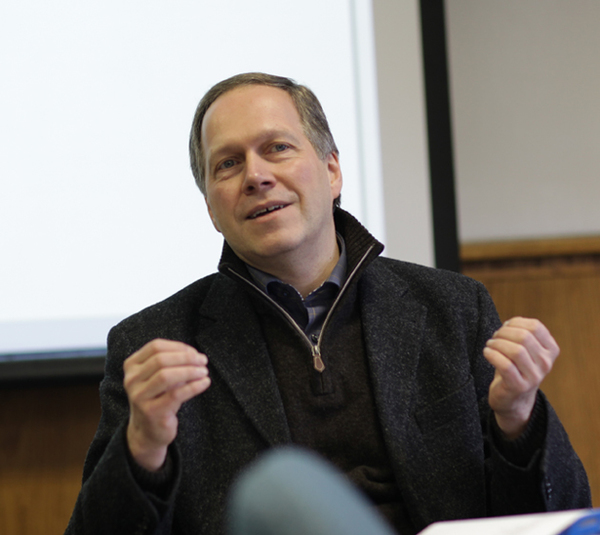
I know of a Trattoria
tucked away in a side alley in Trastevere
He who orders early enough
can get a delicacy there:
from the deepest freezers
preserved for centuries
the brain of a Renaissance prince
sautéed in butter and sage…
Connoisseurs do not pair it with a wine
The flavor, simply enjoyed,
is different than anything they have ever
tasted in their appetent dreams …
The unsophisticated palate
is initially overwhelmed by the hints of decay
but then
the roof rips away at the copula,
fountains of light shoot upwards
as if out of carotid arteries
and spatter the walls,
nymphs at the springs enlace holiness,
fauns trample porcelain plates with filthy hooves,
fireworks flicker down and Danae spreads her thighs.
Indulge yourself! Savor each metamorphosis!
Your tongue will successively turn into
a boar, a rhinoceros, a panther, a peacock;
extend every second into an eternity!
Rub pepper in your eyes
to stay awake!
Jab forks into your arm
to experience each additional nuance of desire!
The following night—believe me—
is going to be one hell of a ride.
translated by Paul-Henri Campbell
*
Ludwig Steinherr, a fellow guest at Druskinikai, is a well-known, prize-winning German poet. A selection of his poems translated into English, Before the Invention of Paradise, was published by Arc. This poem is from a later collection and is wilder, more Dionysian than much of his earlier work. Fantastical and ecstatic, it is concerned as much with cruelty as with pleasure. Beginning with a visit to a simple trattoria the poem expands first into history, then into the flavour of a historical moment that proves shockingly transformative. By touching as much on the explosive as the ecstatic, the view of the past affords a prophetic glance into a possible future where indulgence is the first step to destruction.


Wednesday, 8 October 2014
Death Should Be Intimate
A Poem by Kerry Shawn Keys

Death Should Be Intimate
Death should be intimate.
It should be something like this –
sitting in a rocking chair,
mistaking the wings of an angel
for the swish of the rocker.
It should be sitting down for dinner,
the white napkins, the soup of bread and garlic,
a soup spoon approaching the mouth,
and then suddenly falling forward,
the wine glass spilling on your lap
at the moment of death, and the glass
breaking on the floor the moment after.
It should be in bed, again the color white,
this time the white sheets and the pillow case,
dawn bringing its alba song of love through the window,
with the sun barely visible behind pink clouds,
and then you see your body beneath,
curled up in sleep like a fetus on the bed,
and you are floating above, slowly, slowly
in the thermal, in shafts of sunlight.
And finally, after dying so many times,
death might be a knife, hidden, intangible
in such a shaft of sunlight, silver, invisible,
a secret knife, not yours, not the kitchen’s,
not the beloved’s, but belonging to someone like Abraham,
a servant of a god, a myth, or belonging to no one,
self-contained in its intimacy, eternal, waiting for nothing,
and, yes, your soul, which is all that is left of you,
will pass through it on its way.
I am featuring a few poems by poets at Druskininkai. Kerry Shawn Keys is a marvellous poet who should be much better known than he is. He has spent the latter part of his life in Lithuania and has often performed his poems at the Poetry Fall and indeed all over the world. He has published a good many books too, too many to list here. His life story would make a most wonderful memoir, should he ever write it down. I am delighted to be able to print this relatively new poem by him.
This poem, a contemplation of the moment of dying, moves clearly and powerfully, almost like a film, from image to image through to that final knife which is a point of re-entry to the world presented at the start of the poem - the world of soul and symbol. There is nothing cluttered or melodramatic about the poem. It accepts the moment of death the way it would accept anything else in the universe as something simply itself, yet more. Its language is natural, its sense of rhythm and cadence authoritative without special effects. It is masterly.
More to come from others.
Tuesday, 7 October 2014
From Vilnius 4: Frank Zappa's
Republic of Letters
Republic of Letters
 |
| Poet Kerry Shawn Keys at the door of the Republic of Uzipis |
Apparently it started with Frank Zappa. Or maybe it didn't.
‘Okay, so Zappa never visited Lithuania and had absolutely no connection with the country, but as far as I was concerned, this was a test of our new-found freedom. Lithuania had just proclaimed itself to be a democratic country. I wanted to test it and see if I would be able to realize my ideas.’King Zappa, President Zappa, Prime Minister Zappa, Foreign Secretary Zappa, His Excellency Frank Zappa, His Holy Highness Frank Zappa, Zappa the Bridge, Zappa the River, Zappa the Horse (why not?). It is April the 1st and we have a new state titled, Uzupis, meaning 'the other side of the river', the river in this case being the River Vilnia, after which the city of Vilnius is named. After the melancholy of Vilnius, the gaiety of the bohemian republic within the Vilnian heart of the republic.
I won't describe it here: the links will do that. It exists in a perfectly serious albeit internationally unrecognised Zappanian way.
These eruptions of the spirit have happened before and will happen again whenever the bounds of some particularly stern and oppressive authority are - however briefly - broken. It is the immediate and direct product of the breaking. If I can't quite imagine it in England it is partly because England has a very different history and because here it would be regarded as something 'silly' like the Ministry of Silly Walks in Monty Python. Something of a lark, something rather Pythonesque in fact.
Such are the paradoxes of history that now and then they have to be turned upside down so we can see them at all. Uzupis is carnival in the Bakhtinian sense in that it is a complete parody of the apparatus of state with its own constitution. It has statues and flags and speeches and state occasions. It is and yet not quite a joke. This is the land of the Zappatistas.

If eras had a distinct smell I would say Uzupis smelled of the Sixties; to be more specific of the years from 1964-1969. It is heady with Haight Ashbury and Cornelius Cardew's Scratch Orchestra and Ken Kesey. I wouldn't say it smelled exactly of Woodstock, nor, on the other hand, did it have the 'characteristic sweet, thick and dark character of the balsamic' occasionally inflammable notes of Berkeley 1969, Grosvenor Square, Les Evenements de Mai or Altamont. The basenote is, and must course, be Prague Spring. Vaclav Havel would have worn it as aftershave on the day Uzupis was founded.
But this is reinvention, revival, rediscovery, revenge. It has had time to build its own characteristic architecture of flavours and scents in the twenty or more years since Prague. I can't hope to characterise it in a visit, but there is probably more alcohol in the mixture than there might have been back then. It seems more like a masked ball for poetes maudits than a political ideal.
Not a Utopia then, nor (thank heaven!) a boho Disneyworld. Artists continue to live, work and meet there. It is not Zappa on a chocolate box or even on an artily reconstructed box of 1960s cigarettes.
I can't tell what it was or is, but I do think about what it means to me. What does it mean?

I can imagine such a place without wanting to live in it. I am not really a communal creature but I can imagine becoming fond of people there, of the bars and streets and studios and the river, as well as the 'occasions of state'. I can imagine admiring it. If I were there it would be churlish not to join in and celebrate its entirely improbable existence. I am pretty sure I could approve and abide by much of the constitution.
I don't suppose I have ever been a political idealist and can't imagine myself on Kesey's magic bus. I was shyer, more remote, more lost, more wary than that. And yet there is something about circus and street theatre that seems vital not only to my own well-being but the world's. I think Marcel Carné's film, Les Enfants du Paradis offers a perfectly real understanding of the world, my own world. I think the film presents us with most conditions of the world.
And Uzipis is, in its own rusty way, just that kind of paradis. I feel an immediate affection for it without wanting to be swallowed up by it. I never wanted to join the scouts either of course but, given a choice between clowns and scouts, I would pick the clowns.
And these are the clowns of a bitter history. They have made their own licence and their own carnival. So now I have the visa in my passport. Here it is. As official as the nose on my face.

Monday, 6 October 2014
Lithuania Letter 3: Back in Vilnius
 |
| Autumn in Druskininskai |
I am writing this from the Hotel Congress in Vilnius where we first arrived and to which we have returned in order to depart again.
It is always hard to know what to make of festivals in terms of the art but this much is certain: you meet new poems that make an impression, you meet their makers, and you make friends, that being the chief good. The rest is ambience, new scenery, a little craziness, snatches of conversation, music, drinking. After the first few hours of apprehension (what is this place? who are these people? are they utterly different from me? how to talk to them? how much is expected of me? is my work going to make contact at all?) it all merges into a kind of conviviality where moments of idiosyncracy or monstrous egotism become charming for the duration.
Much is down to the hosts of course and in this case the president and founder of the festival, Kornelijus Pletatis, carried it all with an amiable tolerance and seen-it-all kindness. He is above all a major Lithuanian poet in the grand European tradition of both personal lyric and elements of epic - I mean a voice recognizably in the humane family of Milosz and Herbert but utterly itself - a selection of whose work I managed to find on Kindle and more than warmly recommend. I will find a suitable poem of his and put it up on the blog once I am home.
We knew Ludwig Steinherr from before. We had met at StAnza a couple of years ago and immediately took to each other. We exchanged books and he exists in excellent English translation. He is a marvellous philosophical poet, the poems clear, warm, beautifully balanced. I will put up something by him too.
I have mentioned Donna Stonecipher already, I think. An American poet living in Berlin, it was her poems that most suprised me, partly because I hadn't read her before but chiefly because of her originality. The poems are in prose and in series, so ideally one needs a run of them for full effect, but they are so delicately positioned in terms of development of voice, imagery and emotion that they fell on me like unexpected light.
I can't be quite fair to the other poets bcause some of them were available only in Lithuanian translation or because the English translation was not quite enough to judge them by but in terms of performance the young Swedish poet, Laura Wihlborg was very impressive and clearly much appreciated by the younger poets at the festival. She was also making a radio programme for Swedish radio so moved around with a microphone.
I noticed how Veno Taufer's poems in the anthology were formal and firmly rhymed sonnets in the original. They sounded beautiful to my ear but the translations were in Lithuanian, as was the case with Suzana Lovric, Artis Ostups, and the Japanese poets Keijiro Suga and Koichi Yakushigawa.
Lidija Simkute's poems were written in English but also translated by her as she is a Lithuanian long resident in Australia. Short, deeply spiritual poems, drawing on, it seemed to me, Japanese traditions of haiku and tanka but without the strict form, it was not surprising to me that her poems had in fact been translated into Japanese, indeed by Koichi Yakushigawa.
Alfredo Costa Moneiro works with sound and performed a single long poem, Soliloquio Vazio, a play on the idea of nothing and emptiness, with the backing of his own voice speaking in the background. I don't see or hear much of this work in the UK (though I am sure it exists) so it was a fascinating experience.
I myself had the great good fortune of being translated by Sonata Paliulyte, a fine poet herself and married to the American poet Kerry Shawn Keys .
Oh, but so much more and I haven't mentioned the Lithuanian poets such as Erika Drungtyé, Bendiktas Janusevivius or Vytautas Rubavicius who were in English translation and sounded very good in their different ways, particularly Rubavicius, or the Estonian poet, Jürgen Rooste who gave a powerful performance, occasionally in English.
But that's the poetry and I can't do justice to them all, nor is there time now to link to the work, but I will.
One should avoid pieties, of course one should, but there is no way of accounting for all without the pieties.

We are Babel and our tongues are confused but at least we are in the same wing of Babel, or maybe not a wing at all, but at the very foundations of Babel where tongues spring into words. And later we try to talk over music and over each other, passing each other wine or vodka or potent local herbal brews, or sneak out for cigarettes. Babel is in the noise, but the foundations are articulate and shaped to hold the structure together. Even when you knock Babel down and destroy it, the foundations remain.
Yesterday on returning to Vilnius we met with Kerry and walked around Vilnius a little longer ending up in that part of the ghetto where Kerry and Sonata live. The street still shows the signs of ghetto life and is partly crumbling. It is like a photograph of itself reanimated. The building opposite their flat was where there was some attempt at Jewish resistance. The attempt failed of course but at least photographs of some of those of who resisted are roughly displayed on the wall (see above). In order to get to K and S's flat you walk through a courtyard with woodsheds and some fairly ramshackle improvised building and mending. Nothing has been renovated here. The stairs up to the apartment are steep and dark. When we walk up, a complex space opens up on the top floor with a narrow balcony overlooking the yard and a little beyond. Chimneys. Bricks. The rooms are full of books and art and souvenirs of travel. It would be good to feature a poem of Kerry's too, since he is a very fine poet indeed, resident here now for many years. I recognise both the feelings and the sense of the space too, that cave of making for both Kerry and Sonata (whose work I don't know in English translation but must try to find).
Europe has been both garden and charnelhouse but we recognise it and shrug and are glad to be here if only because it is our essential cave of making. And remaking of course, a constant remaking you see in the houses, streets, squares and parks.
Hello Europe. We are not divorced. Not from this.
Friday, 3 October 2014
Lithuania Letter 2: From Druskininkai
 |
| Druskininkai: The stately pleasure dome decreed |
Druskininkai - Drusk for short - is a spa resort in the far South of Lithuania. It looks like a cross between Socialist Paradise (TM protected) and Modernist Baroque in terms of architecture and disposition, with one river and two lakes and a great domed building that serves as health centre with mud bath, massage, leisure activities and night club; the spoils of the West taking root in the Baltic. The trees are magnificent, all in 'their autumn beauty', ravishing, far from bare, but gently showering dry yellow leaves over the grass.
We walk down to the river and round the smaller lake on our free morning with our German friend Ludwig, then stop for a coffee in a very volkisch bar where the waitresses wear ethnic gear. Such things aways make me feel a curious mixture of unease and childish pleasure. We order acorn coffee as that is prominent on the menu but, disappointingly, there are no acorns, so we order ordinary coffee instead and sit and talk literature and politics, which is what civilised people do in such circumstances.
The festival proper begins in the afternoon with the raising of the festival flag on the lawn outside and the playing of the festival anthem. Then we proceed back into the hall and discuss the function or non-function of 'canonical forms' for some three and a half hours to a thinning audience. The discussion brightens up as it goes on, and once we have made an effort to distinguish between the idea of form and the idea of a canon we find ourselves making a few worthwhile points.
Poetry festivals are like this. We don't arrive at earth-shaking conclusions, but we talk for the amusement of the invisible poetry deities who are sitting at our elbows, occasionally nodding, occasionally yawning.
From the discussion we pass on to the readings - twelve poets reading for some two hours in all, complete with translations on the screen behind them above their heads, some into English, some into Lithuanian. This the genuine business end of the festival where the poets are what they claim to be: the authors of poems. And the poets are all different, of different ages, from different countries with differing poetics. Everyone has ten minutes and it works. Particularly delighted to make the acquaintance of poems by Donna Stonecipher, a Seattle poet long settled in Berlin. Calm, precise, architectural yet passionately driven poems, all in prose and soon to be published in the UK by Shearsman.
I read tomorrow.
Then, after the reading, a table at the restaurant-bar with a fine array of drinks reserved for the guest poets who can watch the readings in the other room on a large screen. The drinks go round, the laughter picks up, we open bottles of bubbly then, some of us, decide to retire to bed.
Thursday, 2 October 2014
Lithuania Letter 1: Vilnius

Vilnius is cold at night but it's a small city and a short drive from the airport. Ruta had picked us up off the 22:55 in from Stansted but since Lithuania is two hours ahead it was only nine in the evening for us. She is a young highly capable woman who loves Vilnius, a very green city, she says though it's too late to see that now. It is certainly a quiet city as we approach the river and our hotel.
What do I know about Vilnius? That it is beautiful, that it is green, and that back in the nineteenth century the greatest part of its population was Jewish, some 45% in fact, but that now it is only 0.5%. That is some vanishing, and the reason is not hard to seek.
Beautiful places with stern morals are not necessarily kind.
We sleep well though after watching almost two whole football matches through, both featuring English teams. The Lithuanian commentary is remarkably tranquil. There is no particular excitement at goalmouth incidents, serious fouls or even at goals when they are scored. They are remarked on. No one shouts or gasps. It is very calm.
The next morning after breakfast the sky is cloudless, a wonderful mid-blue, the light clear, slightly icy without hard shadows. We walk towards the old city. There are cars but very little traffic. Cars wait courteously for us to cross, the drivers gesturing us on with faint smiles. The faces - I always notice the faces especially of the women - are northern, possibly Scandinavian, with high cheekbones, large eyes, pale skin and, mostly, blonde hair. They are tall. The men and boys are even taller. They have an angelic look, their language bell-like, tinkling. The buildings too are clear and pale.

As we approach the old city we see why the city is green. Though the old streets are narrow they are not long and very soon, at the end of each, we come across large squares or open spaces each with trees at their autumnal best, green moving through to orange, great dense heads just losing the odd leaf now and then. A hooded crow, sparrows, scrappy tousled pigeons. The older buildings are either spruced up or pieces of pure tachisme, scraped, rubbed, smeared, crumbling, vanishing into themselves. It's good for graffiti too.

We enter the Vilnaus Sventosios Dvaiosa a Baroque church full of the familiar hypnotic billowing as befits the God of the Psychotic, all voluptuous gesture and frantic grace, as a counterpoint to the apparent calm outside. It looks somewhat like this.

But soon, not too far away, there is the contrast of the Greek Catholic Church. Plain, tall, half scrubbed clear by time and neglect.

Then it is more pale buildings, more narrow streets, more large - extraordinarily large - squares. The city must have been able to afford these open spaces since there is very little over three storeys; in the old town. Is it beautiful? Yes, I should say so.
Eventually we return to the hotel, check out, meet other writers and walk over to the Writers Union, which is nineteenth century grandeur inside, reminding me a little of the Writers Union in Bucharest.

We dump bags there and go off again down other parts of the old city, down alleyways and passages. We stop at a bar that does lunches and sit outside in the sweetest most blinding light yet, half in shadow, lingering over beer and coffee before heading off into the ghetto.
Here the buildings are plainer, more utilitarian. One imagines the scuttling of feet into the doorways, the fear stifling the squares and narrow streets. It is marked and acknowledged but it is pretty bare save for the constant green of trees and rough grass.
Could we live here? Yes, without memory, filling our eyes, learning the bell like language, learning the manners, the direct look in the eyes that pass on and through. A good city to be young in. A good city for ghosts at windows and in walls.
At 4:30 we set out for Druskininkai, the spa town, where the festival is to take place.
Sunday, 28 September 2014
Lurching at King's Lynn:
A discussion of passive suffering
A discussion of passive suffering
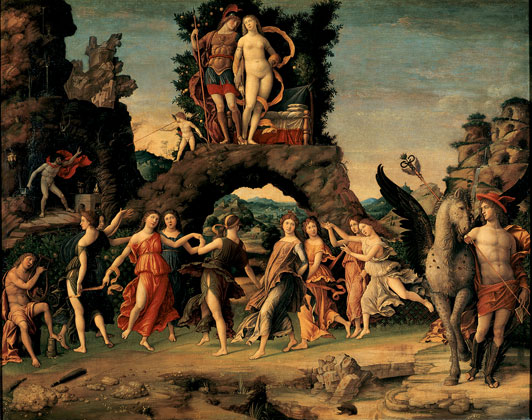
King's Lynn Poetry Festival is rather different from most festivals. It is, in many ways, much more a communal event, all organised by the remarkable solicitor Tony Ellis with considerable help from his friendly and willing committe and, no doubt, friends and family too. The events are very well attended and supported; there are poets who have returned on several occasions (nor was this my first time); there are lunches and dinners and, besides the readings that are either in the morning or the evening, afternoon discussions where all the poets are invited to contribute.
This was in fact the thirtieth such festival and therefore a more than usually celebratory occasion. The poetry takes care of itself. I read on Saturday morning with Tiffany Atkinson and the Catalan poet Manuel Forcano whose work is beautifully translated by Anna Crowe. Anna couldn't come but Manuel''s UK publishers, Tony Ward and Angela Jarman of Arc were there, and Angela read the translations to great effect. As to the rest of the bill you can read it here.
*
Clarissa came with me but we could only stay till Saturday night as I have a mad schedule coming up and I needed to prepare (I am recording a radio programme for Radio Four tomorrow), then we're off to Lithuania for a few days. So I missed the Sunday discussion but was able to be part of the Saturday afternoon discussion which was nominally about what we want from poetry and should it be left to the academics, and about whether Yeats should have included Wilfred Owen and the other War Poets in his Oxford Book of Modern Verse. The crux of the matter, as Yeats dealt with it in his Introduction, can be read here.
Of course it didn't turn out like that. We started with Yeats versus Owen and some of us decided that Yeats's notion of passive suffering was nonsense and, what is more, tautologous, because wasn't the essence of suffering passivity in any case. We did not deal with the two sentences that followed the remark about passive suffering, namely that "In all the great tragedies, tragedy is a joy to the man who dies; in Greece the tragic chorus danced". In other words we left the question of tragedy to one side.
Such discussions tend to lurch from here to there without a firm chair. Our chair was lively rather than firm and it could be argued that the lurching was actually enjoyed by a lay audience: that they had, in effect, come for the lurch.
So we talked about other poems by soldier poets, including those of the Vietnam, Iraq and Afghanistan wars. One felt strongly that the recent poets were a poor lot because they didn't consider their enemies as subjects or fully examine the complexities, political or other, of the war as a whole. Some of us replied that that had never been an expectation in war poetry and that a touch of humanity regarding the foe was probably the best that could be expected.
Was war a proper subject at all then? Clearly it must have been or we'd never have had the great war poems of the past. But if that is the case, so the discussion lurched on, what were proper and improper subjects for poetry?
There were, of course, common poetic subjects such as love, the sea, the moon, nature, art, mortality etc and others much less common (readers should suggest their own at this point). Some poets disliked the idea of writing about the experiences of others. Others pointed out that not doing so would signal the end of theatre and the poetry of drama. The word 'appropriation' did the rounds. One was concerned that poems should not cause pain. I wondered whether this would not demolish satire. I quoted Pope: John Lucas in the audience quoted Dryden. Was pain in poetry better than pain in prose or as administered by the fist? That's a very big question, but then they all were.
For some reason the discussion lurched into the issues of form and rhyme eliciting some diametrically opposing views which were not quite as opposing as they first sounded. Rhyme was generally let off the hook as of course it must be or else we'd have to discount a vast number of marvellous English-language poems that have used it to remarkable effect.
Then we were on to the propriety or possibly overweening egotism or possibly narcissism of writing about sex in particular ways (specifically, according to one poet, by women), then - perhaps not surprisingly considering the potentially contentious, not to mention inflammable, nature of the opinion - we found ourselves back on the safer ground of other technical matters and the issue of difficulty.
Do we have to understand poems in order to like them, or do we have to like them first in order to understand them? I suggested that the issue of understanding is not at all simple and tried to elucidate a little. A man in the audience said he hadn't liked Bartók at first but trustworthy friends suggested Bartók was pretty good and he himself eventually thought so.
By the end we had cited and quoted a good number of poems and essays to no particular effect except the cause of intellectual entertainment. Not that we were ever going to decide anything or even investigate it in a focused way, and it's quite possible that, had we done so, the afternoon might have been a good deal less entertaining. Free-for-alls are generally entertainments.
And of course every time someone cited or quoted in order to propose something, a quick counter-quotation immediately demonstrated that the proposition in question would lose us an entire class of writing including some wonderful poems.
In the evening we listened to Hugo Williams and Tom Paulin. Quite a different experience. Utterly different, particularly in Hugo's case. No one raised the question of passive suffering.
Subscribe to:
Posts (Atom)