Monday, 22 June 2015

Worlds Literature Festival 2015:
1. Introducing the Octopus


Dragon Hall, Norwich, The National Centre for Writing


I left the meditations about Labour's election defeat last month at the point before the famous winter of discontent if only because so many other things had to be done and because, being so contentious,  it seemed a particularly hard thing to talk about. I would like to go back to it but in the next few posts I want to feed in the final draft of my summing up of the Worlds Literature Festival 2015 in Norwich which ended the Friday just past.

As some will know Norwich has hosted this festival for eleven years now and I have attended many of them and summed up the last three before being asked to sum up this one. Putting aside capital cities as centres of all the arts Norwich has been a city of literature for a long time, partly because of its history  but chiefly because of the early establishment of the Creative Writing course at the UEA which has produced so many successful, prize winning and much praised writers. That MA course started in 1970 and began to offer PhD's in the mid-eighties. 

The New Writing Partnership was a collaboration between the city, the county and the university and was renamed the Writers' Centre Norwich in 2009. This partnership has been so successful that the city, which was already a City of Refuge, was named as England's first UNESCO City of Literature. It is now also in collaboration with the British Centre of Literary Translation, first set up by W G Sebald, and is now a National Centre for Writing with a great ambitious programme. In other words Norwich is a hive of literary activity and each year's festival brings its internationally known writers to the city for the sessions known as salons and for public readings.

Each year the Festival has a set theme that eight writers are invited to address in the form of provocations that can be about half an hour long and are followed by discussion. Last year the theme was Nostalgia (I wrote it up on the blog this time last year), this time it was Reputation. 

My task in summing up is to recall all the main points of the provocations and discussions and to try to link them together in a presentation lasting about half an hour. This could be a dry business so it is worth trying to hold it together with some running theme or metaphor. In this case it was an expression used by a first participant at the festival, Dan Richards who, in describing his unsuccessful attempts to sell a previous book to publishers, said it was like offering them an octopus in a suitcase. I'll link each author once the first time they appear in the script (so the first parts will be peppered with links)  but thenceforth I'll use just italics.

The octopus follows.


First session and Jon Cook's introduction

It is very tempting to begin with the octopus in the suitcase that Dan Richards mentioned at the end of our very first provocation by Chris Bigsby. It is, after all, a creature with eight limbs and and we have had eight quite various tentacular provocations. Lucy Hughes-Hallett’s biography of Gabriele D’Annunzio, about whom she spoke that morning, is titled The Pike. Jon Cook then spoke of D’Annunzio being drawn to his public as a predatory bird to its prey. Kyoko Yoshida, in her reading told us a story about squirrels with secret gardens.  Liz Berry read us two poems featuring birds, in one of which she told us that a certain kind of pigeon was known in the Black Country as a Birmingham Roller, which I first misheard as a burning umbrella.  Anna Funder gave us, was it Ernst Toller, as “an animal, a beaked bird with a glossy black head”.  Then Vesna Goldsworthy suggested that hoping to be a writer by engaging in literary study was like preparing to be a jockey by qualifying as a vet. Then, at the very end, the publisher David Graham wondered whether he was a fox in a henhouse or a lamb to slaughter. 

Given all this I was rather hoping that I might be able to link all the sessions together by reference to various animals, but then the animals thinned out and grew somehow facetious and the only analogy I have left in my hand is the menagerie.

It would be equally tempting to begin with As You Like It and Jaques’s “all the world’s a stage” speech about the seven ages of man where the fourth age belongs to the soldier who is conveniently compared to a leopard:

Full of strange oaths and bearded like the pard,
Jealous in honour, sudden and quick in quarrel,
Seeking the bubble reputation
Even in the cannon's mouth.

And that, I thought might cover a few bases in thinking of reputation in terms of honour and of quarrels, of the sheer transience of bubbles, and indeed of cannons, both the firing kind with two n’s and the kind - perhaps just as deadly, in its own way - with just one.

Jon Cook built his introduction to the salons on Pascale Casanova’s book, The World of Letters and set about exploring the idea of reputation and place. Where do you go to make your reputation? To the big cities, of course, to Paris, to London, to Berlin, to New York, to the great metropolis beyond your back yard. Metropolitan power, he said, following Casanova, was a matter of accumulation; of competition, rivalry and dispute (those jealousies mentioned in Jaques’s speech); and of concentration - a kind of density where all the books and ideas are crowded and jostling together.

He also brought our attention to the idea of a national literary consciousness which some posit as the glory, or even definition of a nation, while pointing to exceptions such as Stendhal who, notoriously (for his French countrymen)  preferred Shakespeare to Racine.

But wherever it’s happening now, he ended, it will probably go on to happen elsewhere. I suspect this ease and rapidity of movement has a great deal to do with the technology of immediate communication and globalisation of capital. In any case, as Feste, another melancholy clown in Shakespeare, points out “the whirligig of time brings in his revenges”.


The first two provocations follow.

Wednesday, 27 May 2015

So what happened at the general election (5)
Towards a winter of discontent.


What to say of the 'winter of discontent'? For information see here and here and here and... need I go on? Look it up yourself and flavour according to taste. Accounts will be contentious but it was certainly cold.

For us personally these were tough years. We were very lucky to be able to rent a house in late 1973. It had been rented previously to American servicemen who had wrecked a door and kept a goat and a rusty car in the back garden.  It had no phone and little heating. When my mother died in 1975 Clarissa's parents (whose house it had been) had to walk down the hill to tell us.  Tom had been born in hospital at the end of 1973. We heated his room with a paraffin heater. Helen was born at home to an international choir of midwives in January 1976. By that time I had had three teaching jobs in three years, the first two part-time. Then came the run-up to the famously discontented winter.


1977-1978

The children were three and one respectively in 1977. My father had remarried that September. Our recorded conversations about the past had stopped for lack of private time. I had somehow (through being the older of the two new staff) become head of a two-person art department in a girls ex-grammar comprehensive school. Nevertheless I was still learning the art of teaching. On the other hand, miracle of miracles I had, on Peter Porter's recommendation, been picked up by Faber for the fourth of their Poetry Introduction series.

That was the good news but at the same time Clarissa developed a lump on the ear that was ignored by one doctor but was diagnosed as a tumour of the parotid gland by another so she had to go to hospital to have it removed in a tricky operation. The removal was successful - the tumour wasn't malignant - but it was a scary and anxious time. I took the Faber volume to her in hospital in the January of 1978 as she was recovering.

But the operation must have lowered her resistance for later in 1978 she caught mumps from Tom and it quickly turned to encephalitis. I was working full time by then and her mother came daily to nurse her. Her fever was high, she was in great pain, and there were times she was delirious.  Had it not been for the help of her parents things might have turned out a great deal worse but over 1979 her health recovered and her art - she is herself an artist of course - was to recover a few years later. Back then, however, we were sliding towards a pretty scary winter with strikes in hospitals, schools, in waste disposal, in electricity, among lorry-drivers, firemen, and more.

Having, meanwhile, lost the general election intended to affirm government as the controlling power in 1974 the Tories had dropped Edward Heath and, in a revolutionary change in 1975, elected a woman as leader, which is something Labour have yet to do.

Labour limped on and lost the election in the wake of the winter of discontent and Margaret Thatcher became prime minister of the country on 4 May 1979. Butskellism was well and truly dead. For the first time since 1945 Britain had an ideological government. We are still living through the consequences of that.

I am steering clear of value judgments in an attempt to see what happened and to consider why things are as they are now.

What kind of vacuum has developed since 1979? Why is the Labour Party currently reconsidering its entire raison d'ĂȘtre? What has come to fill the vacuum?


Saturday, 23 May 2015

So what happened at the general election (4)
1973-1979: the angry brigades


I have stacked my cards heavily on 1973 though one commenter on the Facebook link to these pages, John, says that for him personally the psychological breaking point - the end of the sixties - was 1968. Paris did it for him. Having been active in politics with the Young CND he left to wander the globe and didn't move back into politics until the Thatcher years.

Mine, like John's, is, as I said at the beginning, a personal view. I feel something in the world cracked in 1973 and that we entered a kind of vortex.

1973 was, in the first place, a major reaction to the sunny optimism of the summer of love.

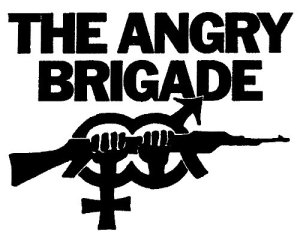
America, post-Watergate, was full of self-doubt. Parts of New York, and Central Park in particular, became no-go areas. Black Power had already moved into its most military phase with the Black Panthers. The Soviet Union was becoming the mafia state it has now fully blossomed into. Tensions were high. There was Iraq and the Ayatollah Khomeini. There was Eurocommunism and the Baader Meinhoff gang (also known as the Red Army Faction)  in Germany. There was the kidnapping and killing of Aldo Moro, the Italian prime minister by the Red Brigades. Ireland was witnessing great violence in the expanding Troubles. In England there was The Angry Brigade and the Animal Liberation Front. There was even the Paedophile Information Exchange that survived for ten years from 1974. And people are surprised by Jimmy Saville and Rolf Harris etc. Autre temps, autre moeurs. The post-war order was splintering not only under economic pressure but under the pressure of failed hopes.

We slipped from San Francisco and Woodstock into the vacancies of stadium rock and Abigail's Party with only David Bowie and lesser Glam Rock bands for company. From Donna Summer, Abba, and the Bee Gees to the Sex Pistols and punk is hardly any time at all.

And, since much of the political change was a product of the world economic crisis that sprang out of the quadrupling of oil prices the world's sympathies began to shift from Israel to the PLO and Yasser Arafat. Always be nice to those controlling your oil supply and look to see their point of view. That is, of course, an unfairly cynical view but age is sometimes as much a sceptic about what is now considered virtuous and nice as about what is now considered wicked, and what could be considered more wicked now than paedophilia?

The six years between 1973 and 1979 are a crucible where the next phase of world and global economy and politics is created.

The crises of 1973 shifted into the big crisis of 1974, the defeat of Heath on the key question of  'who governs'. In 1972 the miners went on strike for the first time since 1926. The NUM was demanding a 43% pay rise. Heath's government offered about 8%. Here is some background to the events. The miners sent out flying pickets, that is to say pickets who didn't just stop all movement at their own place of work but at others and in other branches of industry too.

The result was industrial standstill  uncluding the famous three-day week which lasted into 1974 - a national traumatic event that was to have very long term effects -  and the curious situation whereby miners became the best paid workers for a year but within that time had dropped to eighteenth place. Events followed from there. As the link above says:

By 1973 however, the miners had moved from first in the industrial wages league to eighteenth. The miners saw however, that the poor economic situation that the country was in could be used to their advantage. The Arab-Israeli War was causing oil prices to soar, and throughout the country, relations between the industrial unions and the Government were hostile as the Tories were attempting to introduce pay freezes and restraints to help the economy. 

In late 1973, the miners once more voted to take industrial action if their pay demands were not meet. They were not, and so on the 9th February 1974, the miners came out on strike.

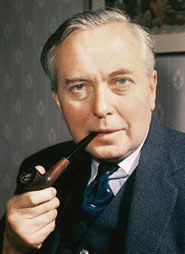
The figures tell a story of their own. High inflation was a stress no government could live with for long. Heath called the election and lost. The years after under first Harold Wilson's minority government,  then under Jim Callaghan, constituted a power struggle betwen government and the unions, at one high point of which Wilson told Hugh Scanlon, head of the engineering union: Get your tanks off my lawn.

*


The military analogy used by Wilson is rather extraordinary, isn't it? It suggests that the unions and the party formed to represent them were on opposite sides of a war. And indeed there was something of a war going on with the country as a battlefield. Sky-high inflation, a depletion of reserves, a vast loss in the country's prestige (Britain as the sick man of Europe, a term originally applied to Turkey), the sense now of justified conflict, now of despair dominate the period as I remember it from the point of a view of a young father, a schoolteacher, and aspiring but rarely successful poet. And, of course, as I mentioned in an earlier post, my mother's suicide in 1975 and trying to be of some solace to my father. I think it was during this period or shortly after that my father went Tory, having been visited by the local party who gladly took him in. It wasn't because he was a man who wanted to protect his privileges or because he had a contempt for the poor. It was because he was frightened of chaos.

But what was the miners' strike of 1972 and the threatened one of 1974 about? Was it simply about a fair wage, or greed as the Tory press had it? I don't think so. There was a chink in the armour of history, of capitalism, not only in Britain but all over Europe, and indeed the world. A certain dedicated, revolutionary ruthlessness set in. If there had to be sacrifices, well there had to be sacrifices. The mid-seventies presented a moment when the constantly re-defining Left saw a chance of re-defining the world. That might have been the last time. But which Left, and how?


Friday, 22 May 2015

So what happened at the general election:
The 1973 moment (3)


I sometimes think 1973 was, before 1989, the most significant year in late twentieth-century history, in British history at least. That was the year the sixties truly ended. After 1973 we were in a new world of global influences and domestic upheaval. The six years between 1973 and 1979 were, in metaphorical terms, the months of pregnancy that would give birth to Thatcherism. They represented the crisis point of one ideology and its replacement by another. It was the beginning of the end, not only the sixties but of 1945 as well.

It was in 1973 the roof fell in. The year started well enough when on the 1 January Britain joined the EEC and Nixon suspended offensive action in Vietnam but Watergate broke a few months later, there was a second wave of the Cod War,  the Black September attack on Athens airport, and in October came the Yom Kippur War that was less decisive than the Six-Day War of 1967 had been. It was a result of that war that OPEC (the organisation of oil producing countries) embargoed countries supporting Israel and the great energy crisis began. By December OPEC had doubled the price of crude oil. By next year the price had quadrupled. There was a big stock market crash in any case and this exacerbated it.

The British prime minister was the Tory, Edward Heath, who had introduced decimal coinage in 1970, and reduced the number of local authorities, an act nicknamed the HeathCo reforms. He was an enthusiastic European from a non-public school background (Alf Garnett, the comic right-wing bigot figure in the BBC sitcom, Till Death Us Do Part, referred to him as 'a grammar school twit'). It was his administration that was to break in the 1974 general election, opening the way, some five years later - momentously, since we are still living the consequences - to Thatcherism.

1970 was an unlucky year to come to power anyway and everything worked to make things progressively worse. The rock Heath was to break on (in 1974) was the Trade Unions Council, in particular the National Union of Miners. There had been a rising tide of militancy in the unions since the mid-sixties for various reasons. There is a useful sketch of developments in the Cabinet Papers at The National Archives.

If the 1950s and early 1960s led to the unravelling of consensus Butskellism, the late sixties and seventies was a period of ideological polarisation. The strikes were less about the fine details of money, more about power and the attempt to define the time in socialist terms. But the socialist terms were themselves changing, not just in Britain but internationally. Not that I saw events in that way at the time. We were a young family chiefly at the receiving end of the strikes, power cuts, loss of services, shortages and the sense of things falling apart.

Would that be a necessary falling apart so a better world might be built on the ruins? I sometimes think 1973/74 was a potentially revolutionary year,  more revolutionary than 1979 which brought in a revolution of quite a different kind. That is why I hesitate at this point.

It was in 1970 that Clarissa and I got married. In 1972 I graduated (with a First!) from Leeds and over 1972 and 1973 I trained as a teacher at Goldsmiths. On the last day of 1973 our son, Tom, was born into the headwind of what was to follow. Just over two years later years later our daughter  Helen was born. I undertook the traditional bread-winner role and went into school teaching of various kinds for the next seventeen years (at least eleven as full-time, heading art departments, the rest half time) while continuing to write, in hope.

It was in 1973 the Times Literary Supplement published my first poem. Six years later, in 1979 my first book, The Slant Door, appeared. The years 1973 and 1979 bracket both my private life and, coincidentally, the life of the country.

Here's a brilliantly intelligent,  highly ambitious episode of Till Death Us Do Part where working class Tory, Alf, and Labour-supporting son-in-law, Mike (played by Cherie Blair's father, Tony Booth) discuss the industrial conflicts of the time over a game of Monopoly. Una Stubbs utters an early feminist protest. And there's the full blown racism of the seventies. Script by firmly left wing Johnny Speight. I find it hard to imagine a sitcom script as open or as far-seeing as this today. (OK, you can tell me how wrong I am in the comments part.)


Monday, 18 May 2015

So what happened at the general election:
A partly-personal meditation (2)


Altamont Festival 1969

The five years between 1968 and 1973 were precisely the years I was at art school doing Fine Art, an area in which I expected to make no money but survive. I would survive because there would always be something I could do. I would survive because the the summer of love was about surviving outside the rat race and creating a new world with no wars, no Vietnams, no nuclear bombs. The summer of love was about getting so high you would never come down. Some would crash no doubt, and many did, but it would, it was felt, be worth it.

Not exactly in my case. I was not a product of this society but another. Not the product of Union Jacks but of Hungarian flags with the Soviet banner at the centre. Behind them lay the swastika that almost killed my parents and did kill three quarters of our family. It was a different perspective, though I couldn't have said quite what.

The balance of the world was as it was. We had left Hungary in 1956. There was East and West. There was Soviet style communism with its vast army and there was the West with its own vast army, chiefly American. China was a mystery. The rest was tension and anxiety. There was Korea and Malaya and Cyprus. There was the Berlin Wall. There was the Cuba crisis. There was Algeria. There was the Six Day War. The Prague Spring was to come followed by its crushing and a new wave of Cold War bristling. The summer of love's answer to this was to carefully place a flower in a rifle barrel, or in the case of Czechoslovakia (and Vietnam), to set yourself alight.

As to Britain, it was still a military power. The Empire had become the Commonwealth. There were problems of course. There was South Africa (Macmillan had already warned SA that there would be problems) and the Mau-Mau. On the other side there were the Commonwealth Prime Ministers' Conferences with the Queen welcoming all to the 'mother country'. It was an arrangement of sorts though what it counted for we couldn't tell. According to PR it was a generous act on behalf of Britain to set these countries up as though they were her children and then to send them kindly on their own independent way with the assumption that they'd all be nice to Britain in the way a big happy family is full of relatives being nice to each other and especially to mum.

Then there was Europe, which, at that stage, was the European Economic Community of six nations. Britain (with the Conservative Edward Heath negotiating) tried to join in 1963. Why? Because some believed that the Commonwealth would not be enough to sustain us and that some kind of economic tie to Europe was also necessary. Maybe because the thought of Western Europe forming a bloc against the potentially threatening power of Soviet Eastern Europe was considered useful, even necessary. After all, the US had deserted us over Suez and might desert us again. As it was, Europe (in the shape of Charles De Gaulle) said no. Britain was too close to the Americans. It was a wounding rejection.

I am going back here because history is never irrelevant. It can be a dreadful burden, an awful master, and, at times, a deadly killer, but there is no use pretending it isn't there. Europe is a major question for us now and in the immediate future. It is very complicated and simple slogans are, as always, worse than useless. Slogans don't do history.

In geopolitical terms the idea of military strength counted for something in public opinion. You may have been on the CND's ban-the-bomb marches, you might have grown into the summer of love, but everything around you told you that conflict, and anxiety about conflict, would not be going away in the near future. Donovan (our UK Bob Dylan) might sing about the 'universal soldier' who was really to blame' but a good many working class boys were joining the army for a job, and while you could remove the ultimate MAD deterrent or wrench it from the hands of people like Dr Strangelove, there would still be marching and drilling and border troubles here or there in the world with the two big players looking on, encouraging, supplying and estimating how any set of dominoes might fall.

Certainly, neither the Tories nor Labour were advocating disarming, though you could bet your life on it that the Tories would be greater supporters of Her Majesty's Armed Forces.

Nevertheless, despite the summer of love descending into bloody winter at the Altamont Festival of 1969, the period between 1968 and 1973 retained something of the sixties spirit, albeit ever more ragged, ever more politically radical, and tending towards ever greater violence. Bloody Sunday (1972) brought in a long period of killing.

The radical politics of1968 were, I think, part of the psychological landscape of the time. There was no good news in conventional domestic politics. In 1968 Britain stood at the brink of economic catastrophe. The economy was going down the drain to the extent that Harold Wilson's government considered a financial coup.  There was devaluation. According to the BBC records of the time:

Chancellor Roy Jenkins had forced through a swingeing package of cuts, which had brought howls of protests from ministers. 
In a memo on 3 January 1968, he told the Cabinet: "Our standing in the world depends on the soundness of our economy and not on a worldwide military presence."

American response was:
"If these steps are taken they will be tantamount to a British withdrawal from world affairs," he [President Johnson] said.

No big deal then.

At the age of nineteen I didn't understand any of this. I vaguely followed the news but the crisis seemed distant, almost another planet.  By 1970 I was married. By the end of 1973 I was a father.


[to be continued]


Sunday, 17 May 2015

So what happened at the general election:
A partly-personal meditation (1)


By fellow Hungarian cartoonist, Vicky

This is a little later than intended.  I am sure other people could do (and probably have done) this far better than I can but - just for my own sake - I want to think through the results of the recent general election to consider the background and its significance. I haven’t done any research for this, it is pure recollection but for the checking of dates. I hope friends will put me right in matters of detail. I am not going to link to everything, only that which might have been forgotten.


First a little personal background: Butskellism and beyond

The political landscape has changed considerably since the first elections I remember in this country. The Hungarian Uprising, of which we were refugees, coincided with the Suez Crisis. We arived in England on 2 December 1956: Sir Anthony Eden, the prime minister, resigned in January 1957. Our first government was Conservative under Harold Macmillan. Macmillan was a One-Nation Tory, a Keynesian who believed in a mixed economy and in maintaining the welfare state as set up by Clement Attlee. Living standards were rising after the lows of the war so why change things?  His two famous speeches:  ‘You have never had it so good‘ (1957) and  ‘The winds of change’ (1960) - which marked the beginning of decolonisation - seemed to define the era and the kind of place Britain was. 

Then came the night of the long knives (1962), the Cuba Crisis (1962), the Profumo scandal (1963), the assassination of Kennedy (1963), and Macmillan’s resignation, followed by the election of Sir Alec Douglas-Home, or ‘old death’s head’ as my mother called him. His brief administration was the end of that Britain. My parents (my father a member of the communist party in Hungary with my ‘class-alien’ mother to the left of him)  helped vote in Harold Wilson in 1964. The new Britain already had Private Eye and Beyond the Fringe. It was the age of the first Cool Britannia (though we didn't call it that) and would last about five or six years.


Harold Wilson in 1964

I came to faint political consciousness of a residually optimistic sort in the era of Wilson and the Beatles. I wasn’t old enough to be protesting violently against Vietnam in Grosvenor Square in 1968, or rather I was, at nineteen but, like a well-behaved immigrant boy, I was still constrained by my parents. I was, in any case, confused. I had no sooner woken up, at school,  to The Summer of Love in 1967 than it was collapsing already.

1968, I suspect, was the year my parents began to retreat from the democratic left-wing positions that they were completely to abandon by 1974. My mother was desperately ill in ‘74 and already suicidal (she was to kill herself the next year). I was married but my life hadn’t come to what my parents had hoped and my brother was suffering under the harsh regime of a music professor who made excessive demands of him. It was a miserable time for them. To my parents, brought up under secure if oppressive authoritarian conditions and settled in a country which seemed the epitome of freedom in the fifties, it would all have seemed dangerously anarchic.

Leaving aside the personal now, it seemed the country had arrived at a kind of political consensus between 1958 and 1964. That consensus was called Butskellism by some (see cartoon at top),  after the Tory R. A. Butler and the Labour leader just before Wilson, Hugh Gaitskell.

Bustkellism seemed a comfortable place to many liberal minded people (not that my parents were liberal minded in the post-1960s sense) but 1968 raised some serious question marks about it and the seventies were to raise many more. 


Under the surface of Butskellism, of course, the old class system was still very much in place. There was an increasingly irrelevant but plutocratic upper class, the various levels of the middle class, and a clearly definable working class composed chiefly of those working in state industries: in the docks, in the steelworks, in electricity, in hospitals, in transport and above all in coal. These forces were unionised and a vital part of the Labour movement. To be Labour was to be modern. To be modern meant being part of the broad left-liberal movement, which would of course involve Labour at its core.

It was a Britain that could still remember the war, the creation of the welfare state, and those the never-had-it-so-good days as a touchstone of stability  The Butskellite world might have been stuffy but was tinged with idealism. Under the historical circumstances that idealism grew wild in several directions at once. The end of the sixties - and 1973 above all - put a cap on that, stifled it, and cranked up a pressure that was to become much more explosive.

But that’s just Britain. Europe and the Cold War were just as important in forming a political climate.


Tuesday, 12 May 2015

The Artist in Real and Virtual Company 6:
The river at night


Imagine a scene where the poet has woken from sleep and remains awake. The body is tired but the mind alert. There is something thin-skinned about the mind at three o-clock in the morning. It is reactive and receptive. The poet reaches for his phone, presses a button and immediately a stream of voices appears in front of him, that stream rushing past like a river in spate, bearing all kinds of small objects on it and under the surface. Everything vanishes. It is as if that river were time itself bearing all its sons away.

Let’s call that river Twitter. You throw something in and it is immediately swept away. The ephemerality and brevity of the voice is a given. I’d like to suggest that the same ephemerality haunts our every day conversations. It is mortality by any other name and it is the engine that drives poetry itself. Here the symbol of mortality is compressed into a disposable cry or gesture, a flimsy gravity. As in one of the great silent films,  King Vidor’s ‘The Crowd’ of 1928, the masses sweep along the street, each small tragedy nothing in the traffic of the world.

On the great rushing stream of Twitter are carried a variety of commmunications: political, personal, scholarly, commercial, erotic, moral, philosophical, experimental, trivial - flowing in no particular order, according to no particular classification apart from the ubiquitous hashtag. The order of reading the twitter stream is simply the order in which any tweet might be written or arrive. That lack of order is another given. The condition of the individual text is to be detached not only from its tribe but from its originator.  One might write two texts in a minute but they will not appear next to each other in the stream unless someone is tuned specifically to the author. The texts are not a well-organised convoy or flotilla but flotsam and jetsam, scraps consumed as scraps by those feeding on it. The idea of voice or character as continuity is constantly being modified by what comes in between.

That world contains multitudes of voices, some familiar as a voice in the pub, some clearly assumed, some heard as through a megaphone. At this stage I confess that it is often I whom am lying there. I have a history of formal poetry in terms of sonnets, terza rima, villanelle, sestina, canzone and many other forms some of which I have invented and used just once or a few times. The idea of any formal constraint is interesting to me. If the question of form - that 140 character limit - is the first consideration, then voice is second. Voice gives birth to form as form conducts voice: the two are indivorcible but the voice is clearer. One might trust to the form to yield up the voice.

The poems I wrote on Twitter began to develop in length - quatrains in rhyme, distichs in classical metres, haiku about haiku, haiku that preserved a syllabic structure - some of invited continuation and I soon began to work on sequences, often ten-stanza poems or texts, individual tweets now linked, now in watertight individual sections that could be read as complete in itself. Themes emerged: disasters, animals, journeys, disorientation, language, manners, ageing and death. Those who followed me knew where to look to discover the next apparently distinct verse or episode. They could reconnect the fractures. As for me, once the sections were drafted and avaliable for fishing out of the stream, I joined them up off Twitter, re-drafted, and posted the new joined-up draft on Facebook, hanging the poems out to dry, as it were.

Robert Graves said he composed best when in a mild trance well supplied with coffee and cigarettes. Let us say our poet is in a similar mild trance that allows him or her to advance an idea as if in a dream, with the assurance of dream where things happen according to rules of their own. Whatever had been contemplated or impinged on the consciousness at some other point in time has now been distilled into its own trace material and is capable of working by association, of undergoing metamorphoses. Chance and impulse are its friends and associates, the visrtual voices of the river become a form of company of whom little can be presumed except their flickering presence.

So we return to presence. All the while I write at night I am aware that people read what I write as I write it, that it is a form of nakedness. But I began with the notion of the listening presence, with Dylan Thomas’s lovers, with Li Po’s drunken companions, with Jean Valentine’s other solitary.There are also the travellers on trains and one’s elective masters whose ears are keen and minds most critical.  Out in the night that is not night everywhere, the words flow by much like my life flows. Other eyes register them and may respond. But theirs too are on the stream.