Sunday, 31 July 2016

From Miklós Vajda's Portrait of my Mother in an American Frame


From the first page of Miklós Vajda's Portrait of my Mother in an American Frame, a translation in progress.

She stands in the kitchen, in a kitchen, not our kitchen, not the old kitchen, not any of our old kitchens, but her own kitchen, an unfamiliar one, not mine, and she cooks, stirs something. She is cooking for me. That's another new thing, a strange thing. But there she stands, repeating anything I want, anywhere, whatever I happen to want most, at the time I want it. I am here: she is not. And there are things I do want. But even if I didn't want them she would carry on coming and going, doing this and that, entering my head, calling me, talking, listening, now in delight, now in pain, thinking of me or looking at me, ringing me, asking me things, writing to me as if she were alive. I am insatiable: I am interested in all that is not me, in what is private, in affairs before me and after me, in her existence as distinct from mine, and I try to fit the jigsaw together, but nowadays, whatever she is doing - and I can't do anything about this - is always, invariably done for me, because of me, to me, with me or on my behalf - or rather, of course, for me.


At this very moment I want her to stand there, in that kitchen, stirring away. Let's have her cooking one of those dishes she learned abroad, let her make make a caper sauce to go with that sizzling grilled steak. But I often have her repeat a great many other things too: for example, I have recently taken to observing her secretly from the bed as she slowly removes her make-up at the antique dressing table with the great gilded antique Venetian mirror hanging over it, looking into the antique silver-framed standing mirror before her, going about her task in a business-like manner, applying cream with balls of cotton wool, her hands working in a circular motion, efficiently, always in exactly the same way, pulling faces if need be, puffing out a cheek, rubbing her skin then smearing it with, among other things, a liquid she refers to as her 'energizing mixture' which dries immediately so she looks like a white-faced clown. Then she wipes it off and I fall asleep again. The room is covered in mirrors, each of the six doors of the built-in wardrobe has a mirror-panel right down to the bottom. My bed is there in her bedroom: my own bedroom is being used by the German Fräulein. Sometimes I wake late at night just as she enters from the shower, wearing her yellow silk dressing gown and I hear her as she applies creams and lotions for the night before going to bed, as she moves around, gets comfortable, clears her throat and gives a great yawn before falling sound asleep, her mouth open, contented, breathing loudly exactly the way I catch myself doing nowadays. Or I am watching her at eleven in the morning, as she steps into a car, fully made-up, elegantly dressed, wearing hat and gloves and high-heeled shoes, as she throws back the fashionable half-veil, pulls out of the garage, turns in the drive, takes the left-hand lane - the traffic is still driving on the left - and sets off from our Sas-hegy apartment in what is now Hegyalja Street, into the city centre to execute her various commissions before meeting her friends in the recently opened Mignon Café - the first of its kind in Hungary - or at the Gerbeaud where she might go on to meet my father who sometimes strolls over from his office to talk over their plans for the next day or whatever else is on their minds.. Then they come home together to eat. Or I see her in Márianosztra, or possibly, later, in Kalocsa, at the end of the monthly interrogation, led away by a guard armed with a machine-gun, out of the hall that is divided in half by rolls of barbed wire, leaving through double steel doors, overlooked by enormous portraits of Stalin and Rákosi, and I catch a glimpse of her as she is shepherded away in a procession of prisoners and guards, and she freezes for a moment, conscious perhaps of me looking at her, to look back over her shoulder, sensing me standing there, staring at her. The guard's flat cap is covering half her face but her half-closed eyes, her shrug, her faint smile and her suspiciously lively expression tell me more than she has said in fifteen minutes to the flat-capped guard....


Thursday, 28 July 2016

From washing line to spring cleaning:
An excerpt from Dezső Kosztolányi's Édes Anna


The first novel I translated was Anna Édes by the great early 20th century poet Dezső Kosztolányi. The novel was written 1926, my translation appeared in 1991. It is the story of a lovely but somewhat simple country girl who comes to Budapest straight after the fall of the brief Bolshevik state and is there employed as a maid by the Vízys a high-bourgeois couple.

I am putting it here because of a lovely thread of comments that followed my Facebook post on washing lines as a subject in art and literature.

These are three paragraphs from Chapter 8 which is about spring cleaning in the Vízy household.

...There came the day of the great washing. Mountains of grey sheets and blankets, shirt and underwear rose before her, the dirty deathly sweat of the revolution still clinging to them. The steam made her pleasantly light-headed. 
She boiled the water in the pan. Her sleeves rolled up, she knelt beside the tub, beetling away at the cloth. Her fingers played and puddled sensuously in the warm soapy scum. She lugged great baskets of washing about from place to place, shook the cloth, pleated it, wound it through the mangle. Her tablecloths were soft as lawn, her collars shone like glass... 
...From morn to night Anna strove in an aureole of dust. She spat black and sneezed grey. She thrashed the mattresses as if she had a furious grudge against them. She dashed upstairs into the flat and downstairs into the yard on a hundred occasions. Window-panes streamed with water, filthy water swirled in the pail, rags slopped and squelched. She polished the windows while perched on crude scaffolding. Then she was scouring the floorboards, applying a pale coat of beeswax, dancing on brushes strapped to her feet, polishing the parquet, sliding, gliding, stooping and kneeling as if at church, engaged in some interminable act of prayer. Glass-paper scraped along rusted locks. She brought hidden carpets down from the attic, unwound them from the naphthalined cocoons, and belted the dust out of them on the carpet-stand. Quickly she rearranged the furniture: a chair here, a table there, the piano a few feet forward. Then to finish with there was the chandelier to re-hang with infinite care in case anything got broken, a few new lightbulbs to screw in, and lastly the cream-coloured curtains to be attached to the smoky gold curtain rods and sewn to the curtain rings, then all was done.`


I cannot tell you what a pleasure this was to translate!


Monday, 25 July 2016

Excerpt from REWIND
Psychopomp


It was in 1983, after three books of poetry, that I first felt the desire to visit Budapest.  For the one and only time in my life I applied for a grant, got it, and started reading. I read throughout our holiday in Scotland that summer, not books in Hungarian since my own grasp on the language had loosened year by year until it seemed I had lost all contact with it, but about Hungary in English. I read histories and whatever literature in translation I could find. I had understood that I could not make further progress in writing unless I returned. Budapest was my subsoil. I had grown out of it. 

But this was also an attempt to return to her, to Magda, my mother, who surely must have left some part of her being there. I needed to write the city and I needed to write her. Perhaps writing the one would be writing the other. 

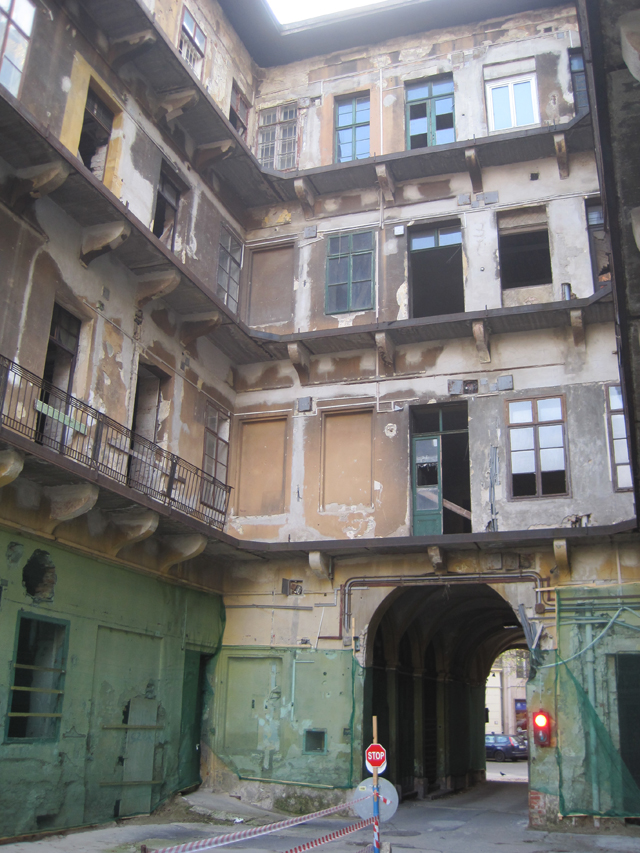
For three weeks I wandered around as in a hallucination, meeting parts of myself in buildings and streets that presented an alternative reality. Everything was familiar: nothing was specific. The buildings were still scarred by war and revolution, the courtyards were still open. One could wander into tenement after tenement and sense the distinction between the private life of flats and corridors and the roar and cries of the street. One could unpeel the city like an overripe fruit. 

Three longer poems resulted from this visit which in effect changed my life.

The first was about the courtyards themselves, the interior spaces of both physical and mental worlds. It was about their history. 
So much stucco had fallen outside and in the stairwells, so many statues were broken on the facade. So much had happened here. So much anxiety, fighting, death and survival. I wanted to register the texture of walls, the light on the third, fourth and fifth floors, the sound of steps along the inner corridors, the radios, the clanking of saucepans.  

One of Magda’s old friends, the plumber’s wife, now widowed, had lost her sight and had to creep along the fourth floor corridor holding on to the rails. She would drop us the key to the lift by feeding it down a long piece of string that was just long enough for us to fit the key in the lock. Her aged brother lived with her. Their flat displayed a few small porcelain figures from before the war: coy shepherdesses, bold twisting nudes. The bathroom and kitchen were rudimentary. She asked us to bring instant coffee from England. This was their world and had been hers too.

The second was entirely about her as a photographer. I watched her touching her skin, checking the camera in its case, preparing to go out, and catching a last glimpse at herself in the mirror before making her way out into the snow. I sat behind her ghost on the tram and trailed her down the street. My ghost addressed and interrogated her ghost. ‘Where are you going? To work? I’m watching you. / You cannot get away.” I got her to pose for me:

….Please
Co-operate with me and turn your head,
Smile vacantly as if you were not dead
But walked through parallel worlds. Now look at me
As though you really meant it. I think we could be
Good for each other. Hold it right there. Freeze.

I was David Hemmings in Blowup, bestriding her, turning her own camera on her. I accused her of lying by employing hand-colouring. I watched her work at it. I lost track of who was subject, who object.

I go on taking pictures all the same.
I shoot whole rolls of film as they shoot me.
We go on clicking at the world we see
Disintegrating at our fingers’ ends.

It was like being shot.

In the third I transferred her to England, not to where she lived but where we did. I imagined the floor of the local church opening up like black ice to reveal the dead swimming in vast shoals beneath. I recalled those who had been shot into the icy Danube in the last months of the war, the statues of whose shoes are now lining the Pest bank, among whom there was one girl, shot and disfigured, yet surviving the water and making the other shore, a girl who actually existed and about whom I had read before leaving for Hungary. She too was one of the shoal beneath the church. But what language did they speak down there where whole families were interred, some in childhood, some in great age? How did they communicate?

Metro, and her removal from the city came later, with more apocalyptic images, of a whole underground city, of passengers waiting on platforms, with individual flames above their heads.

One of my most abiding fantasies was conceived at this time but not written down for another five years. In it she returns from work and begins to climb the stairs in one of those scarred tenement buildings that is home to her. The front of the building is decorated with plaster statues, caryatids, allegorical representations and so forth, mostly blown away, missing heads and limbs. She stops at the door of the flat, takes her key out and lets herself  in. She puts down her bag and takes off her coat but instead of sitting down in a chair carries on walking through the wall until she emerges as one of the plaster statues. At that moment I realise all the statues were tenants once, that Budapest is absolutely crammed with statues that were once people, people who had simply walked through the walls and become stylised allegorical figures, that this was their fate, hers, and mine too come to that.


There is an Ancient Greek figure called a psychopomp, a kind of spirit or angel or other being whose task is to conduct the living into - and, with luck, through - the land of the dead. Charon and Hermes are such figures and Virgil performs that function for Dante. These creatures can take various forms; deer, dogs, horses, crows, sparrows, owls. They provide safe passage. By 1986 Magda had become my psychopomp to Budapest. She would provide safe passage. She had to. After all she was my mother.

Metaphors and metaphysics. Like each great city in its own way, Budapest is a metaphysical smell. You smell its being as soon as you enter it. It’s not like Vienna or Prague or Paris, let alone London. It’s not just the buildings, but the scuttle and hurry of it, the noise it makes, the wild gestures combined with the ‘fuck-you, what do I know’ shrugs. There are the bitter jokes, the hunched shoulders, the impatient glances of intelligent eyes, the learned and cultivated charm, the peculiar squalor of its poverty and the vulgar display of its wealth.  For Magda, as she was then, it is 1940. In Budapest there is no war, not yet, but a coldness that has been creeping through the city for twenty years has now reached the critical point. There is ice in the heart and scorn in the eyes. 


Sunday, 24 July 2016

Small shards of clear or coloured glass


10:23. Bells ringing in the abbey, the sun chalky, a light fitful breeze. Last night to the Gatehouse Press launch of Dark Pool Ripple by Mike Saunders together with five other readers, including three I had taught: Angus Sinclair, Laura Elliott and Edwin Kelly, as well as two new to me, Isabella Martin and a young woman whose name I didn't catch. 

The fact is they and the audience were all young, perhaps just five or six older ones in the audience, including Clarissa and I. Very few of the readings were straight poetry and all read firmly hybrid texts that begin somewhere, move through a list of images and ideas, then stop. The poetry is in the nature of the hybridity, the language now concrete and sensuous, the next abstract and conceptual.

This was particularly the case with Dark Pool Ripple, a pamphlet, it was explained, primarily about finance. The reading of the text was colourless, a deliberate choice I assume, since in between the texts the address was informal, funny, self-deflating and intimate. I found it hard to be drawn into language as thoughts about financial concepts and thought more about dark pools than markets. But that is the nature of the pamphlet and, presumably of the mind that created it. The programme of the pamphlet is clear enough: it is a criticism of neo-liberal economics, and that is enough to draw sympathy from everyone present and all its likely readers. I'd find it hard to imagine a poetic text in favour of it. This was a way of using its own terminology against itself.

The support readings, though short, sang more clearly in the naked ear. Fascinating to hear the old students, all three of whom have gone on and are continuing to publish. They too read hybrid texts moving easily yet abruptly between registers, some notational (Laura), some more conceptual (Angus), and some visionary and, in this case, directly related to specific experiences of nature (Edwin) but none of them exclusively in one key.

All the readings showed evidence of theoretical sophistication. It was, in some respects, the theory that produced the hybridity which is itself partly a distrust of the lyric voice as engaged in the lyrical text and partly an echo of the manner in which information now reaches us. The self is displaced, or rather pushed a little off-centre together with what the self conceives as an integral field and we end with small shards of clear or coloured glass.

Dark Pool Ripple was on sale alongside Edwin's And After This I Saw, his selections from the work of Julian of Norwich. That had appeared two years ago while we were in Singapore so I had completely missed it. Finding both him and the pamphlet there seems=ed part of a series of coincidences whereby our dear friend, the Japanese poet, Mariko Nagai, currently resident in Norwich is researching Julian of Norwich, and another old friend Sally-Ann Lomas has just had her documentary on Julian shown on BBC4.  All this had sent me back to Julian too. For further reading around Edwin's work with Julian see here.

So Julian is in the air.

Saturday, 20 February 2016

Une Semaine de Bonté: A Week in Papworth
Conclusion


from Max Ernst: Une Semaine de Bonté


I have been out of Papworth for a fortnight now, so am just one-sixth of the way through a twelve-week convalescence process. I am still very limited in scope. The potential problems are increasing the swelling on the leg by sitting too long or standing too long (ie working at my desk), the disposal of a residue of water on the lungs that makes me cough, which in turn can prevent me talking and, more importantly sleeping, for which I take water pills, and managing the the periods of exhaustion after relatively little activity.

I was glad to leave when I did. It wasn’t that there was anything wrong with Papworth but I was increasingly aware of being enclosed and of becoming a little stir-crazy. The closer to discharge date it got the more I wanted to leave even while knowing that I wasn’t quite ready. In the event I stayed one extra day because of irregular heartbeat (treated and cured with an extra day of drugs). 


During my time I found myself admiring almost everything about Papworth: the people, the routine,  the efficiency, the fascination of unfamiliar company. I have a paragraph in my notebook about the hospital as a model for the world. In it, everyone is working to the same end, everyone has a mutually supporting role, Everyone is sympathetic. Everything works across normal borders of class, language, culture, and politics. It is, I write, like entering a hive in a dream.

The only problem is that the conditions necessary to bring this about are indivorcible from the prospect of death. We are all there either because we are in danger of death or because we are dealing with the danger of death. The brevity of our stay there is a symbol of the brevity of our lives in general.  It is, essentially, a society that only functions in extremis. I never once dwelt on this, and not once did I think I was going to die, but there was no escaping the fact that it was the reason we were all there,

*

You want out of Europe? I’d say some 70% of the staff were European. One morning my bed was being made up by a Hungarian and a Greek. There were Kosovars,  Latvians, Portuguese, Italians, Spaniards, and many others. Like airports, railway systems, and many other public services, the hospital is a microcosm of the reality we actually inhabit. The microcosm is not of the neighbourhood but of everything that sustains the neighbourhood. That does not make it Utopia but it works and it is, in its own way, a vital, exciting place, constantly stimulating.

The main language of the hospital is English of course, but there are three varieties of it in use..

The first is that spoken betwen staff. It is the language of precision, the right dose of the right substance at the right time. There are proper names for things and processes without which chaos would ensue.

The second is the language of common conversation, generally between patients, which is, sometimes, hedged in by sensitivities and proprieties, but can at other times be direct in a way that it might not be outside.

The third is the informal language of staff to patient. I was re-watching Dennis Potter’s masterpiece, The Singing Detective, a few weeks ago. Potter’s central character, Philip Marlow, is suffering from acute psoriasis and rails against the patronising baby-language in which the doctors address him feeling that it is a reduction of his humanity.

I now see it a little differently. I have already mentioned the ordinary, indeed regular, terms of endearment addressed (chiefly by the female staff) to us as patients: darling, my lovely,  lovely, sweetheart, beautiful...These were everyday tokens of our relationship. I didn’t ever mind it. It seemed to help both parties. These symbols of affection and intimacy braced us against the more brutal aspects of the mechanical process.

There we lie, we patients: slumped, cramped, bent, straightened, prodded, pierced, racked and retching as in a play to which we ourselves are audience. We watch our bodies that are no longer our bodies, not the ones we had got so used to. We are semi-detached creatures.

*


Dennis and I were talking about the NHS. He is easily wealthy enough to have gone private but opted for the same care we all get. He wants to save the NHS. It is people of our age doing it in, he believes. On the other hand, he continues, it is also a monstrous bureucracy that should be broken up and parts of it privatised for greater competition. That is already happening, isn’t it, I ask. The man continues suffering. We live in the shadow of death, I think, and that keeps us talking.

One snippet of conversation between a new patient, Bill, and a nurse checking his details.


Nurse: You say your height is 5’8”?
Bill: 5’8 and a 1/2”
Nurse: Age?
Bill: Fifty-four. Just.


*


Clarissa comes daily. One day she brings old friend, Ed, and I am immediately in full loquacious flow, somehow super-articulate. I talk about the books I have been reading, about Demis Johnson. Robert Walser and Evelyn Waugh, about the hospital, about anything at all. I do this for about half an hour then blow up. I start coughing and can no longer speak but have to go back on the nebuliser.  So good to get out of the hospital ambit for a while. It is all too exciting. Ed has brought enormous strawberries and custard apples. Later I offer the strawberries round.

The biggest decision I make while there is to shave and to eat a proper breakfast. That done I am back partly in control of my own life. Or at least in so far as one ever is.

I have titled this series Une Semaine de Bonté after Max Ernst’s surreal frottages in which he blends parts of popular engravings to produce narratives that seem oddly familiar in terms of feeling while remaining utterly fantastical in terms of concrete imagery.  Une Semaine de Bonté means, literally, ‘a week of kindness’.The week is over. Now the recovery.


Friday, 19 February 2016

Une Semaine de Bonté: A Week in Papworth
Who are we: Staff (2)


Dennis had a particularly trying time on my last night in the ward and Luiza was on duty. I thought Dennis was going to die but Luiza was a scornful of my concern. Dennis, as it happens, was running a high temperature and was delirious. During the night he wandered over in my direction and took the top off the central heating radiator then sat down on it. What are you doing, Dennis, I asked. A poo, he answered. The toilet is just outside the room on your right, I said. Right-ho, he said and set off in that direction. Over the rest of the night he was seeing a succession of doctors who examined him and pumped him full of anti-biotics.

I had two physios, one English, one Mexican. One had glasses the other did not. The Mexican with glasses, Fernanda, told me she was a writer. What do you write, I asked. Short stories, magical but material, she said. Do you mean Magic Realism, I asked. Yes, she nodded so I talked a little of Hungarian proto-magic realism, particularly about the Sindbad stories of Gyula Krúdy. She listened and made a mental note. I did three or four laps of the ward corridor with her and clambered up and down stairs.

The other physio, Alice, was cheerful but firm as she taught me ways to breathe, to march on the spot, and to extend my arms into the air, then reach down towards my knees. The more the better, she said. A mile a day, or half an hour at least. It seemed a hard command. Twenty laps of the ward, she demanded when I had only ever done four. But my blood pressure rose and my heart rate became irregular so they dosed me for that and 20 laps became 8.

*

Of the night nurses Melanie was my favourite, A tall, blonde, slightly gawky girl, she tried to help me and give me whatever I needed. She’d stroke my arm and call me my lovely, and my beautiful. Everyone else did that of course - it was the social language of the hospital - but, in her mouth, these things sounded different and had another dimension. It was not that she treated me like a special case. Everyone was special to her, it seems. She loved what she was doing, she said.

We had non-business conversations. Her first degree was in Graphic Design, she told me, but after a year or two's work in that field, she decided to retrain as a nurse. Her father, a headteacher, was not pleased about it but gave in at the end. In the meantime she had formed a long term relationship. But that broke up as she came to Papworth so she was living in nurses’ quarters now. She’d had a house and felt foolish selling it.

It was the non-essential things, as ever, that made the difference, especially in my half-hallucinatory condition. Her sense of generosity and interest mattered to me. Not that she asked me anything about myself. I was asking the questions but she was willing to wait, answer, and talk. It was she who removed the catheter.

When she came on duty one night she took a look around. Men! she snorted. It was not as clean or tidy as she would have it. When I come back I am definitely coming back as a man! But then when a female colleague was nagging at her and fretting she turned to me in confidence. Bloody women, they never stop whining, she said.

She had a great many other people to see in the course of her work. Her shifts, like everyone else’s, were of 13 hours duration.When she went home, especially after night duty, her routine was to go to bed and stay there until it was time to come in again. On her penultimate night she had given up her day-shift sleep to baby-sit for a colleague.

The night she clocked off - my penultimate night - she kissed us all a fond and proper goodbye but immediately returned,  hauling Mark and Atilla by the arm. Mark had said he would wash my hair the previous day but hadn't done so.  You are my witness, she told me, He is to wash your hair, is he not Mark? Mark looked awkward but smiled and said OK. Then she gave both Mark and Atilla a hug and executed a splendidly gawky dance out of the room. I didn’t see her after that.

There are times any patient feels needy but is too proud to say so. I was too proud myself. The vast mechanism of the body - I mean my very own body, the one standing and typing this - combined with the mechanism of the operation and then of the immediate mechanistic period after in hospital - is constantly detaching tugging away from self. The body becomes an it that is the sole concern of the hospital. The patient watches it behave or misbehave. There is a sense of both wonder and desolation about the detachment.

The spirit has wit and affections and interests and obligations. The body is, as Delmore Schwartz had it,' the heavy bear who goes with me. ' In whole life bear and self are one. In hospital the body is almost all.

One more post to come on this subject.