Tuesday, 7 July 2009

With guitar


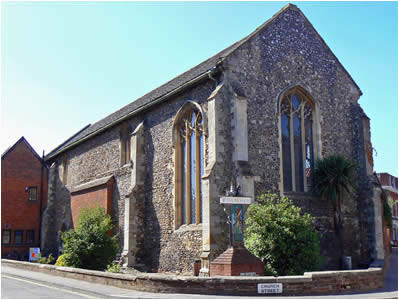
C has now sold 11 (eleven) works at her exhibition. That's better than in London. Last night poetry and music in the chapel along with the art. Reading with Esther Morgan and Keith Chandler, the music by Andy Kirkham, who sounds like this (It's MySpace, so pick your own). Given the right amount of reverberation in a medieval chapel the guitar fills it like water fills a bowl. Meanwhile rain and thunder outside, just a little. The whole a touch impromptu, everyone performing free to draw attention to the chapel that might be converted into a centre for arts of various sorts. Chapel as below:


Handily next to pub, as below:


Further encouragements from people to put myself forward for the Oxford Chair. I am extremely flattered and deeply uncertain.

Otherwise working at home, translating and writing and trying to catch up with countless commissions and commitments.

This is one of the duller entries. Mind in too many places at once.


Monday, 6 July 2009

Apropos teechers


Couldn't resist this, having found it on the web. Messrs Miles and Abrams, the latter of whom taught me Latin. The eloquence of photographs: it is as if time itself were curling in the autumn rain.


The weekly Latin vocab test. Mutual marking. Call out your scores. Decem? Bene. A certain torpor. Ink smudges and graffiti on the desk.


A Neat Segué


Yasmin Alibhai Brown in todays Independent argues for limits on freedom on the basis of this case:

Libertarians and free expression campaigners were jubilant last week. An obscenity case was due to be heard against Darryn Walker, a 35-year-old civil servant who had posted an essay on a website, titled Girls (scream) Aloud, imagining the sexual torture and mutilation of the each of the women who make up the pop group...

She carries on

...In his fantasy, they are slashed and dismembered and, according to Don Grubin a consultant psychiatrist, the singers "are sexually aroused in spite of and, indeed, because of the humiliation, pain and domination". This apparently modern erotica known as "popslash". Cool, man.

The case was dropped and is celebrated as another important knock-back for censorship. Sadly I felt unable to join in with the good cheer. Something is deeply troubling about the validation given to Walker and those who think they have the right to say whatever they wish and excitedly share with others the thrills of extreme violence against women.

The formidable Geoffrey Robertson QC (who rose to fame fighting the case brought against Oz) is very pleased indeed. Jo Glanville, editor of Index Against Censorship (an organisation I support but not blindly) righteously asserts: "The prosecution should not have been brought in the first place. Since the landmark obscenity cases of the 1960s and 1970s, writers have been protected so they can explore the extremes of human behaviour. This case posed a serious threat to that freedom."

And then a fascinating shift:

Hmmm. Is that so? So If Walker had written, say, the same fantasy but on the sexual torture of Anne Frank, would Index have backed him? Or if a wannabe Muslim fiction writer had done the same, would he have the right to "explore the extremes of human behaviour"? I hope the answer to both these hypothetical questions is No
.
From Girls Aloud to Anne Frank. I am not sure of the rhetorical term for this kind of contextual shift but the argument is chosen for a reason. Anne Frank? Jewish, wasn't she? Gets special protection for reasons we all know. The case regarding the Muslims takes off from there. Jews protected: Muslims persecuted. Now, how did we get here?


Sunday, 5 July 2009

Sunday night is... Lunatics


As has ever been the case.

*

Long drive to Chepstow yesterday for the reading, staying at kind hosts' W and J's medieval gatehouse, up three floors by spiral stairs, with extra ladder to tower from where grandiloquent view of all and sundriest even unto the old Severn Bridge. Mullions, transoms, passages, the whole reclaimed from sixties updating of sixteenth century and before.

The reading with Samantha Wynne-Rhydderch. This has been a week for reading with two outstanding younger female poets and I expect Wynne-Rhydderch soon to be at a peak similar to Jen Hadfield's. Where Hadfield is precise, liturgical, visionary and roguish with her language in a post-Edwin Morgan Modernist manner, W-R is passionate, funny, wickedly sharp and tragic, somewhat in the bardic tradition. It was quite marvellous reading with them both in their different ways - as indeed my own way is different from either's. Both sets of readings worked very well as a pair. I left both feeling happy. Both places were good places to be.

This is not a review or a survey, just notes, but if I were writing an essay I would try to explore the poetry of the younger generation of female poets whose work is now, in many cases, independent, beyond polemic or conscious self-assertion. The subject is not 'being women': it is nature, or history or incident, but the voice is a female voice being itself. W-R is older than Hadfield, a sort of 'older-sister by a few years' older, but still very much the same generation - my children's generation. Both write out of a sense of independence as poets. As persons too they are independent. I wouldn't use terms such as 'post-feminist' because that implies something specific, something more directly political, something less to do with the quality of their poetry, than with an argument that may or may not be proceeding in their own minds. Impossible for me to comment on that.

Poetry and politics are not, of course, entirely distinct fields, but good poems are not illustrations of political positions. The positions embedded at depth in them must float on language with the openness of a language that can never be certain of itself, because uncertainty is its very essence. That uncertainty cuts left as well as right. But it can shimmer and sparkle and sing in all its multifaceted uncertainty and it can rise out of conviction. The higher the tightrope, the fewer the nets, the better. The world in all its power and complexity is the ground beneath. We can never forget the ground.


Saturday, 4 July 2009

Teechers - a rant


Isn't it interesting that as the statistics of exam success rise each year and as the chorus of governmental self-congratulation grows ever louder, that we now have demands for a 5-year MOT for teachers? I asked C who still teaches a day a week in school what she thought of this. She said she would resign immediately. It's exactly what I would do were I still teaching in school. And we had it easy. Our pupils could be unruly at times but they never threatened or attacked us and neither did their parents, which is not an uncommon occurrence in some places. In fact - to go by letters from past pupils - we seemed to have made a decent job of it.

And I must admit that is what it was to me - a job. Unlike some, teaching is a job where you immediately know whether you are doing it well. The class is like a theatre audience at the Restoration period. They are most palpably there: they are both actors and audience, fully equipped with personalities (and weapons) of their own, some positively bursting with personalities that do not necessarily want to be right there, right at that moment. I say teaching was a job, not a vocation. Doing a good job meant making it seem like a vocation.

We were indeed lucky to work at places that were sometimes lively and unconventional. Others - a great many teachers - are not at such places. They are at places where the odds are very heavily against them. It takes considerable energy to fight those odds, much more energy now than it did when C and I started. The bullying school curricula, the pressure of league tables, the collapse of families, the growth of the short-attention-span culture and entitlement-culture and litigation-culture, the endless soul-destroying administration, the periodic panics and paranoias about whatever social evil is currently perceived to be the greatest, the prevention of exciting activities once thought natural because of worries about health-and-safety. And the endless, termly, quadruplicate / quintuplicate checks that you are doing your job half-way properly, and half-way honestly, that is even when all four / five constantly proclaim you are doing it outstandingly well.

I had it damn easy. I didn't even have to prepare lesson plans. There were (gasp!) teachers who smoked in the staff room. There were fewer meetings, fewer public presentations. There was no physical punishment but I could break up a fight by physically lifting one child and placing him at arm-length distance from the other. There were sports fields, and while there wasn't always a theatre there were plays and music and art and - crucially - time for these things.

But time moves on. Even at the very good university where I now teach stately-plump-Buck-Mulliganly two days a week and speak softly without any need for a big stick, or indeed any stick; where I am fortunate enough to talk to students who happen to have come to my class because they are interested in precisely what I am interested in, I think I am doing more admin than I was when full-time, head-of-department in my third school (the first two were for just one year each).

So it grows. And the government (whichever government, it doesn't matter, as long as they don't have to take the blame but can find someone who will and cannot fight back) piles on the changes at school level so teacher can't have a decent run of years to perfect something, but have to jump in time to government's own rapid knee-jerk. Nor does that knee ever stop jerking.

And then it praises the results (ie praises itself for producing them) fiercely defending the results against any criticism because any criticism is "an attack on the hard-working brilliant students", and it buggers up school reform time and again. And then it says to the teachers - many of whom they have had to bribe to enter the profession - Still not good enough, we will have to pillory you again and punish you still more severely, you bunch of incompetents, who have nothing to do with producing our wonderful results but have everything to do with any every social ill, for which you bear full pastoral responsibility.

There is exhaustion, of course, as how could there not be given the circumstances? C's suggestion is to give teachers a sabbatical every seven years so they come back refreshed. I do not imagine, not for a micro-second, that this will ever seem even vaguely like an idea to either possible government.

And whichever govenment it is it will be composed of the selected elite of the famously straight, utterly competent bunch of public representatives with their famously honest approach to private expenses, not to mention their great support for education, education, education that entails shutting down as many means of adult education as possible. Deplorable bastards, I sometimes think, though I defend public representatives generally if only because someone has to. Deplorable sellers of snake-oil. Except there is no oil, only snakes.

Teachers are fallible, of course, and some really can't manage. Most do though. I think of them as a heroic band who never get called heroes, a bit like 'Tommy' in Kipling where it's "...thank you Mr Atkins when the band begins to play."

The band just carries on playing and it has long been out of tune. (Picture (via)...

*

Talking of theatre and actors, my first mentor, Martin Bell, used this epigraph from Wallace Stevens for his Collected Poems of 1967.

To know that the balance does not quite rest,
That the mask is strange, however like.


Philip Larkin said he didn't do more poetry readings: "Because I couldn't go round pretending to be me."

True. I heard and introduced Mr P. Muldoon last night. Thus it was. The mask firm. The constant on-stage of literary history. V. funny, very snake-oil in "inverted commas". Otherwise the Muldoonian collisions of chance and reading.

There (ah, the social calendar! my very own Jennifer's Diary!) I meet M. and Mme. Schuchard of Emory fame, whom I last met in Dublin eight years ago. And dear Judith P and lovely Anne-Marie F. And Sarah whom I had met at Cambridge. And Mr Brian Docherty who once enrolled on an MPhil that started and vanished before it had a chance to grow even into a toddler with reasonable prospects. And a lady from Amerikay who reads my poems, and Will, also from the USA who actually had a copy of Reel in his hands to sign (for Will and Alison) and Robert (was it?) from the BBC, or rather ex-BBC ,with whom a nice last conversation about literature on TV, but particularly about the endless interest of faces, viewed unflickeringly, un-tricksily, head-on on a TV screen, who was very nice and who sometimes reads this blog. Please drop me a line and let me have your name again. It was good talking to you.

And so exit your correspondent, dressed fetchingly in suit of light material but of dark colour, in new shirt with white collar and some kind of faintly bluish pattern otherwise (dead cool, like you wouldn't believe!), and black suede shoes with red socks. No tie, alas. Exit, and home by midnight on the stroke of which suit magically changed into humble poverty-stricken nightwear. So relieved I wasn't wearing nightwear in such glittering company.


Thursday, 2 July 2009

Exhibition, excursion, ex-train robber


Clarissa Upchurch: Houghton Hall, conte on gesso paper


Hot, short and all too long days. This is my one day at home in many, too many to count. Tomorrow to chair a meeting at the university then straight down to London to introduce Paul Muldoon and then say something on behalf of the PBS at the Eliot Summer School that has been fully illuminated by luminaries of both poetic and scholarly persuasions. The days after they are jaunting to Little Gidding and to Burnt Norton. I myself will be in Chepstow reading with Samantha Wynne-Rhydderch, whom I have heard read as guest for the Arvon Foundation.

I am no fan of heat. I go with Frost on this one;

Some say the world will end in fire;
Some say in ice.
From what I've tasted of desire
I hold with those who favor fire.
But if it had to perish twice,
I think I know enough of hate
To know that for destruction ice
Is also great
And would suffice
.

Desire and hate? All I know is heat makes me sluggish in brain and nerve and muscle. R and H had spent the night with us and I dropped them at Wymondham station so they should get a train to Norwich, thence back to London. Within quarter of an hour of leaving them H called. Their train - hence their connection - had disappeared into thin air along with the sign on the electronic sign board. So out with the car again and dash up to Norwich, just in time to catch the train that, presumably, did leave on time. Then into Becket's Chapel to help Clarissa (see picture above) tidy and clear wine glasses etc from the opening of her exhibition. The rest of the time busily correcting proofs of The Burning of the Books and Other Poems, just ready.


Ronnie Biggs, train robber story on radio this morning. I'm for letting him go. Mere vengefulness to keep him in prison in feeble old age. Currently he's in the local hospital with practically no mechanical parts of him working. Jack Straw. With a name like that he'd burn easy enough if it grew much hotter.


Wednesday, 1 July 2009

Back from... and back to...


...er, Dove Cottage, reading with Jen Hadfield, which was a delightful experience. Jen's voice is a thing apart, so full of relish for language and a close, almost religiously close, eye. And there is the incantatory quality which is exhilarating. I enjoyed this reading as much as any I have done in recent years. And Emma Jones there, and Neil filming and recording. We had dinner then stuck around in the bar for an hour or so The bedroom lovely but hot. Like sleeping in an oven on very low gas.

Shown round the Wordsworth Centre in the morning - wonderful early editions, the spaces lovely and the rooms all air-conditioned and perfectly lit. I had been shown it before in 2005, when it was not quite ready, by the late Robert Woof who was to die before the end of that year. (I sat opposite his widow, the scholar, Pamela Woof, at dinner chatting about tragedy and The Winter's Tale, etc.)

The train back was a nightmare though. The first train from Windermere was late so I would have missed the connection at Oxenholme. Kindly Andy Forster dashed Jen and I off to Oxenholme. On track again, I thought, and in good time to Birmingham New Street. There, however, the train did not arrive when it was due to and there was no announcement, though there was, at same time a long stream of announcements about other trains of which half were apologies for lateness. Rail travel in Britain is truly an utter shambles. I cringe just to think of it. Some half an hour later there did come an announcement for us to dash to another platform. The small train was crowded out. Then a railman made another announcement, on board this time but without amplification, his voice lost in the hubbub, so he was almost 100% inaudible. People started rushing off again, back, it turned out, to the platform they had just left. But the train now waiting there was only as far as Leicester. Bound for Ely, I was advised to stay on, once I had found the railman with the announcement, despite 'technical problems'. The train half-empty now, it stood there another half an hour before setting off on its two and a half hour journey. Impossible to make connections now. Not a word of apology. Some three hours later we were at Ely where I had a twenty minute wait for the train after the one I missed.

The point was that C's show was opening at 6.30 and even if my train had been on time I would only have arrived about an hour later. Now I was two and quarter hours late. But the place was not quite empty - daughter and now son-in-law there as well as other good friends and some six pieces sold! In celebration six of us troop off to the Indian and now I am so exhausted I am practically asleep as I type this so there are bound to be typos to be picked up and corrected in the morning.