
Tuesday, 19 January 2010
Lost Weekend
Not an alcoholic haze, just the usual clarity - as far as anyone can judge their own clarity. I didn't win. So where are the wounds? some will wonder. The stigmata?
No stigmata as far as I am aware. A little catechism:
Would you prefer to have won? - Naturally. This was not a competition for sainthood.
Did you expect to win? - No. Nor did I the first time, or indeed ever.
Did you think you had a chance of winning? - Yes, at least 10/1
Did you think you had a good chance of winning? - Quite possibly. At least after the readings on Sunday night, while knowing full well that the readings are very secondary (if they count at all) in the judging process. It's books not readings that win this prize.
Now let's ask something more difficult. Do you think you deserved to win? - I have never had a firm idea of deserving. Furthermore, I even think that to have any firm ideas about your own deserving is a canker on your soul, deserving of contempt. Who knows how many of those cankers I already have. Don't want an extra one. As the greatest among us said, 'Use every man after his desert, and who should 'scape whipping?'
Are you not in the least disappointed? - Damn fool question. Of course, I am, as is only befitting. But look - examine the wounds of the committee of the self. Call that a wound? I am a very fortunate man who has 'scaped a whipping most of his life (and has a deeply ingrained notion of what whippings exist and have always existed). Indeed, I have actually won this very prize. I have been nominated for it a second time. If ten or twenty years ago anyone should have suggested any such thing I would have been astonished. I have no right to wounds of any sort. I prefer to wear my heart light, thank you.
And the result? - Delighted for Philip, one of poetry's good men. Was he better than the rest in my opinion, you will want to know? I don't know, is the answer - all I do know is that Philip is very good, as are the others on that list. I do know I have always thought myself, primarily, fortunate to have won in 2005, and am very glad that the luck I enjoyed in winning should have passed to Philip. I think it is a good redress for some years of very unfair neglect for him. That sounds like a form of deserving to me. It's the best any of us is likely to get.
Can we end the catechism here?
I loved the readings on Sunday night - for myself as well as for the others. I am deeply aware of the omissions from the list but I did think the noise made by all the poems together at the QEH that evening was memorable and grand and intense and deeply hopeful for all that poetry can do and might do.
So, God bless us all everyone. Now go about your business in peace, but delight in argument too, because argument too is a delight.


Monday, 18 January 2010
Brief from London by iPod
Reading at QEH last night - one of the most electrifying I've attended. Place packed out. Some of the poetry quite marvellous. It will be a hard job for the judges today at lunch (that's when it happens). First time ever heard cheering - including for myself. Afterwards the book signing Jude Kelly offers to take poets for drink but everywhere shut. Hotel room tiny but C and I fit in and fall asleep fairly quickly.
Today busy - exhibition, lunch with children, coffee with friend then, in the evening, the announcement of the Eliot Prize - and the scramble for the train home.
Saturday, 16 January 2010
Disasters proper
When it comes to the scale of Haiti, or, before, Phuket, or all the other places where a catastrophic event - an event that within a year is half-forgotten - overtakes a more than comprehensible number of people at one time, our consciousness takes a severe jolt. I speak for myself only, as ever, but I suspect it is the case with us.
Because, in the first place, it is a little like having a limb, a small limb, of the body sapiens actually removed. We experience it as a loss to ourselves. The number is that significant. It is not that each individual caught up in the disaster feels it more acutely than he or she might if it had happened to a smaller group, or indeed just to the individual. That seems unlikely. Do we say to ourselves: I am part of a universal disaster? Or, The whole damn ship is going down and I amongst them?
I did dream once - maybe more than once - of being caught up in a disaster. Apprehension had thickened to knowledge.It was dusk. There were silent groups waiting in public places for their doom, and they weren't welcoming, and yet they would have been congregating for a reason. Maybe it offered some melancholy comfort. (Some of this dream material surfaces in the last section of 'An English Apocalypse' series.) In the dream I was aware of those others but I did not think they were either a comfort or a threat to me. Their very clumping together seemed an important aspect of the melancholy. The uniting factor was, after all, the common knowledge of impending disaster. No panic, just an oppressive melancholy.
Do we each die alone? Is that the sensation? Does it help to have a companionable death or does it make death worse?
Nobody knew they were going to die in Haiti. It happened too suddenly. The mind has only very little time to adjust to the disaster. A moment or two of panic. And then, if one has survived, the seeking of a way out back to normality, a way that might or might not appear.
Part of us - for 'us' please read 'me' if it doesn't suit - lives in the consciousness that disasters happen, almost inevitably, in disaster-threatened places. Geological fault lines. Volcanoes. Lands prone to flood or famine. Desperately poor places. Places with a long history of war. If the disaster is on large enough scale it appears we lose a limb, but it's a limb we can afford. We give money to help what can be helped. Within a month we are back to normality.
It is the puzzle of vast numbers. I can image 200,000 in a stadium. I have seen 200,000 people gathered together for a political purpose in a vast square in Budapest. It did not seem in the least likely that there would be large scale loss of life (say 25, or even 100) that day, though we must all have been aware that 200,000 people gathered semi-legally for a political purpose is a riskier option than attending the Maracana Stadium. We are aware of risk.
I cannot comprehend Haiti. I couldn't comprehend it before either, but now it has a meaning that is incomprehensible in a parallel fashion. Now it does feel as though I have lost a limb - a finger, or just the end of a finger - and I know it will grow again but the shock of its vanishing remains.
Friday, 15 January 2010
Eliot Weekends and Márai Years

The Today programme has been broadcasting a poem each from the shortlisted poets. They've got through six so far. I will be either tomorrow or Monday morning, but we'll all be there for a little while. On the Today website you get us all reading three poems each. I have yet to work out what to read for my eight minutes-worth at the QEH itself. Something to do tomorrow.
The readings happen on Sunday at the Queen Elizabeth Hall on the South Bank, and the presentations on Monday at the Wallace Collection (though that's by invitation).
*
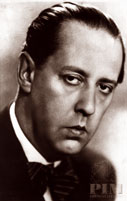
Having finished the Márai translation only means I have got to the end of the Hungarian - now comes the comb-through for evenness and energy of style, for consistency, for tone, for the humble typo. It's my favourite part of prose translation - it's where it should become fully literature. That becoming is a fascinating and problematic process, because the literature it is becoming is, of course, English literature. It is already Hungarian literature and nothing I do can change that.
But best be careful! The novel becomes a special sort of English literature, much as Cervantes, Dostoevsky, Chehov, Sebald and all the rest become special sorts of English literature - in the same way as Hamlet in Hungarian becomes Hungarian literature.
Languages are broader and more generous than we think. Our cultures are not locked away behind barbed wire fences, nor are our literatures and languages. Qualities and characteristics persist. An elegant Hungarian sentence will share something of the elegance of an elegant English sentence. An abrupt sentence will remain abrupt. The characters we meet in fiction act and think in ways that refer primarily to their immediate surroundings, but they are not antenna-sprouting exotics. They are recognisably human beings.
Prose is a more international realm than poetry. It does not depend quite so much on density, form, metaphor, association and minuteness. It doesn't lie quite so close to heart of language. It travels further in straight lines. Broadly speaking.
So now Márai is being dressed and equipped to re-enter the malls, bedrooms, cafes, subways and libraries of the anglo-american imagination. Just an hour or so ago I was having an exchange on Facebook with an Italian scholar who had read this book in an Italian translation. She told me that, in the Thirties and Forties, Hungarian literature was much prized in Italy and that some Italian writers actually took on Hungarian names.
The glories of Hungarian romance! The pleasures of Hungarian wit!
Read Márai, and you too will want to become Hungarian. In your own English or American way of course. Márai did spend forty or so years in America himself.
My task is to try to be of assistance to him in his accommodation. And it's an exchange of sorts, even if it's one that is far from evenly balanced. Márai - in a tiny, all but insignificant sense, becomes me and I become Márai. Soon it will be Ciao, Márai. Arrividerci. Jó éjszakát, Night night.
Márai was the morning. This afternoon I was back to judging competitions and writing references.
And now, since last night was not good for sleeping, I am going to bed.
Thursday, 14 January 2010
Márai finished & Two Birthdays

At long last!!!
More on that later. More on many other things but, as celebration, two small birthday verses, one for son (New Year's Eve), one for daughter (yesterday). Son Tom (aka Shurikan), gallivanting and gigging in Brazil. Daughter Helen, with child. Lightly, lovingly trots it.
1.
The Ballad of Shurikan
for Tom
Out in Brazil on hot beaches
There labours a travelling man,
The music he preaches and teaches
Is moody and cool as Japan.
The name of the man - Shurikan.
In clubs in big cities, in danceland,
To those of a similar clan,
He’s bigger than rock or a danceband,
It’s the soulful intelligent fan
Who will pay to come hear - Shurikan.
He will travel the world in a plane,
In a limo, a train, or a van,
If you pay him he’ll come back again,
Since that is all part of the plan.
If it’s music, the name’s - Shurikan.
And can he keep up with demand,
And be bigger than when he began?
He’s free so he’s not to command,
But the answer is clear: sure, he can.
He is, after all - SHURIKAN.
2.
Now January
for Helen
Now the winter freezes up,
Now there’s snow under blue sky,
Now it’s minus, day and night,
Now the sparse flakes drift and fly,
Now the wind cuts icy trails
Through open spaces, down wide streets,
Now the ponds grow grey as steel,
Now the old year stops, retreats,
Now the belly fills with child,
Now the months troop by in frost,
Now that scarves and hats are worn,
And heels are scraped and gloves are lost…
So many nows all making then,
So many nights in the long dark,
So many lightbulbs turning on,
So many sparkplugs with no spark,
So much waiting and recall,
So much tomorrow on the line,
So much that passes, flashing, light,
So much to number and define.
Much undefined, much still uncounted,
Light grows faint against the cold,
With spring still distant but in view
Of face to kiss and hand to hold.
From child to childhood, back to child,
From song to words, from words to song,
From here to there in one slow leap -
And there you stand, grown big, grown strong.
Now there you are, and here the words
Set out in January ice.
Now there are almost two of you
What love can bring, may love bring twice.
Now to a restaurant! Wine, waiter!
Wednesday, 13 January 2010
Post-postscript from Marai

All day I have been working on Márai and am only ten pages from the end. In the meantime I sneeze and sneeze and sneeze again, possibly because I've got a cold (it feels a bit like a cold) or, more probably, because of an allergy. I suspect an allergy because a number of times I have started what I think is a cold, running, sneezing, red-eyed, but within a day it goes. In the meantime it isn't constant. It comes and goes. So now I have taken antihistemine and have some hope that all manner of things shall be well.
In this end part we are left with the drummer who had become the last lover of Judit Áldozó, the maid who married the young master, became a society woman, then, eventually, rejected society. When we last saw her she was delivering her story in the hotel room in Rome to her young, vain, and rather stupid lover. Her story is as extraordinary as her mind.
But then her story finishes and we are left with this coda. The young drummer is now in New York, some time in the seventies, I would guess, serving in a smart off-Broadway bar and that is where he begins his monologue to a customer, a fellow Hungarian newly arrived in the USA. He talks in Hungarian street slang some of which is genuine and some invented. My impossible task is to translate this not into British but American English. I am working on the assumption that the editor - or a friendly nearby American - will correct my feeble efforts. As it happens, this part is relatively straight.
The drummer is in New York because he skipped across the Hungarian border a few years ago, straight after being asked to file reports for the AVO, the much dreaded security police. He tells this story and that of his escape, his feelings presumably close to Márai's own, albeit more crudely expressed. After recounting his escape he starts reminiscing about Judit. We mustn't expect too much of him, of course.
The photo? It was the one in the passport, I’ve just had it enlarged. Where could she go without a passport? To join the angels, friend. You don’t need passports or photographs there. No jewelry either…. Take a good look at her. That’s what she was like. But not just like that. By the time I met her she was like a flower at the end of the season.
I don’t like talking about her. She’s been gone ten years. Soon after that I too said 'ciao Roma' and crossed the big pond. They say what’s gone is gone, why fret about it?.. Yes, but heaven knows it’s not always like that. Some things don’t disappear quite so easy… because this picture isn’t the only reminder I have of her. I remember more… her voice for a start. And some of what she told me. She wasn’t like the usual kind of woman I met. The rest have vanished without a trace. But I remember this one.
Because, as you probably know, with artists like me, chicks more or less just pass each other the house key. There were all kinds, I needn’t list them all. There were cute little thin girls. There were big ones. There were showgirls with boobs out to here, but also women with class, women with a position in life… women with taste who sensed their time was almost over, who'd grown wild and started firing on all cylinders… but, let me be clear, all of them wanted just one thing, which was that I should love and adore them, and only them, for ever.
This one was different. She wasn’t a bag of nerves. She told me straight from the start, no beating about the bush, that the only thing she wanted of me was that I should let her adore me. She wasn’t insisting on full blown romance with hearts and flowers… Cigarettes were all she needed, that is apart from adoring me and making a fuss of me.
At first I thought she had fallen for the artist in me. I’m not one to boast, I’m simply recognizing the fact that there’s something irresistible about me… especially now that I’ve had the bottom set of my teeth fixed. What you laughing at?...
As I said we don't expect much of him, but the book finishes with his words. And there's just a shade of Iris Robinson there, further news of whom seems to bubbling through the Austrian papers, according to Gwilym.
Tuesday, 12 January 2010
Postscript to the tragedy or otherwise...
We have been beating about the central bush in the comments to the last post, wondering whether the affaire Robinson can be described in terms of classical tragedy.
My essential conjecture was that the affaire may be perceived as a tragedy if we look not to the specifics of the people (she being hostile to gays, etc, and, as Lucy hints, who knows what we might discover about him) but at the specifics of the situation. That is the way drama works. We don't know everything about the characters involved in it, only what is necessary for us to apprehend the events as a drama.
The related conjecture was that certain things happen in what we call 'real life' that, in the way they unfold and in the choices they present, approximates to art; that if art is a mirror to life, the moment of the passage through from one side of the mirror to another is the tragic moment.
Once the characters are through the mirror they are no longer simply themselves. They are symbolic figures in the imagination. Something like this happened, I think, in the relationship between the life and poetry of Sylvia Plath. It seems, in some way, she chose to take the passage through. The figure we remember is the one at the point of crossing. That, at least, is the position she holds in the imagination. As for the reality? Reality is elsewhere, where it no longer matters.I have immortal longings in me, says Cleopatra in Shakespeare's play. Then she steps forward and becomes the symbol the play had been preparing her for from the start. That sense of stepping forward is what interests us. Not whether she wore green underwear, picked her nose, or was a bigot in the scenes we don't see. Or whether in real life she was everything art cracked her up to be.
But surely we cannot detach the persons from the symbols they become? No, we can't, but we strip them of everything but the choices they faced within the drama prepared for them.
*
This was going to be a short post but I can see it can't be as short as I intended. Let me start elsewhere, beat about another bush if you like, and try to find my way back if I can.
In the comments to the post below we were speculating whether Iris Robinson was in the grip of passion or was merely feeling - as Mark put it - an itch that she was arrogant enough to think she could satisfy without consequence. We tend to think passions are in some way grand and noble, whereas itches are there to be controlled. Ascribing passion to this woman, some might feel, would be to excuse her.
On the relatively ignorant but important instinctive level I felt this was a case of passion, not so much because she was having an affair (lots of people have affairs) but because she took the risk of providing money she was not entitled to so that the object of her passion could set up his life. If it was an itch, it was an itch gone mad. The risk she took seemed to me the act of a person out of control. Who, in any case, knows when an itch becomes a passion? I suspect it does so pretty regularly.
It takes two to have an affair. There is the object (in this case the young man, presumed handsome, vigorous and, above all, young) and the subject (powerful but aging, driven by furies - even bigoted furies are furies - that are frustrated). At fifty-nine the subject may be grasping at the last straws of youth. What began as itch could easily pass over into passion and madness. The ego is frail, the body is desperate for reassurance. All things pass. One would give anything to stop it passing. And people do.
We do not find Iris Robinson an attractive figure in life, but this is an existential predicament in which an existential choice presents itself in a form we all secretly understand. We understand it in so far as we understand the pull of desire and vigour and the fear of weakness, incapacity and death. We understand it but we cannot act on it, nor can we fully admit it. Life closes in and we don't want to be closed in but we have responsibilities, affections, security - love even. And still we feel closed in. That, we suspect, is our greatest given existential predicament. Our truths pull us two ways at the same time. The tension is intolerable, so we act as though there were no such tension.
How do you become brave? someone asked. You do it by acting bravely, came the reply. You act. You act as if. You assume the form of your aspiration. You don't even want to know you are assuming it. You want to become, and may become, the thing itself, But the truth of the tension remains. It rolls in waves under dreams and produces shadows and myths.
In tragedy the choices we reject becomes choices that are accepted. That is what the figures in tragedy are there to do. They are there to accept what we reject. This isn't just a matter of criminality. A criminal's arena of choice is a mean little place we wouldn't want to enter most of the time. The arena of passion is different. There the choices are not so clear cut, if only because they are passions, not social ethics. There the ghosts under the waves are larger, the shadows bigger, the figures through the mirror more haunting and imposing. Desire, terror, and power are the big figures in the big arena, and maybe desire - for a while at least - is the biggest. Out of those figures and the spaces through which they move - their arena - we make art. The arena is the poem, the story, the drama.
We know transgressions carry danger. Here, in shadow world, the dangers can perform their ritual revenge.
*
So maybe we can detach Iris Robinson from the woman whose politics we don't like, whose statements we abhor. Those are part of her catalogue of faults but when it comes to the moment of choosing to take a lover and go for broke, her other qualities diminish. The catalogue is much reduced. By the time she reaches that point she has become the shadow figure who chooses what generally we cannot, in an arena we don't inhabit, an arena within which she already occupies a dramatic role of some kind. Power - and she is associated with the seat of power - is a dramatic force.
It is, by no means, a case of saying: What a tragedy that such a good / heroic / admirable person should come to harm. We don't because we don't believe her to be good, heroic or admirable. It is the very fact that she is flawed, and that one flaw leads to another, eventually to disgrace or madness or death, and that the waves travel out from this into every part of that arena that makes her subject for tragedy.
*
I have left Peter Robinson out of this because he is - for now - easier to defend, and, for that very reason, is less interesting. For now. His fate remains to be seen. It is the very fact that Iris Robinson is not to be defended that enables her to cross the threshold of the mirror. Power, passion, discovery, devastation, madness, suicide and general collapse are rarely brought together around a single figure.
And in any case, she may, as some suggest, be taking refuge in 'madness; and 'suicide attempts', or may emerge a sadder and wiser woman, or just a ridiculous and somewhat repulsive old bat. If so, that is not tragedy. It may be farce, or it may simply be a drama, even a storm in a teacup. So Gwilym may be perfectly right in the end. But the tragic form is there, the stage is set.
I have always thought that the last days of János Kádár in Hungary, and of Mrs Thatcher as prime minister in the UK, were the stuff of opera. Maybe someone will commission me to write the libretto. Nixon in China, anybody?
Subscribe to:
Posts (Atom)