Friday, 9 December 2011

Poets in China: Kaiyu and artists


Pascale Petit, self, Xiao Kaiyu and Yang Lian in China
Pascale Petit, myself, Xiao Kaiyu and Yang Lian, November / December 2011

Pascale and I knew each other a little, I had met Lian a couple of times, Kaiyu was an entirely new acquaintance. He was the one who came out to Pudong Airport for C and I in a taxi when no-one else was around. We talked hesitatingly at first, he uncertain of his English, I uncertain how much he understood or wanted to speak. He sat in the front of the taxi, we were at the back. But I immediately warmed to him: something about his manner, quiet, reticent, but genuine. He took us to the hotel then, once we had settled in came to take us out to an artist friend's studio.

Extract from Notes:

We strive to lie down and sleep, having been awake for something like nineteen out of twenty-two hours with only a four hour sleep preceding. C manages, I don't. And soon we are downstairs with Kaiyu again, and he takes us for a very late (Chinese time 3:15 pm) lunch which turns out to be five times as large as we can eat, but then he gets us a taxi and we roar off into the very north of the city to visit the studio of his artist friend, Chen Qiang. The studio, part of a disused factory, is enormous. Qiang's work is abstract, beautiful, patient, crowded, full of small specific marks in apparent motion.

Though he speaks no English, Kaiyu's has improved a lot and he acts as interpreter for us. Qiang introduces to other artist friends in equally enormous neighbouring studios. They all work with various aspects of abstraction on a large scale. In fact the Shanghai School is primarily an abstract movement, very well known and very highly valued in China and abroad. We tour the studios, greatly impressed and determined to argue for a Shanghai School exhibition back in England.

Then Qiang drives us to a nearby restaurant where an absolutely enormous meal is ordered (by him, he is treating us), every part rather exquisite, but still impossible. The conversation moves around art and poetry and the changes in Shanghai.

Kaiyu remembers he had arranged for us to meet the head of the Shakespeare Research Institute at Fudan, Professor Tan Zheng. So Qiang drives us miles and miles back to the hotel from whence he goes home. Kaiyu, Tan Zheng, C and I adjourn for coffee in a nearb coffee place popular with international students. Talk here of Shakespeare and Wilde and influence, and history plays, and religion in China, including the growing Christian influence.

Cheng Qiang, seen here with one of his paintings:


We had no idea how successful and well-known he was, successful that is to say, in an almost Damien Hirst sense. And this is the first surprising thing about Shanghai: the art market. Who buys the works? The state? Big business? The international market? All of them.

The aesthetic: how specifically Chinese is it? How international? Those small ornate regular marks may be a version of calligraphy, a display of patience, an ornamental system or a kind of poetry. How thorough! How big! How meticulous! An art of candied brilliance. Qiang gives us two handsome catalogues as we leave, studies of his work. I see that Kaiyu has written one of the essays.

And the meal. Culinary opulence in a brightly lit modern street, in a restaurant not entirely geared to elegance. Much smoking. A small hole in the tablecloth. But friendly and likeable. One could hang out here: it's not too grand. It's just right.

More photos, videos and music to come, as well as excerpts from the Notes and reflections on them.


Thursday, 8 December 2011

Music from China 1


From Notes page:

After this to another quarter, a long narrow very straight street opposite a gate, one aimed at tourists, lined with red lanterns, with elegant clothes and expensive items for sale, but we are heading for a small room to hear a recital on the guqin, a seven stringed zither, played by a master. We gather on benches and are offered tea and the master plays and sings ancient songs. To my western ears it is a distant, sad, deeply sensitive sound, held together by some repetitions and changes of mood. The instrument is so quiet at times one can hardly hear it; at other times it is struck with great force then hushed. Our Chinese friends are clearly absorbed and moved. The owner of the house says one of the songs played by the master is the finest performance of the piece he has ever heard. The tea goes round in the growing cold. The master sings a short solo verse, then he both sings and plays. By this time I am beginning to hear motifs and imitations of human voices - a lot of vibrato, some steely sounds, much tonal whispering and sighing.

*

The absorbed figure on the left of the picture is our friend, the poet Xiao Kaiyu. The video was taken on a simple iPhone. Mao looks on.


Just Received: Video from Battle of Ideas


Sent on from the debate on Sunday 31 October, 2011. Odd to watch oneself - I seem to be constantly moving. I put it up here at the risk of embarrassment since I haven't watched it first.

More China material to come. Some today, including videos with music.


Wednesday, 7 December 2011

Just Back


Back about an hour ago. The blog continued, albeit intermittently, in the Notes part of the website, so if interested do look there. It's late, and we got up about seventeen hours ago. I'll try to gather some thoughts about China over the next few days. And put up some visual material.


Wednesday, 23 November 2011

Blog update whilst in China

Just to inform you that whilst George is in China he can't update his Blogger account due to internet restrictions. However a cunning workaround is in place, so you can continue to follow him in the notes section of the main website (http://www.georgeszirtes.co.uk/index.php?page=notes).

Normal service will resume here in around 2 weeks time.

Thanks
Tom

Sunday, 20 November 2011

Pictures, forms, families (6): the event


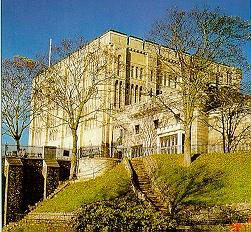
Norwich Castle Museum and Art Gallery

The intensely air-conditioned lecture theatre of the Castle Museum. Martin and Helen arrive just before me and we walk up together. Chris Gribble is to be our Chair and he appears. Then Anna Green, our host together with Harriet Loffler, the Co-curator. Norwich City are playing Arsenal at home at the same time (final score an honourable 1-2 defeat), there has been no great fuss of the reading so for a while we wonder whether we will outnumber the audience. Andrea turns up. Will we have the images on the screen behind us? It turns out we won't. Technical problems. Eventually some twenty-five people enter, prepared to listen. Poetry on match-day on a Saturday afternoon. Lucky to get so many.

We have drawn two tables together at the front and arrange ourselves. Anna introduces Chris who introduces us one by one as we talk about the pictures then read our poems. We go: Martin, Andrea, Helen then me. It seems I am the only one to have chosen paintings, the others have chosen photographs or sculpture or videos, though Martin's refers to paintings too. I think it is Andrea or Helen who say the problem with having the catalogues was that there are already words there that suggest how the pictures are to be interpreted. It's the same with all the images of course so that can only be part of it. But then there is also the question of how paintings are clearly constructed whereas photographs seem simply to appear. To think about this would require many more blog-posts so I won't do that here. For me it is chiefly a matter of familiarity. If I already know something very well it makes it harder to write about, unless the work is as powerful as the Andrews. Poetry is never just saying what you know. Negative capability, said Keats. I have loads of that.

I can't speak about the poems of the others as I don't have them in front of me, but they are all vivid and sound very good. One of Martin's is in the form of a specular, the form invented by Julia Copus which runs not only the end words but every line forwards and backwards. Martin is keen to emphasise this is not just showing off or cleverness. I think to hell with that. As if cleverness were a crime or a hindrance to feeling! Form invents feeling and supercharges it. His specular sounds very well, as do his other poems. As does Andrea's ballad, a form she usually avoids, she tells us. Again, I think everything is possible and everything is possible to do well, to leap from. So why not leap? Helen moves readily into fairy tale so her subject is immediately familiar territory to her. They all sound good poems.

Chris asks about form. It is not that overt formal devices - rhymes, stanza shapes, particular rhythms - are better than what seem to be covert informal discoveries. They are not, but neither are they, as many contemporary poets know, invalid. There is no need to go into the closed versus open form arena, still less try to fit into the straitjacket of traditional versus modern (as if traditional and modern were always the same, enjoying a fixed relationship). I don't even think it is easier to be naff in form than in free verse" it just sounds more naff. There is no opposition between form and feeling or intelligence and feeling and as for the distinctions between personal and impersonal, they seem gestural pedantry to me. You may be very clever but I really feel things, is the argument. Yeh, right, I don't feel anything, is the proper answer.

The hour goes very quickly. It is brilliant sunshine outside. As I walk down St Giles the iron fencing of the church is glowing extraordinarily. It is pure gold. It is burning gold. The cause? The sun is shining on a shop front opposite and the reflected light turns black to gold.


Pictures, forms, families (5): Andrews and Struth


The Batoni poem was a formal sonnet, more formal in some ways than many of nine. I thought of it - felt it - as the equivalent of a formal bouquet. The sonnet with its compactness, clarity and history seemed to be the right way to go, the full ABBA ABBA of the octet followed by a full CDE CDE. I don't say this was forethought - not at all - but once it began as a sonnet (the current beginning is a serious redrafting of the original idea) it felt it wanted to go that way. I have written about form often enough, how it is, like necessity, the mother of invention. You are never more than one line ahead, if that, having to look forward and behind as you go. But I knew as soon as I had drafted it that the sonnet would not be enough. There was some light beyond it.

I have long admired the Michael Andrews, in fact quite a lot of Andrews. He seems to me the poetic soul brother of Gerhardt Richter and Luc Tuymans. Sometimes I even think he was much less glib than they can sometimes be (I know, they comprehend the glibness but I can't help noticing it). In this large painting he is teaching his daughter to swim in very black water indicating great cold and depth. The daughter's face is half lost under her hair. Swimming - he is holding her up - is a matter of survival. The sea is not just the sea, the cliffs are not just the cliffs. They are domains - visual domains, language domains - in which he too must swim or sink. The Batoni poem ended with metaphors: this poem is all metaphors folding in on themselves, each section reversing its end word as if cupping some necessary space, maybe just enough space for a breath. The picture, as well as the poem, made my blood run a little cold. And yet it's about survival. And yet we survive.

The Struth is a photograph, one of a long series of photographs based on long-exposures of families so there is, naturally, a little strain in the faces and poses. But look how populous this family is, how comfortably ensconced in their room, and how they confront us. It is as if they were behind thick glass. 1989 signalled the end of history according to Francis Fukuyama, and this 1989 is a momentary dead end in the Smith family's history. It is the opposite of the first two images: it is family as armour and bastion and tribe. Each member of the family is fully mortal and sensate in himself or herself but put them together and they are a unit that has been arrested at a peak of power. The photograph is an embodied idea of what families might become. They have, as the poem puts it, made it as far as the room in which they sit. Nor is that a negligible achievement, in fact it's a great deal because, having been photographed there, they will remain there, invulnerable as image whatever happens in life. They look out at us rather than the other way round. Their gaze is the stronger. In that respect they are like those Byzantine wall paintings whose figures stare out at us reminding us we are not there as connoisseurs to appraise their aesthetic value or judge their merit as images, but as potent forces in judgment over us. They are conjurations, not art. I am still not sure of the Fukuyama reference, however it fits (and it does fit), because it is almost a pun, and it might not be that kind of pun that is required.

I write long today because we fly to China on Tuesday and I might not be able to post on Blogger there. One more piece to come on this theme though.