Monday, 17 December 2012

Hungary: A Disappearance


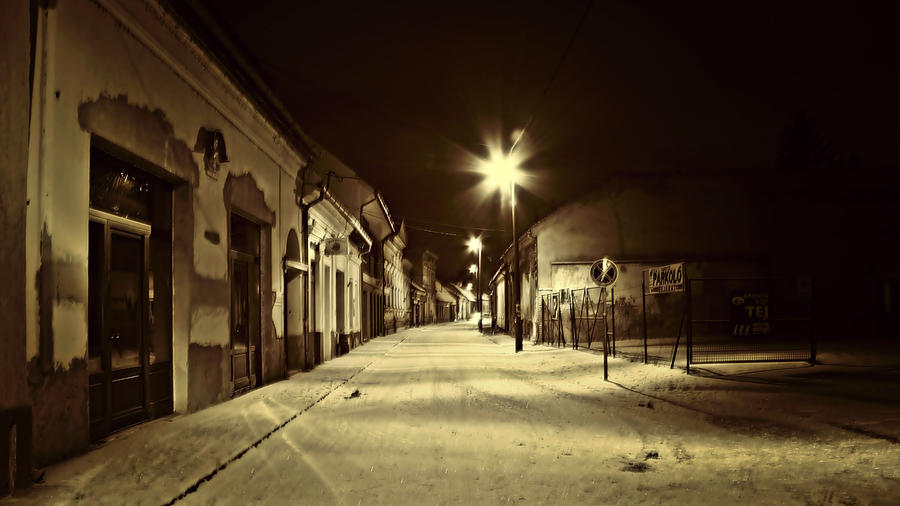
Békés, Hungary.


I don't know what to make of this story but, if true, it seems rather sinister. It comes from a private blog and while the language is not altogether confident the sorry state of affairs today is that I find it perfectly believable.

It begins with a description of an elderly woman:
A woman in her early 70’s, a survivor of the Holocaust, has mysteriously disappeared from a small Hungarian town, close to the Romanian border. 
Mrs Margit Abonyi Papp has lived in Békés for most of her life. She was one and a half years old when she and her mother were deported to a slave labour camp in Austria.
Then it tells what seems to have happened to her.

A few weeks ago, while sitting in the local doctor’s surgery, a young thug associated with Jobbik – the neo-Nazi political party now flexing its muscles all over Hungary – verbally assaulted her.
The teenage fascist asked why she was not wearing her Yellow Star. Then he continued to rant at her, saying she should “Move to Auschwitz or Israel”
The young bully taunted Mrs Papp with the fact that a Hungarian MP, from Jobbik, has recently raised in Parliament the need to list all Jews as a national security threat.
Until now, Mrs Papp had run the town’s second-hand bookshop. Her family was well known in Bekes. Her father, pre-war, had been a prominent lawyer, but he died in a forced labour battalion.
The story goes on:

A mayor associated with the right-wing Fidesz party leads Békés’ local council. The Deputy Mayor is from the neo-Nazi Jobbik party.
These two are backed up by a council prepared to look the other way as a criminal political gang rampages through this town of around 20,000 people...
Soon after the young fascists’ verbal assault, Mrs Papp disappeared. So far, several attempts to locate her have come to nought.
She is now presumed to be in hiding in Budapest, nearly 200 km to the northwest of Békés, the town she had hoped to live out her final days in peace.  

The rest of the piece is concerned with another woman who still lives in Békés, who has had threatening phone calls. At the end, the writer tells us that someone who had offered to help find Mrs Papp later backed out, frightened.

We are not told whether Mrs Papp was reported as a missing person and, if so, what was the response. There are certain climates in which such things are possible.


Sunday, 16 December 2012

Wings of Desire: Subway Scene


A small tribute to Newtown from very far away in time and place.


Friday, 14 December 2012

Three Questions on Hungary


Why are you so concerned about the current Hungarian government's cultural policy?

Ever since the landslide election of Fidesz in 2010 - a landslide brought about by very particular circumstances - the government has been looking to impose itself and its view of what it considers to be 'the nation' on not only the political sphere but the cultural too. In effect it wants to return the country to the condition of the thirties. In practical terms this has meant appointing its own supporters, and in some cases figures well to the right of its own floating supporters, to positions of enduring power, replacing what it considers to be corrupting internationalist 'anti-Hungarian' elements. 

So theatre directors have been replaced, others hounded, oppositionist radio stations and publishers and writers' organisations have been squeezed, the funding of arts organisations reduced and their control assigned to right wing, sometimes ultra right wing figures. The education system is now told to teach ex-fascist authors of the last war, statues of Admiral Horthy have been springing up, a major competition and exhibition of the new rather farcical nationalist art was organised, extolling the virtues of the Horthy period. Major philosophers have been smeared with trumped-up charges. 

It is a dangerous attempt to turn back the clock by force and to ensure that it stays turned back. The atmosphere is full of hatred.


Much of the international focus is on the antisemitic antics of the Jobbik ultrarightists in Hungary. Are they the most serious threat to Hungarian democracy, or do you see the popularity of Fidesz as more signficant?

Jobbik are a threat. They are the third biggest party in parliament and are well supported in some places. Their behaviour in parliament - fiercely anti-Semitic, anti-Roma - is tolerated by the Fidesz government. Their uniformed units terrorise Roma in villages. They are a potential army - in fact elements of them had been militarised then banned, but they are ready to be militarised again. They model themselves on the wartime Arrow Cross that murdered so many people in the last year of the war. 

The problem is the relationship between the Fidesz government and Jobbik. They depend on each other. The right wing of Fidesz is pretty close to Jobbik. They might not express themselves in quite the same way, but they look to effect similar changes.Using its powers to change the constitution, Fidesz has so extensively manipulated the political system that it is going to be very hard to vote them out of power, and, even if - unlikely as it seems - they were voted out of power they have changed the terms of service of Hungary's equivalent of the civil service so that their own, new appointees could in practice stop any changes a new government might propose. 

Although nominally opposed to each other, Fidesz is creating the proto-fascist conditions that Jobbik (who deny they are fascist) actually embody. The opposition is disunited and excluded.


How would you answer the charge made by Mr Schopflin in the LSE debate that critics of the government, such as yourself, are leftists without a constituency in Hungary, who are badmouthing the nation abroad, and perpetuating a stereotype, congenial to Western Europeans, that Hungarians are barbarians from the East?

Mr Schöpflin really doesn't have a leg to stand on. In our debate at the LSE he gave no response at all to a long series of quite specific criticisms (see  blog), but along with the Hungarian Minister of State for Government Communication, insisted on a martyrology where the left-leaning press of Europe (including The Telegraph, The Financial Times and The Spectator) had a 'narrative' - a word much used by the minister - that was the product of such bad-mouthing. That was the only argument. 

This is nonsense. Nor is it only outsiders 'without a constituency in Hungary' who are responsible for this 'bad-mouthing': there are strong opposition voices in Hungary, people who actually live there. It is just that they are being ignored, excluded, and legally locked-out. They are told they are not 'real' Hungarians, in effect not a part of the real Volk. 

Essentially Schöpflin is peddling the big lie, in the hope of garnering the votes of 'patriotic' Hungarians. Those votes are based on long-established historical conditions and reflexes which is what makes them so dangerous.

*Questions posed by Hari Kunzru


Sunday, 9 December 2012

From Bucharest 3


This photograph isn't mine. It is one taken by Michael J. Totten
who has a set of good Bucharest photos, so best go there.


Saturday morning: brilliant cold sunshine. I was supposed to be interviewed by a magazine at 12:00 but the reporter had an illness in her family so Anca Fronescu took me for a walk around the older parts of Bucharest. It was about an hour and half, and after the austere grandiosities of the Ceausescu era and the odd piece of 19th century Baroquery left standing after his ravages it was very good to pass down streets that felt human scale but still allowed for the ambitions of the imagination in various modes. Domes, arches, pediments, columns, Orthodox churches, theatres, old cafes and restaurants, bookshops, alleys. It was Anca's family district so we went down side-streets, dropping into buildings along the way. It was very quiet for a Saturday morning, clean, intimate.

Anca

We arrived a little late for lunch at a cellar retaurant with the other writers and organisers.  Daniel Boyacioglu, Mátyás and I talked politics, Daniel, who is part Syrian, part Turkish and part Swedish, ever more passionately. Marius Chivu was remembering the time at Neptun when we went on a boating trip in the Danube Delta and Paul Bailey had a heart attack. (That was the trip I wrote The Black Sea Sonnets about, including a poem about the hospital at Constanza) I suddenly remembered, quite vividly, Paul talking to Marius and a girl reporter on the boat, in the intense sunlight, drinking wine and black coffee. Later that night we noticed a wedding, were invited in and danced.

We walked back to the hotel then at 4pm Nadine Vladescu came to do an interview. We talked away with considerable energy for over an hour and a half and I just had time to pick up my coat before we were driven off - by Daniel - to the venue at the Clubul Taranului.

*


It was, if anything, even more crowded than yesterday, well over a hundred people. I am sure it wasn't because of me. more likely because of Mircea Dinescu who was a very well known poet before the fall of Ceausescu, was filmed in the TV studios during the siege in 1989, underwent an eclipse, then became a popular figure on television himself and reasserted himself as a poet.


 It might also have been because of Daniel...


who is a very well-known slam- and rap-artist as well as a poet, not to forget, a stylish dresser. Or it might have been Kei Miller, who was snowbound in Glasgow and appeared to read a few poems of Skype. And perhaps Marius Chivu who is at least known as Romanian poet. In any case the place was more than packed and, again, generally, very young.

I read first, about 10 minutes as asked, then Dinescu held forth for about 25, chiefly talking before rattling off about six poems to general amusement. Daniel had a couple of long poems translated by Marius then performed a half rap-half poem with great style to great enthusiasm. Kei too was very welcomed, and lastly Marius read a few quieter poems, though I had no translation. I felt deeply unspectacular in all this but didn't care much. I do what I do and I try to do it well. It seemed OK.

Then we had a series of questions including one about the 'crisis' in poetry. I said there wasn't a crisis in poetry as it has always looked after itself and always would. There may be crises in publishing but not for poetry particularly. It wasn't the desired answer perhaps. Dinescu made another long speech. Daniel talked about poets' obligation to their audience. I said I never thought of audiences but of a sum of individuals, a crowd being one plus one plus one etc. I am sure Daniel is right for what he does, I hope I am right for what I do.  I appreciate what he does: I have no idea what he thinks of what I do. As I said, I wasn't sure what I was doing in this context except that Bogdan, the organiser, has, he says, a strong passion for my poetry, having heard it first at UEA. This was the first of the five Bucharest festivals so far with a poetry night, so it would have been very satisfying to see it so full.


That's Bogdan, with the beard, on the right and the quiet very thin man who asked me for book title on Hungary 1956 next to him. 

Afterwards a drink, some pretzels and goodbye, including to Nadine, below. (I look rather too vampirical in the picture, maybe it's the physical closeness to Transylvania and my mother's roots that brings this out.)


*

Lastly, by taxi, to Denisa Comanescu and Nicolae Prelipceanu's. They are both poets and editors. The  ride is long in a very wet traffic queue that hardly moves. It is two days past Nicolae's name day and a small company of writers and friends are gathered to celebrate. It is just like an eighties flat with eighties company - warm, relaxed, everyone heading for a smoke now and then. I talk in English to those who can, and feel sad to divert people from their native Romanian. But they are very kind and welcoming. I don't know Nicolae's poetry but do know Denisa's in translation and have known it for many years now. She is outstandingly good. She is a poet in the same sense I am.  Perhaps we are all poets primarily of our periods, in some sense. It's just that I am very restless and must always be experimenting. She gives me an enormous slice of cake I can't eat. I sip at a pálinka.  We talk a little of our lives in terms of work, and of friends, some no longer such close friends it seems. Nicolae is a generous and wise man. Denisa remains very girlish. It is lovely, just lovely. Then, back in another taxi, the traffic quieter, the rain still falling.

*

I am enormously grateful to be invited and so well looked after by Bogdan-Alexandru Stanescu, Oana Boca, Ioana Gruenwald and Vasile Ernu. Thank you. And thank you again.

Just one brief note before anyone else notes it. The festival writers were all male. I think that will change.


Saturday, 8 December 2012

From Bucharest 2


I still have this nuisance of a cold and a flight doesn't help. The plane was packed solid with no room for my cabin luggage or coat above so I had to keep them at my feet. In front of me a man was talking to two blonde women with the intensity of someone who has to hold the floor and to be giving out information all the time. He'd have driven me mad. There was an hour of conversation about dogs, then towards the end about half an hour on learning to fly small planes. He knew everything, an alpha male in his small orbit. I wondered whether they were together and so they turned out to be.

My pick up, Vasile, was ready and waiting at the airport. His English is minimal and my Romanian is non-existent. We drove from the ragged outskirts into the more majestic centre of Bucharest, some of it looking vaguely familiar. It is my fourth visit here but each time it has been either for just one night or even less, until the buses arrived to take us down to Neptun on the Black Sea. That is over now, those Days and Nights of Poetry having lost funding, and this Bucharest Festival has taken its place in the last five years.

The British contingent included Will Self, Jonathan Coe, Andrew Cowan, Kei Miller and myself but by the time I arrived Self and Coe had done their - very successful - event and were gone. Andrew - a colleague at UEA - was however here and we met at the hotel desk.

The hotel itself is very good, better than the usual. The room spacious, well-equipeed and free WiFi without passwords. But I was tired. I showered, unpacked and lay down, but only for about an hour because we were due to be taken, by organiser Ioana Gruenwald,  to the evening event, featuring Andrew, Hungarians Sándor Zsigmond Papp, Mátyás Dunajcsik and Romanian Mihály Mateius.

The venue is a club with tables, a bar and a raised stage. It was rapidly filling up almost entirely with young people of student age, many smoking. It was like being back, in the best possible sense, in the 70s or 80s. Bogdan-Alexandru Stanescu who invited me was there as well as another of the quartet of organisers, Oana Boca. I was feeling rather ill and was shown to a table with Englsh speaking literary agents and publishers, in fact Andrew's agent. I was feeling ill and immediately upset the remnants of a bottle of beer.

The event moved in and out of focus for me, but chiefly it was very good. Each writer read for ten minutes (well, a little longer) three in English, though SZP, who spoke Hungarian, had his story read for him by MD, whose English is excellent. I couldn't understand MM who read in Romanian, but when abroad you must expect not to understand everything. After the readings came questions from Nadine Vladescu who conducted the whole in both Romanian and English. Nadine is one of that group of beautiful dark haired women in whom Romania is so very rich but she also writes for literary papers and had already done an interview with AC, who had arrived the day before.

It was very dreamlike, very clublike, more like an art college affair than a respectable UK festival with its rank of grey and middle-aged. This reflects very well on Romanian culture, or at least on the ambience of this festival. Despite my cold I enjoyed it.

Then we hung about before going off for supper, about fourteen of us. The time between ordering and serving was about an hour and a half, but it was good and there was a lot of conversation. I probably succeeded in giving my cold to the agent Simona K, and talked Hungary and Hungarian books with MD, then Anca Fronescu came in and we talked travel and Amsterdam where she lives.

The food eventually came and about 11:30 I began to feel at the end of my reserves of energy and asked for a taxi. AC came with me. As for the night - another broken one with some sleep at the end.

*

I like Bucharest more each time. Some of its downtrodden, feral quality has vanished with the passage of time though not entirely. It feels like a proper city, different enough not to be Western European, but not so different as to be unrecognisable. Bauhaus building, 19th century classicism and baroque, big broad streets, a slightly chaotic traffic with cars cutting each other up without too much neurotic honking (a little like Delhi in that respect).

There is something passionate about its intellectual life, enthusiastic, hungry, generous. It is on the whole warmer emotionally than Budapest, which is a city floating on a sea of  half-restrained irony. Not so here, not the sense I have of it.  No city is without irony, of course, but Bucharest lets its guard down rather more.

Today I have interviews and my own reading with Mircea Dinescu, Daniel Boyacioglu (who is in fact Swedish) and Kei Miller. Then a round table discussion as last night, I imagine.


Friday, 7 December 2012

From Bucharest 1


A very hectic week, on top of a cold. Monday and Tuesday full days of teaching and Tuesday night straight over to Blackfriars Hall for celebratory drinks and canapés of the UNESCO award to Norwich as City of Literature. I also finished the translation of Krasznahorkai's New York Times piece.

On Wednesday frantic preparation ion the morning then the train down to see Krasznahorkai himself talking to Colm Toibin at the LRB Bookshop. The place was packed out, sold out ten days ahead despite a £10 ticket price. It shows how swiftly fortunes are built. It was a very good occasion. I sat in the audience next to Clarissa and Tim Dee, with whom I had made a good number of programes in the past. I was asked, impromptu, speak about the translation of LK and did so. Then I signed about sixrty copies of Satantango and some other books. Lots of other writers and agents there, and good to meet a Twitter friend, @Seventydys.

In the end we went to a Turkish restaurant, some dozen of us, including Ruth Padel and Adam Thirlwell and that ended quite late.

The next morning I took a quick walk down to LK's hotel, about 15 minutes from ours and we chatted in Hungarian for an hour or so. What about? Romanian writers, Hungarian politics, tranlations, future book. Then quickly back to the hotel to prepare for Thursday night's event at the British Academy where I was chairing a symposium on Czeslaw Milosz. I was ery anxious about this because I m by no means a Milosz scholar. As it happened all went well, if running a little late. Jerzy Jarniewicz spoke of Milosz's misunderstand and hatred of Larkin. Cynthia Haven talked about Milosz in California, where he seems to have been open to a great deal, including Allen Ginsberg. Michael Parker spoke about the connection between Milosz and Heaney in the context of political responsibility, and Stephen Regan spoke about Milosz and faith. I linked, commented and quoted. It was all just fine. There too met a blog reader, Tom Deveson for the first time. I love these meetings.

Afterwards we had dinner at the BA, formal with place cards, myself next to Jerzy and Gwyneth Lewis who had come all the way from Cardiff. Jerzy and I disagreed on the reasons for interest in Eastern European writing and the disagreement ended with me challenging him to a duel, date to be arranged.

Walk home in the rain then hard to sleep, alarm for 5am and walking to Covent Garden tube for the train to Heathrow 3.

And now I am here with one event and one supper done Something of that tomorrow morning.


Tuesday, 4 December 2012

Two Night Poems: Sleep and Muse


Sleep

The night plumped up like a cushion. The words small, brittle, frail as eggshells. The sky filled with them.

How easy to wake. Like pushing a well-oiled door. It swings open and there is the landing, the stairs, the hall, the call of the street.

Along the street the street lights drawing the eye, pulses and pools, collection points, then fields, rivers.

Beyond the rivers and seas the provinces of sleep, the seabed, the wrecks, the luminous tracks that cross and re-cross as if for ever.

So there are the tracks and the sea, the river, the field, the street lights, the street, the hall, the stairs, the door still open, night.

And at the very core of night the eyes, the fingers, the mind, the heart, the words frail as eggshells. You walk across them, hear them.


Muse

It was a woman's face deep in the sea, self-constructed, as if one could make the moon out of flesh, bone, colour, reflection.

There was nothing there to touch. The sea was warm, the face gazed through it in its act of self-construction that involved gazing.

This was it. The muse-face. The construction. The self-made moon on its seabed. The astonishing in its perpetual process of construction.

This was the face that could give and consume, made out of myth and moonlight, making itself, turning itself into gaze.

And I have seen her, said the words. That gaze constructs itself and the compulsive act. And a cold shiver ran down him. And more words.

Make me a poet, said the words of the poem. Undermine me, said the gaze. Be discontent, said the muse. For ever, said the moon in the words.

These are old tropes, said the muse. But you must keep opening them. The poem lies beyond the opening, at the origin of words.

But muse, said the poem, if I am not the construction I desire to be I will die. Be sceptical, said the muse. Believe, said the poem.