
Thursday, 31 March 2011
The PBS and the Arts Council: Hatchet job at the RFH
On Sunday 24 January 2011 the PBS organised the Eliot prize readings at the Royal Festival Hall which seats 2,500 people. The previous year the same readings were organised at The Queen Elizabeth Hall that was packed out with about 900 people. Just a few years before that the readings were in The Bloomsbury Theatre, that has a capacity of 535 seats. The Prize had clearly outgrown the Bloomsbury, and within a year or so had outgrown the Queen Elizabeth Hall. There was a near capacity audience at the Festival Hall. That represents more than a doubling of audience with every change. The atmosphere has always been great but it had become ever more, well, festival-like.
The Arts Council sent out an observer who could not have done a better of job of stabbing the organisation in the back if she had been paid to do it. Her report was grudgingly complimentary but noted that she would not have had quite that shortlist (as if it was any business of hers to comment on it, ignoring the fact that there were two Nobel Prize winners on same list) and that a lot of people in the audience seemed to know each other, hinting that the audience was a matter of a small cabal of people pleasing themselves, a cosy little club of some 2,500 people. In other words the double doublings of the audience meant nothing to her, nor the fact that the RFH was the place that those who loved poetry would naturally flock to. All in all it was a hostile report where in reality there was only cause for celebration. Frankly, it looked like a set-up to me.
It didn't help that I recognised the name of the person submitting the report, it being someone I wouldn't particularly trust to make any judgment on poetry or indeed on much else. I won't name her here. ACE knew that the Eliot Prize was the biggest feather in the cap of the PBS. Hatchet job done.


Wednesday, 30 March 2011
Little Murders, Big Murders.. And Light
Back home from hosting a reading so exhausted after constant travel and rushing. but worse than anything the Arts Council cuts. It seems an attempt at the assassination of poetry at its roots. Poetry will survive of course, but not necessarily the people who have put their hearts and souls into making publication and distribution possible. For them - for me too - it is heartbreaking. And then for the Arts Council of England to give a hundred thousand to a commercial publisher like Faber is an absolute disgrace. Carol Ann Duffy got it right:
The poet laureate, Carol Ann Duffy, condemned the cutting-off of the Poetry Book Society, established by TS Eliot in 1953 "to propagate the art of poetry" as "a national shame and a scandal". She added: "This news goes beyond shocking and touches the realms of the disgusting."
Disgusting is exactly what it is. The PBS has been my own particular concern for several years. It is a core organisation doing so much more than selling books. But then there are the publishers too: the root publishers who do the work with new writers and translations.
We will fight these of course. Much activity to come. There is nothing cheaper to support than literature and books, and poetry is the cheapest of all. For the sake of a few coppers they kill half of it. Little murders and big murders.
I'll write more on this tomorrow...
News at the university no better, administrative redundancies, losing invaluable, kindly, highly efficient people; reorganisations that mean moving the experienced into areas where they don't have experience, very fast, creating faceless 'hubs'. Thank you bankers and our glorious financial sector. Pocket those bonuses and let them sink you.
*
But, also tonight, the second in the series of free readings at the Drama Studio. These are turning into rather wonderful events. The bill was Heidi Williamson, Sam Riviere, Katharine Kilalea, Tom Warner and Peter Scupham. Fine attendance and marvellous readings, I mean really marvellous. I was particularly struck by Kilalea's recitation of her radio poem sequence which I found absolutely spellbinding.
Riviere, Warner and Kilalea, all excellent, all Norwich educated, with more to come. Heidi Williamson, local, grown into a very fine poet. These things make me happy, as they did the audience too. That was positively palpable. Poetry at best is electricity that flows through the neural system in the form of language and leaves the reader or hearer feeling electric. This was an electric reading. It's the present and the future. And Peter Scupham is simply one of the major poets in this country. He is a monument.
The bleakness of the day transformed. Just for the evening maybe, but the memory will remain and generate more such evenings and more electricity, quite beyond the reach of Arts Councils and Cuts and Funding. The poetry is in us: that will never go, however people try to kill it.
Tuesday, 29 March 2011
Lewes

Last night in Lewes reading to a good many people and, having gone down with a trolley full of books, pleased to be coming back with none. It was a good 45 minutes so for it to go well is as much relief as a delight.
Lewes, where I have now been some four times, seems almost a club rather than a town. It's a secret enclave full of Notables, Artists and Celebrities: a sort of Groucho's of Sussex. Arriving I was met by one of my contemporaries at secondary school, Peter, who was definitely cutting edge at the time (I wasn't even anywhere near the handle) frequenting The Marquee to hear The Yardbirds, then going off into sound engineering and working in big recording studios. He designs websites now and continues to work in radio. He took me to a pub called The Snowdrop, so called not because of nearby flowers but because of an avalanche that landed on it from the nearby white cliff ravine. Nice place. Ex-hippies, kids, respectables and, later, a man in top hat and flowing multi-coloured cape, who looked very much Incredible String Band about 1975, except that he was probably born about 1972, so must have been a retro-cutting-edger. Peter and I talked happily for an hour and more before I was picked up by my host for the night, Christopher and his wife Anne, who took me back to their house where Catherine Smith joined us for a fine dinner, before the walk over the old council chamber at Pelham House Hotel for the Monday Literary Club which was surprisingly packed. Since I never expect to see packed halls when I appear unless it is on a genuinely Grand Occasion, the surprise was marked.
Reading and talk as in first paragraph. Afterwards book selling and signing, and meeting with an ex-school student of mine, now actor Nicola Blackwell and her partner, Nick, as well as with Ruth Swift as was, who was in the very first Leeds Anthology edited by Martin Bell, along with me. Such lovely coincidences. Lewes may be a club in which I know some of the membership. Perhaps everyone I ever knew will eventually be found in Lewes. We drink at the hotel bar till about 11 then I am taken back to C and A's house. The morning we chat for an hour or so over breakfast. They are lovers of cities so we talk about a few we have in common. Then I am back on the train.
I break the journey in London to have lunch with Alfred Corn, who is returning to the USA until January. Alfred is with a stick having hurt his back and is in pain but gracious as ever. He has a present for me - Don Paterson on Shakespeare's Sonnets. We sit down in The Betjeman Arms opposite Kings Cross and talk for an hour or so over food. Poetry, politics, the environment, his education in the USA, some music. Then back on the train again this time to Stevenage to meet C who has been sorting out more affairs for her mother. She drives us back.
I like to write about ideas in these blogs. I doubt whether there is a single idea in the account above. I feel a bit tired and dull, probably a mixture of the two. Tomorrow it is more readings, this time at the Drama Studio, UEA at 7 - 8.30pm. Free readings, myself hosting Peter Scupham, Kate Kilalea, Heidi Williamson, Tom Warner and Sam Riviere. That is not a bad free line up, in fact it's rather magnificent. Let's hope we get a decent audience!
Sunday, 27 March 2011
Sunday Night is... Gilda
Well, why not? It is not that Hayworth is a great dancer, more that she is not, more that she is a touch trashy and looks vaguely out of it in every scene and especially in those assembled here: whatever choreography she is following, she is to one side of it, not quite in time with it. And that's the nature of the deal. She moves like flame uncertain of itself in a slight draught, as if a stronger gust would blow her right out. Candle flame. And yet, as one of the commenters on YouTube puts it, she burns the screen up.
She takes the blame for whatever Mame does because Mame simply cannot help it, because there is a kind of burn in her as in all noir femmes fatales, who are as fatale to themselves as they are to the man in their shadow. The wrong to her has already been done and it leaves her woozy and sensuous. The poor male creature who catches her glove is like a hooked fish. His eyes goggle. But he will know somewhere at the back of what remains of his head, that once they leave the club he'll be a rich man and will die rich while she'll be a befuddled creature whose time is limited.
But in this arena, under stage lights, in the spangly gear, her power as dream fulfillment is immense. A third of our lives if we're lucky - is spent in sleep and dream. And she is undoubtedly beautiful, quite stunning, almost precisely because of what she is not and cannot be, and she does really burn the screen up in the way few have except Monroe and Louise Brooks in Pandora's Box.
Saturday, 26 March 2011
Demo
It is indeed terrible that so many are about to lose jobs and prospects. I know what is waiting to hit the university, where some of the best people in vital offices will be lost. The great rally today is understandable and natural, and the various scuffles at Fortnum & Mason, at Topman and the rest are nothing much. Perhaps the whole is a cry of pain and anger - anger chiefly at the crash itself and what brought it about - with the usual circus sideshows. It doesn't seem to me a coherent demand for anything particularly clear. Is the cry for no cuts at all? For different cuts? For slower cuts? The first makes a good slogan, but the issue is about the second and third which are not much as slogans. CUT A LITTLE LESS! is not very dramatic. CUT AT A SLOWER PACE! is no better. The big 'alternative' as proposed by Ed Milliband is a combination of the second two, but it is still awkward for him to be leading the charge on the barricades as it is less than a year that Labour were in government and it was under their watch, and with their policies, the crash happened.
I say 'them' meaning my party of choice. History is not to be wound backwards. We are not going to recover coalmines, steelworks, fisheries, shipyards and dockyards. The unionised workforce is very much reduced. No doubt railway workers and UNITE can still bring some services to a halt but the TUC has no great army of tanks to park on what Jim Callaghan once called his lawn.
Short of a revolution - and I thought things might just move in that direction with the collapse of the banks and the financial system but we seem to be past that - it has to be different. Banks collapsed but the financial system survives. The importance of the financial sector is beyond me to gauge but I don't imagine it is something that can be controlled at a purely national level.
I would like an honest Labour party that told us it will do the best thing possible in whatever conditions it had to operate in. If it has to operate within globalised constraints, let it form its policies according to the best humanitarian options available. Let it be unashamedly ameliorist. Let it worry less about presentation and hollow rhetoric than about the gradual shifting of the moral centre towards a more generous, egalitarian society, persuading us to it, so we don't just talk or shout but do it. That much is possible and honest. I think it can work. I think the people among whom I live understand that and could respond to it.
That policy won't yield much of a slogan either. Things can only get better has been done to death. But I don't care for slogans anyway. My prescription for a march would be a silent one whose only banners were those that indicated where particular groups came from. This is who we are. This is where we are. Get to the squares and stand there. Forget the speeches. The change starts with silence. And with our own willingness to be honest about what such a change would entail for us. Injustice must be fought from within our own silent pockets.
Friday, 25 March 2011
Some notes towards notes on photography: 1. Innocence
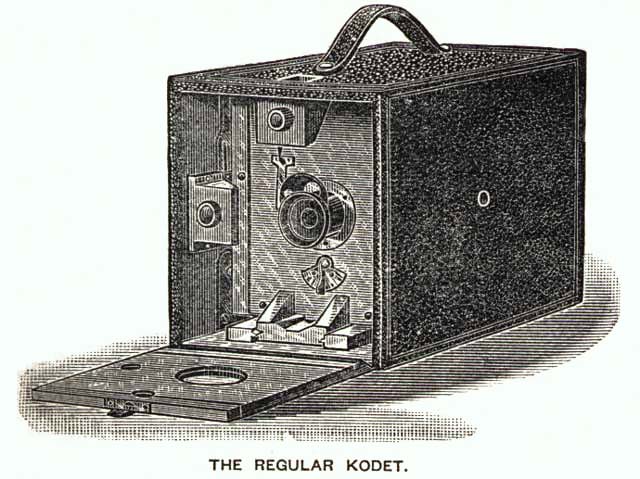
Image from
There is one moment of innocence in photography, which is the moment that light is allowed to enter the lens to strike the sensitive surface that records its effects. But that is a crucial moment by which hangs an entire history of recorded evidence that furnishes out memory and stringently corrects it when it weakens and prefers to follow desire. Photography, in this sense, is what Philip Larkin tells us it is in ‘Lines on a Young Lady’s Photograph Album’. It is:
...as no art is
Faithful and disappointing! That records
Dull days as dull, and hold it smiles as frauds,
And will not censor blemishes
Like washing lines and Hall’s Distemper Boards
In the hands of an amateur photographer, the ‘snap’ which begins with, and seems to stop with, the shutter shutting, does indeed seem to offer a unique form of fidelity. Words, after all, can be twisted, their meaning may be ambiguous, or interpreted ambiguously, but photographs show you who is where, doing what. That is the principle. That is the notion of image-as-evidence.
No one would hold a painting to this definition of fidelity to truth. We know the artistic act to be interpretive. That is what we expect. It may be that Queen Elizabeth had red hair, and a broad class of features that had to be recorded, but we know that recording wasn’t the whole story, that it hardly ever is, so when the painter Paul Delaroche, on seeing the first Daguerrotype announced: ‘From this day, painting is dead!’ we know he was wrong, understandably wrong of course, but still wrong.
And this ability of the photograph not to interpret but to record - this moment of innocence - immediately conferred an obligation. That obligation was to maintain innocence. The innocence was sacred. To interfere with the process of recording was to break a sacred oath. It was to interfere not only with evidence, but with light and time. It was like supplanting God and the laws of the universe in turning time back and changing it by breaking the laws of light. Some things must be sacred. Some things must be free of us. Sacred are the mugshot, the passport photo, the disposition of the corpse in the room, the piecing together of CCTV evidence, the due record of time passing. ‘Why, I saw it with my own eyes!’ cries the woman talking to Groucho Marx. ‘Well, who are you going to believe?’ retorts Groucho, ‘me or your eyes?’ ‘I am a camera with its shutter open, quite passive, recording, not thinking,’ so Christopher Isherwood begins Goodbye to Berlin. The camera is the eye. The camera is the I. Best believe it.
Thursday, 24 March 2011
Fioratura
Translating for a couple of hours, then starting an essay on photography to accompany a proposed book by Justin Partyka. I'll put up parts of it here as I write it, to let the pieces hang out and dry so to speak.
In the meantime a walk in the bright sun before lunch and then the journey to London for the Ted Hughes Award and the National Poetry Competition prize giving, at which I have, briefly, to speak. We walk down the back lane behind the abbey, with the great cedar of Lebanon at one end and the old railway bridge at the other. Birdsong throughout. Goldfinches, Blue Tits (or are they Great Tits), the whistling, whibbling, the stuff I once referred to as fioratura in a poem ('...his sculptured fioratura / neat and clean as a whistle...'), that little onomatopoeic flowerlet of sound, something like the Hungarian word fütyülés, meaning 'whistling', but also as applied to birds. The Italian word purses the lips with its 'f' then practically whistles twice (fio!... tu!) in the first and third syllable of its saying: fioratura. Cousin of toora loora-lie. The walk down the lane being so good, we simply reverse our steps and walk back the same way, listening and watching out, past the abbey beyond the trees that looks so much like a nestling bird it is tempting to imagine a beak on it, past the cedar, down towards the MNR railway line, and back along the Tiffey, which looks clear and fresh.
Fortunate days in fortunate places. The sunlight on my cheek is a reminder of fortune. Good to be alive. What else is there?
Subscribe to:
Posts (Atom)