Thursday, 6 May 2010

And so...


And so they went out to vote about 10am and saw a busy line of elderly men and women, more of them than usual, queueing in semi-orderly fashion, and one very old man in front of them had forgotten his registration card but remembered his personal number and bellowed it, full force, in a quivering, shaking, shrill voice, like something unexpectedly loud from the bottom of a well, at the bemused and startled clerk. All the young must be out working, they thought, but they'll get there before 10pm and have a party, drinking cans and nipping in to cast their votes...

...and there were present
the Picninnies,
and the Joblillies,
and the Garyulies,
and the great Panjandrum himself,
with the little round button at top;
and they all fell to playing the game of catch-as-catch-can,
till the gunpowder ran out at the heels of their boots...

*

In about two hours down to London for the PBS board at the new HQ, only just moved into. Meanwhile, back to work. And possibly to shave. I fancied the thought of going to vote unshaven and a little disreputable, just to show the slobs of the world care.


Wednesday, 5 May 2010

Farewell to Creative Writing at the Art College 5


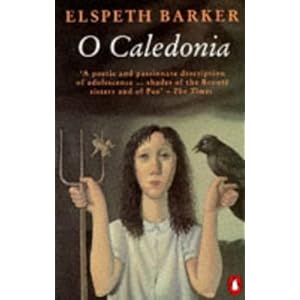
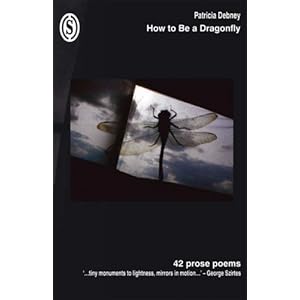
Some books by Scupham, Barker, and Szirtes


The Staff

In 1994 I was asked to attend more meetings. Until that time I had been driving over from Hitchin, for one day a week in the first year of the course and for two (staying overnight) after the second, as a second cohort of students arrived. The drive was over two hours each way. I said I would attend more meetings if I lived closer, and I would do that only if they gave me a permanent fractional post. So a job description was written for an 0.5 Senior Lecturer, the fractional post was advertised in the press, and some very good people applied. The day of the interview was very difficult since it turned out I knew two of the others to be interviewed and had met the third. All these three were well known poets. The fourth was Patricia Debney, a graduate of the UEA MA in Fiction. We sat together for a whole day in a state of embarrassment since they knew I had written and was delivering the course, while I knew that either I was going to get it, which meant a wasted trip for them, or I was not, which meant my course structure and delivery were deemed a failure before they had even run one full course.

I got the job. Son Tom was already at Bristol University, daughter Helen was just starting at Oxford, so C and I moved to our present house in W in the summer of 1994. Patricia was offered work in the Critical Studies department of the college (was that its name then?), with a view to further work on the Cultural Studies BA.

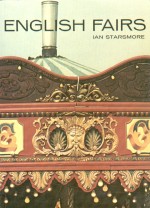
The permanent course staff then was Ian Starsmore as director, Simon Willmoth teaching the cultural studies alongside Ian, and Graham Giles teaching and directing the art.

I am not sure now whether it was in third or the fourth year of the course that Fiction opened up with Elspeth Barker. Elspeth had written one wonderful dark and funny book, O Caledonia and was the widow of the poet George Barker. We now had two branches of creative writing. The visual was moving along too, though it was always going to have to stand comparison with the work produced in other parts of the art college, with courses that had more time, resources, and money at their disposal. Elspeth wasn't on the permanent staff, nor was she ever to be, but she was a prominent writer and reviewer whose reputation could help establish fiction on the course.

Once she became available Ian advertised the course in magazines like the Times Literary Supplement with Elspeth's and my name featured and we drew in plenty of applications. Both Cultural Studies BA and Creative Writing at BA level were relative novelties and there wasn't much competition.

Once Fiction was up and running in its second year Patricia could teach some Fiction too. And Peter Scupham who lived nearby joined me for the Poetry on the same basis as Elspeth. Soon Margaret Steward joined us to teach Performance, a hard task since there was no theatre, in fact nothing that could serve as a drama studio, but Performance, Fiction and Poetry became the three strands of Creative Writing. All three were compulsory in the first year, with increasing specialisation in the second and clear specialisation in the third, with some crossover permitted. Performance put on a section from Tony Harrison's version of The Mysteries with a mature female student as God. Ian and I were Yorkshire shepherds, set in the student bar.

At this time we were oversubscribed, running an annual anthology and inviting six writers per year to read and talk to students. Writers came as invited by the writing course, but also on an ad hoc basis when they were available. George MacLennan joined about the same time, teaching across the college, with increasing contributions in Cultural Studies.

Then came Andrea Holland, in about 1995 who had just arrived in the area with an MFA from the USA and some publications behind her. She turned up at just the right time for us to find her some work teaching Poetry. She became very important, ever more so as time went on, eventually taking over from me. Elspeth too has continued teaching to the present moment.

All the branching out meant having to rewrite the whole Poetry course. In effect it no longer existed as envisaged, but was divided into modules or units to sit alongside Fiction and Performance. Elements survived but were now almost independent of each other. There was also more pressure to relate what we were doing to the work on the core part of the degree.

The students were beginning to achieve individual successes beyond the course itself. A stream of writers and future writers began to appear as early as as the second cohort. They will get their own special post as will the visiting writers and speakers.

I could let Fiction and Performance look after themselves somewhat as they were in very sound hands. We trusted each other. The institution ran partly on trust anyway. Like all institutions of the time time it ambled and stumbled but managed to stay upright and walk. It managed its affairs as best it could, relying heavily on its artist staff who were given reasonable personal freedom to develop ideas and initiatives. I believe it worked.

*

A year or two ago I was having coffee with J from the UEA and we were comparing notes on changes. I said I thought some changes were necessary from the days when I was a student as I rarely saw the artists that were on the staff then. Sometimes they'd be in the pub and students just had to seek them out. There were inconsistencies and liberties of all sorts.

Yes, J nodded. But was the work produced any worse?

Probably not,, I thought, There isn't in fact a direct relation between quality of work and the culture of accountability. Institutions are not the goal, they are the means. The human contract always trumps the institutional contract. If someone wants to be writer it is the potential writer one tries to respond to, not the grade student. Degrees and marks and being good boys and girls were secondary to the point of the experience.

Nor was the world outside ever likely to ask a writer whether they had got a First or an Upper Second. Show us your work, it would say. And you either had the work or you didn't. I owed the institution what the institution demanded for its money. To the students I owed a generous, but true ear and a human commitment that would extend beyond the financial pro rata. The reason I had been brought in because I was a poet not because I was a lecturer. The fact is I had never been a lecturer.

These thoughts have stuck with me from the very start. Do the institutional work properly and as efficiently as you can, but remember education is not about its own procedures but about something beyond. It needs the procedures to achieve that. The procedures have a point. And that which lies beyond is the point.

But success beyond the college was already brewing by the time the first cohort were through and so it was to develop. That next and a few more changes and developments.


Some books by Debney, Starsmore, and Willmoth


Tuesday, 4 May 2010

Virtuous to a Fault: a verse


Photograph by Cameron Self


In Praise of Virtue

In this Vault beneath are deposited the Remains of VIRTUE, the Wife of EDWARD HASE, Esq. and youngest Daughter of JOHN REPPS, Esq….[there follows a list of the dead] …And EDWARD JOHN FOUNTAYNE who died an Infant.

After forty-seven years of uninterrupted conjugal Felicity Her affectionate Husband
- Memorial tablet Salle Church, Norfolk


Not now to be interrupted, the phrases
of Repps, Fountaynes and Hases,
whose elaborate syntax of conjugality
conjures affectionate formality;

whose tender felicitations provoke
delicacies that a hand might choke,
or conjure virtue in woman, and deposit
her body in a verbal closet;

whose breath is language, though language is lost,
interrupted by one killing riposte;
whose love, let us accept, is lexicographical,
philosophical and autobiographical;

whose story is assumed to be true
and persuasive so the reader assumes it too.
because no one can test truth in the vault
or tell virtue from vice, or love from a fault.

*

There is a certain temptation to make something of Felicity, 'uninterrupted' and 'conjugal', as a rival to Virtue, which is, in any case, a very hard name to live up to. I think a son called Larceny, (Elder brother Grand Larceny, younger brother Petty Larceny) Cupidity, Simony, Tort, or at least Animadversion might be called for to redress the balance. On the other hand , here come Modesty Blaise and Whoopee Goldberg.


Monday, 3 May 2010

Farewell to Creative Writing at the Art College 4


Poet Under Tree, Norwich 1993


When I was at art school there was one day a week that was not to be spent in the studio. It was to be dedicated to what they called complementary studies. At Leeds then that comprised available courses on film, music, anthropology, poetry, sociology and psychology. These courses were taught by people outstanding in their fields, much as the studio art itself was taught primarily by practitioners. Nothing was compulsory, or at least no-one checked whether you were there or not. I stuck with poetry throughout and ignored everything else except the studio where I worked away furiously. Theoretical discussion took place there with the artist-tutors. Got prizes, went to Italy, wrote a dissertation on Giotto, included my poems in the degree show.

The term complementary was appropriate enough.They were intended to complement your development as an artist. The place of these areas of study was not defined in other terms.

By the time I went to Norwich, much had changed. The term, complementary studies, had disappeared as though it had meant something rather amateurish. The idea of including poetry as an integrated area of study within a degree that itself was one remove from visual art or ideas specifically on visual art was a litlte odd. When one of the first generation of students told one of the other staff what degree she was doing, the member of staff sniffed: 'Oh, Ian's tinpot degree.'

There was some suspicion and contempt for the whole package, or, if not contempt, scepticism. Cultural Studies was just beginning its rise and was to be supported, but not when it comprised 'bits of drawing' and 'poetry'. I ask you! Poetry! Madcap amateurism! Hippyish youth under trees told by some airy-fairy poet-tutor to think of beautiful things and write them in a form of lazy, undisciplined, self-expression! Besides, haven't the UEA got all that sewn up at a higher level?

But Ian Starsmore passionately argued for it and the principal, Bruce Black, supported it. It would have to be watched of course, but if it attracted students it would be fine while it lasted.

So the place of poetry / creative writing was not at all assured. It was, like complementary studies, regarded as an oddity, an indulgence in an institution devoted to other things. The age of resident writers at art colleges was gone.

One way of assuring the institution of the value of the new degree was the appointment of highly-regarded external examiners. We had Francis Frascina, the poet-painter John Lyons and the well-known poet Roy Fisher. This was an excellent choice and their reports were intensely helpful.

The degree, throughout its existence, had some first rate external examiners, including Sue Roe, Eva Hoffman, John Lucas, Christopher Reid and late and much loved Michael Murphy. They were vital to the course as a whole - sharp, observant, supportive and authoritative.

Next time: the early development, expansion, and changes to the course.


Sunday, 2 May 2010

Sunday Night is... Amelita Galli-Curci


Galli-Curci, 1882-1963, singing Una Voce Poco Fa from The Barber of Seville in about 1920. I find the older recordings of Italian opera very moving, for - quite likely - unmusical reasons, more to do with the frailty of the human voice, the pathos of time, the haunting perpetual melody that trembles across time and space, and the sheer heroism of its survival. Italian opera particularly, I suppose, because of the love of melody, strung out like wire in the sunshine that is also a wire in the soul.

There is a very nice little discussion board here where a certain Scopa Nuova offers a translation.

There! That is enough links to be putting a girdle about the earth.


Saturday, 1 May 2010

Farewell to Creative Writing at the Art College 3


Beside the course itself there were three other important elements in developing the writing.

Birdsuit 1

1. Birdsuit
From the very first, the creative writing element of the Cultural Studies BA was producing annual anthologies. I have the first eight years volumes next to me on the table. Money for these, as also for visiting writers, was somehow found by the extraordinary Ian Starsmore. The anthologies were called Birdsuit after the new art school logo (the figure of bird in a suit, volant). It was an autocratic affair, I'm afraid, but then there wasn't anybody else to be asked, only in the following years. I consulted about the name but probably just decided in the end. I drew a Max Ernst-like figure entering through the door, as above. I designed cover and contents, edited the book, typed it up, and set it, complete with art work elicited from students and staff (students and staff of the whole college that is), then handed over the camera-ready copy over to the printers.

I also wrote an introduction, just as I was to do for most of the series. There I referred to the example of Martin Bell at the art school in Leeds who produced an anthology called just Anthology, in which I had had a good number of poems. The Leeds approach was the model: all that happened was a development from what Martin had done there.

What is exciting about an anthology, I wrote there, is not the voices it controls but the voices it releases. There were some promising voices released there, who were to work their way through successive anthologies.

This first issue doesn't have a number on it because we didn't know if there would be a second.


2. Open Writing Workshop
Not all the contributors were from the course. We didn't want it to be a college magazine but a proper book. In the same year the course began I started a lunchtime Open Writing Workshop that was open to anyone, not only in the college, but in town. It was free. Mostly we looked in depth, for just under an hour, at a single piece of writing by one of the attenders. There were photocopies and discussions. Open Writing Workshop continued the whole time I was there. There was some marvellous work by a range of people. Some were out of work, some were professionals who had retired, some were on other courses or pursuing higher degrees. Some were members of staff. In fact the half - sometimes more - of the attenders were not from the course since our students had regular workshops of the same kind. I was learning to be a kind of ringmaster. But then I had done similar things at the schools I had taught at, so it was a matter of level and tone rather than procedure.


3. Visiting Writers
I could not begin to speak of the splendour and numbers of visiting writers! Imagine it - we had six a year for the first several years, two in each of three terms, mostly poets then joined by novelists. We paid them a basic £100 and the students got it all for free. The visiting writers were then asked for a poem or two for the anthology and they generously obliged. Not that their readings were always necessarily well attended. A list should follow, and will, but in any case, the first set of writers included Anne Stevenson, Kit Wright, Peter Scupham, Lawrence Sail and Jane Griffiths. They were all represented in Birdsuit 2 the following year.

*

I am only speaking of the writing at the moment but the course title was Cultural Studies, and cultural studies in fact formed the core, the biggest part, of the degree, and there was the obligatory visual component too, equally weighted with the writing. Furthermore, in this part, because it's about the writing, it seems to be just me. I apologise for that. But that's how it started. Soon there were others - a terrific collection of writers and teachers.

The remarkable students were, however, the chief glory of the course. They too will follow, as will the staff and the various changes of location and direction, as well as the slow squeezing, then throttling, and finally dropping of the course at the end of this year.


On Being Someone Else: Voices, Serpents, Gardens


I was reading at the Arnolfini last night with Peter Bennet and Rita Ann Higgins, excellent poets both, and thinking - particularly during Rita Ann's reading - I wish I could have written that, or, rather, I wish I could pitch my voice in that place. I wish it because it is a warm, hard, proud, generous, human place, a place for lives that don't often enter other people's poems. I like such places.

*

That thought is immediately succeeded by another thought: You can't and never will, not only because you are not a woman, Irish, etc, but because that range of voice, marvellous in her case, would be quite inauthentic in you.

I imagine this is a not uncommon feeling. Desiring this man's gift and that man's scope, wrote Shakespeare (as if he needed to, we think) in Sonnet 29,a line Eliot stole for the beginning of Ash Wednesday, adding:

....
I no longer strive to strive towards such things
(Why should the agèd eagle stretch its wings?)


(Edmund Wilson in, as I remember, The Shores of Light, gave the 'young' Eliot - Eliot was just thirty-nine - a thorough telling-off for imagining himself 'agèd', let alone an 'eagle', and never mind stealing Shakespeare, thereby comparing himself with him.)

We do covet other people's gifts. We do sometimes wish we could do what they do.

*

But then there is yet a third thought, which is this: What is the 'ourselves' that we seem to be stuck with? I don't specifically mean as social beings ('Lots of folk live up lanes / With fires in a bucket' wrote Larkin in Toads, considering the possibility of being someone else), though maybe that enters into it. I mean as a range of voices.

The lack of fixity in a writerly 'identity' has long been a matter for intellectual debate - our authors are dead, long live our readers! - but it is odd to feel it directly, on the pulse, so to speak. On our own pulse! Which of the 19th century French critics was it (Saint-Beuve?) who accused certain poets of his time of only writing the poems that their diction fitted them to write? Touché!

I think it is like this: that we do get trapped in ourselves, in the voice we have developed with great pain and struggle - or haply landed on as if on a deep mattress from a great height - at the time we actually call our development. Having somehow 'found our voice ', which is maybe no more than just one voice among others we might have found, it becomes a security. It is what we can do. It becomes us. We become it. At best we become Laocoön wrestling with the serpent of our own voice. At worst we just give ourselves up to the bloody serpent and do whatever it insists on. Then the serpent gets bored and crawls off and we have nothing left except our guilt, smugness and ever less comfortable passivity.

It may be good to accept this, to admit our limits, to cultivate - let me change metaphors here! - whatever garden we seem to have built around ourselves: to make it entirely our own. It may be good in the way that humility is good.

And yet the flipside of such humility (everything has a flipside) is, first timidity, then smugness. Realising this might be liberating. We may then, still in humility, ask just what it is we so admire in this man's gift, that woman's scope, and why it seems to be important to us? And we may perhaps tear up and re-plant a piece of our well-cultivated garden, or go and start an allotment elsewhere where another voice might grow, one we might have grown in the first place, had circumstances been different.

This doesn't mean we become a series of allotments, or, like Fernando Pessoa, a mysterious set of heteronyms, just that we don't cling too closely to that right little, tight little garden. Extending our 'selves', expanding them, is not like a piece of colonialism. We don't take anyone else's space by doing so.

The line between exploration and occupation of territory is faint. We may even distrust it. But, maybe, what I hear in Rita Ann Higgins (for example) has a kind of corresponding timbre in the voice I myself sing in. Maybe that is what learning is.

Maybe 'the agèd eagle' had something there:

We shall not cease from exploration
And the end of all our exploring
Will be to arrive where we started
And know the place for the first time.

The first time is the only way of knowing. The rest is words.