Saturday, 31 December 2011

New Year's Eve birthday


Photobucket

Our son, Tom (aka Shur-i-Kan) was born on New Year's Eve. Happy Birthday, Tom!

Seven Haiku for Tom

New Year’s Eve again,
a threshold to trip over
before tumbling through.

Unboxed just five days
after Boxing Day, like a
late Christmas present,

child of the winter,
of stables, stars, and Magi,
son of the old year.

The very next day
the year begins. You enter
it without knowing.

Nobody knows it.
We slip into the future
like newborns, eyes closed

while the year opens
again, again, and again,
as for the first time,

under the same stars,
tripping over the threshhold
tumbling through, through, through.


Thursday, 29 December 2011

Becket and Malthus: two Toms


Thomas a Becket and Thomas Malthus


from Chambers' Book of Days for 30 December


LEGEND OF BECKET'S PARENTS

In connection with the renowned Thomas Becket, a curious story is related of the marriage of his parents. It is said that Gilbert, his father, had in his youth followed the Crusaders to Palestine, and while in the East had been taken prisoner by a Saracen or Moor of high rank. Confined by the latter within his own castle, the young Englishman's personal attractions and miserable condition alike melted the heart of his captor's daughter, a fair Mohammedan, who enabled him to escape from prison and regain his native country. Not wholly disinterested, however, in the part which she acted in this matter, the Moor's daughter obtained a promise from Gilbert, that as soon as he had settled quietly in his own land, he should send for, and marry his protectress. Years passed on, but no message ever arrived to cheer the heart of the love-lorn maiden, who there-upon resolved to proceed to England and remind the forgetful knight of his engagement.

This perilous enterprise she actually accomplished; and though knowing nothing of the English language beyond the Christian name of her lover and his place of residence in London, which was Cheap-side, she contrived to search him out and with greater success than could possibly have been anticipated, found him ready to fulfil his former promise by making her his wife. Previous to the marriage taking place, she professed her conversion to Christianity, and was baptized with great solemnity in St. Paul's Cathedral, no less than six bishops assisting at the ceremony. The only child of this union was the celebrated Thomas Becket, whose devotion in after-years to the cause of the church, may be said to have been a befitting recompense for the attention which her ministers had shewn in watching over the spiritual welfare of his mother.


THOMAS MALTHUS

The first edition of the work, which has conferred on him such notoriety, appeared in 1798, under the title of An Essay on the Principle of Population, as it affects the Future Improvement of Society, with Remarks on the Speculations of Mr. Godwin, M. Condorcet, and other Writers. In subsequent issues, the title of the work was changed to its present form: An Essay on the Principle of Population; or a View of its Past and Present Effects on Human Happiness, with an Inquiry into our Prospects respecting the Future Removal or Mitigation of the Evils which it occasions.

The leading principle in this work is, that population, when unchecked, doubles itself at the end of every period of twenty-five years, and thus increases, in a geometrical progression, or the ratio of 1, 2, 4, 8, 16, 32; whilst the means of subsistence increases only, in an arithmetical progression, or the ratio of 1, 2, 3, 4, 5, 6. The author discusses the question of the various restrictions, physical and moral, which tend to keep population from increasing, and thus prevent it outstripping the means of subsistence in the race of life. A misapprehension of the writer's views, combined with his apparent tendency to pessimism in the regarding of misery and suffering as the normal condition of humanity, has contributed, notwithstanding the philosophical soundness of many of his theories, to invest the name of Malthus with much opprobrium.

When the common or vulgar impression regarding Mr. Malthus's celebrated essay is considered, it is surprising to find that the man was one of the most humane and amiable of mortals. His biographer tells us, it would be difficult to overestimate the beauty of his private life and character. His life:

'a perpetual flow of enlightened benevolence, contentment, and peace;' 'his temper mild and placid, his allowances for others large and considerate, his desires moderate, and his command over his own passions complete.' 'No unkind or uncharitable expression respecting any one, either present or absent, ever fell from his lips All the members of his family loved and honoured him; his servants lived with him till their marriage or settlement in life; and the humble and poor within his influence always found him disposed, not only to assist and improve them, but to treat them with kindness and respect' 'To his intimate friends, his loss can rarely, if ever, be supplied; there was in him a union of truth, judgment, and warmth of heart, which at once invited confidence, and set at nought all fear of being ridiculed or betrayed. You were always sure of his sympathy; and wherever the case allowed it, his assistance was as prompt and effective as his advice was sound and good.'

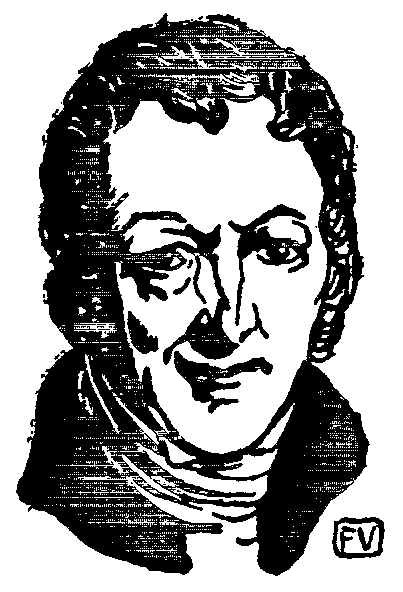
Becket's connection with Wymondham is described in Wiki, here. The Chapel was, until recently, the library. Now it is a successful art centre. The house by the railway crossing is called Becketswell Cottage. Between Thomas and Samuel of almost the same name, Wymondham ought to find some common ground. Perhaps it might yet.

As to Malthus, more another time. It is late and we have been swimming in the social stream all day so I feel I have grown scales and gills.


Wednesday, 28 December 2011

Cards


More from Chambers' Book of Days

The kind of advertisements, now called circulars, were often, formerly, printed on the backs of playing-cards. Visiting cards, too, were improvised, by writing the name on the back of playing cards. About twenty years ago, when a house in Dean Street, Soho, was under repair, several visiting cards of this description were found behind a marble chimney-piece, one of them bearing the name of Isaac Newton. Cards of invitation were written in a similar manner. In the fourth picture, in Hogarth's series of 'Marriage-a-la-Mode,' several are seen lying on the floor, upon one of which is inscribed: 'Count Basset begs to no how Lade Squander sleapt last niter Hogarth,' when he painted this inscription, was most probably thinking of Mrs. Centlivre's play, The Basset Table, which a critic describes as containing a great deal of plot and business, without much sentiment or delicacy.

An animated description of a round game at cards, among a party of young people in a Scottish farmhouse, is given in Wilson's ever-memorable Nodes. It is the Shepherd who is represented speaking in this wise:

'As for young folks—lads and lasses, like—when the gudeman and his wife are gaen to bed, what 's the harm in a ggem at cairds? It's a chearfu', noisy, sicht o' comfort and confusion. Sic luckin' into anither's banns! Sic fause shufflin'! Sic unfair dealin'! Sic winkin' to tell your pairtner that ye hae the king or the ace! And when that wunna do, sic kickin' o' shins and treadin' on taes aneath the table—often the wrong anes! Then down wi' your haun' o' cairds in a clash on the boord, because you've ane ower few, and the coof maun lose his deal ! Then what gigglin' amang the lasses! What amicable, nay, love-quarrels, between pairtners! Jokin', and jeestin', and tauntin', and toozlin'—the cawnel blown out, and the soun' o' a thousan' kisses!—That's caird-playing in the kintra,Mr. North; and where's the manamang ye that wull dour to say that it's no a pleasant pastime o' a winter's nicht, when the snow is cumin' doon the lum, or the speat's rearm' amang the mirk mountains.'

...There are few who sit down to a quiet rubber that are aware of the possible combinations of the pack of fifty-two cards. As a curious fact, not found in Hoyle, it is worth recording here, that the possible combinations of a pack of cards cannot be numerically represented by less than forty-seven figures, arrayed in the following order: 16, 250, 563, 659, 176, 029, 962, 568, 164, 794, 000, 749, 006, 367, 006, 400.

*


One thing I have often regretted when abroad is not having a proper business card / calling card. It's awkward handing them round in England - like holding a formal speech - but in Asia it is vital. People come all the way round a big circular table to hand you their card and, to tell the truth, it is useful, not so much for business purposes as to remember who they are. I have brought back several from China, some of them entirely in Chinese so I forget the person, but next to others I have written the occasion of our meeting.

I suppose the university could give cards to its teaching staff but universities in England are not like that. Professors tend to wear leisure clothes, say things like 'Hi' and leave it at that. In China the cards bear full titles. Somewhere in between might be the ideal.

As for actually playing cards I used to do more of that than I do now. At school I gambled for pennies and shillings, occasionally pounds, at pontoon and three-card brag. At home on sacred family Sundays, we played bridge or rummy for no stakes. I like cards as potentially numinous objects. Especially old Hungarian cards such as these:


.

Tuesday, 27 December 2011

St John


A short series of excerpts from Chambers' Book of Days for the specific dates, with subjoined miscellanea and news.

Various fathers of the church, among others Tertullian and St. Jerome, relate that in the reign of Domitian, the Evangelist, having been accused of attempting to subvert the religion of the Roman Empire, was transported from Asia to Rome, and there, in presence of the emperor and senate, before the gate called Porta Latina, or the Latin Gate, he was cast into a caldron of boiling oil, which he not only remained in for a long time uninjured, but ultimately emerged from, with renovated health and vigour...

...Partly in reference to the angelic and amiable disposition of St. John, partly also, apparently, in allusion to the circumstance of his having been the youngest of the apostles, this evangelist is always represented as a young man, with a heavenly mien and beautiful features. He is very generally represented holding in his left hand an urn, from which a demoniacal figure is escaping. This device appears to bear reference to a legend which states that, a priest of Diana having denied the divine origin of the apostolic miracles, and challenged St. John to drink a cup of poison which he had prepared, the Evangelist, to remove his skepticism, after having first made on the vessel the sign of the cross, emptied it to the last drop without receiving the least injury. The purging of the cup from all evil is typified in the flight from it of Satan, the father of mischief; as represented in the medieval emblem. From this legend, a superstitious custom seems to have sprung of obtaining, on St. John's Day, supplies of hallowed wine, which was both drunk and used in the manufacture of manchets or little loaves; the individuals who partook of which were deemed secure from all danger of poison throughout the ensuing year...

The core days of Christmas are so filled with family and social gathering that thought and feeling tend to come in micro pulses rather than tides. Hence the fiddling with Twitter and the short burst on Facebook. The spaces and constraints of Twitter are interesting. Every form offers its notions of completion, and brevity is no different. Perhaps the brevities will join together in some way to make some kind of song.


Monday, 26 December 2011

Pantomimes


From Chambers Book of Days for 26 December:

Pantomimic acting had its place in the ancient drama, but the grotesque performances associated with our English Christmas, are peculiar to this country. Cibber says that they originated in an attempt to make stage-dancing something more than motion without meaning. In the early part of the last century, a ballet was produced at Drury Lane, called the Loves of Mars and Venus, 'wherein the passions were so happily expressed, and the whole store so intelligibly told by a mute narration of gesture only, that even thinking-spectators allowed it both a pleasing and rational entertainment. From this sprung forth that succession of monstrous medleys that have so long infested the stage, and which arise upon one another alternately at both houses, outlying in expense, like contending bribes at both sides at an election, to secure a majority of the multitude'

He's behind you! No, he isn't! Oh yes, he is! Oh no, he isn't!

There is something of a liturgical feel to these exchanges. The gestures too suggest a vulgar sacred space. I think of wrestling with its poses and attitudes: attempts to codify communal emotions.


Sunday, 25 December 2011

Christmas Poem: Wish List


Photobucket


Wish List

Winter. The festive season. Notional snow.
Winter and sledges and stars. Crystal domes.
Ice crystals. Mountains of ice. Cosy homes
With log fires. Ah winter, how will we know
You? How will our bones recognize the freezing
Fog that tightens round them? How can we grow old
In the climate prepared for us when the cold
Within wants out, when winter starts easing
The locks of the flesh? Bring us your fairy lights
And tinsel. Bring us the shower of cards you promised.
Bring out the wrapping paper. Show us your wish-list
To keep us warm in our dotage on bad nights.
Let the residual gods do something useful.
Let them sing carols to us. Let them be youthful.

Art, detail from 'Red' by Clarissa Upchurch, Poem by George Szirtes


With our very best wishes to all visitors and returning readers. Let Christmas Day roll on!


Saturday, 24 December 2011

Clarissa's China pictures: Going round in Circles


A selection from the garden palaces. All in Yangzhou. You can see more here, and, under Gallery at her website here