Thursday, 25 August 2016

Penig Diary 1


Saturday 20 August to morning 21 August


Flight lands at 10:40, about half an hour late, in Leipzig. Ringo, Tobias and Uli immediately recognise us. They don’t speak much English between them but we do manage to talk along the hour’s drive to Penig, taking a slight detour through the streets of Leipzig, a handsome city where the artists of the New Leipzig School worked and continue to work.

The camp at Penig was opened, Ringo tells us, in January 1945, which is when my mother arrived. It housed some 700 Hungarian women, one of whom Rózsa Deutsch is still alive. Deutsch kept a diary after 1945 so they could talk in depth to her in German Otherwise they haven’t got very far. There are only five in the group and they have been operating for only three years. All are in their forties now so roughly the age of our own children. Ringo is an engineer, Uli teaches in a nursery and Tobias works with children-in-care. Ringo, sitting next to me, mutters under his breath in German when trying to think of a phrase in English. I wish I spoke German but I did Latin at school instead. My father spoke it pretty fluently and he also had some Russian. Me? Some French, and reasonably fluent Hungarian. We should, as Michael Hoffman writes in today’s Guardian, speak more languages.

We pass a couple of cooling towers and a laser display, then some slag hills marking an old mine now a resort. Nothing to see of landscape except that it is relatively flat. Highways at night are much the same everywhere. It is dark, the journey smooth, the conversation dying eventually for lack of linguistic energy. The landscape is no longer as flat.

The strangest thing is suddenly seeing the name Penig appear on a road sign. The name becomes a place. We are entering the name. We turn off the dual carriageway and make our way into further dark, finally entering the small town whose population is less that Wymondham’s, under 10,000, but which looks as though it’s longer and wider geographically. 

We wind our way through until we come to a bridge over a river, the Zwickauer-Mulde. We take a narrow cobbled lane straight after and proceed along the bank for some thirty yards before arriving at the hotel where we are greeted by another of the group, Janine, a tall friendly woman of roughly the same age as the rest. She shows us to our room. It is large, simple and clean. The windows open on to the river and the constant rushing sound of the weir / filter / electricity generator  that is directly under us. It sounds like steady rain and takes some time to get used to it but once we are asleep we remain asleep.


It is only in the morning we actually see what is outside. It is idyllic, a lovely town with gardens, the river wide and clear with dense lines of trees further down the bank. The beauty is a startling counterpoint to the horrors that took place at the camp, where my mother spent three months working at the nearby airplane factory, wearing wooden shoes or no shoes at all in the snow, in the thin summer uniform provided, marching miles to get there, working long hours then marching back in ranks of five, the most tired often asleep or half-asleep, in the middle, supported  by the two on either side.

Breakfast downstairs, the room again handsome, clear, healthy. Clarity in light, clarity in order, clarity in language, everything cleanly articulated: spotless. There is just one other couple present, Germans set for a cycling tour. The cook speaks no English but we manage. After bright sun we now have light cloud. The plan is to walk to the site of the factory, then to the concentration camp and back.

I am not sure what I feel. Curious. A little apprehensive partly because of what I might feel but also because of what I might not feel.

Sunday, 14 August 2016

My father's birth and childhood


My father as a baby


My father would have been ninety-nine today. I have posted excerpts from the conversations I had with him after my mother's death both here and on Facebook. Those concerned the war but, since this is his birthday, I am posting a few paragraphs about his birth and early childhood.

I was born in Budapest, in a small clinic in Ferencváros, the IXth District, in 1917, the first child of my parents’ 
marriage in 1916. Two and a half years later came my sister, and two and a half years after that my little brother, who was to be killed in the accident. [He was on a school excursion, and was killed in a sand slide on the shore of Lake Balaton. – GS] That was while I was in summer camp. My parents, like many others, couldn’t afford a family holiday

At the time I was born my father was working in a leather and shoe factory in Újpest on the outskirts of Budapest where he had to travel about eight miles a day by tram. He had to be in the factory by 7 am so had to start off at 6 and get up at 5. He was a cutter, that is to say he cut up the leather. This was a skilled manual job. My mother did sewing at home to earn more money. She got work through friends, by word of mouth, never advertised. 

I was not brought up by them though but by my paternal grandparents and their two sisters – that is after my own sister was born. My parents had a very small flat and that is why they were quite happy for me to stay there, especially after the birth of my younger brother. It was pretty difficult in those days to bring up a family. My father’s salary was very low, and my mother could do less sewing once she had two children to look after. The arrangement continued until I finished school when I went back to my parents.

I didn’t mind, I loved the arrangement. My grandparents were old gentle people. Grandfather was a tailor and had a small workshop very near their flat. He had two men working for him and he himself worked there until he was seventy-three years old and could barely see. He loved the family and his grandchildren, especially me for some reason. I was very pampered. I was the little bright chap of the family and they spoiled me. Every day my aunties would go down to the confectioner’s to get me a bit of pastry or mignon to put on the table for when I got home from school at about one o’clock and there was always that bit of mignon waiting there for me on the plate. They were very proud of me because I had good school results. My name was printed in capital letters in the yearly report of the school. 

Grandfather was a tall man with white hair, moustache and beard. He looked like a nobleman. Grandmother was a small woman, usually dressed in the customary black. She was a very good cook. The flat was in Eötvös utca and consisted of two rooms, a kitchen, a little hall and an outside toilet. No bathroom. The rooms were pretty dark, on the first floor of a four storey house, looking down to the yard. They lived about ten minutes walk from my parents’ so I would often look in at home, but more often they would come over to visit me at the grandparents’ flat. 

It was my aunts who had particular care of me. Riza was born in 1884, Tini looked older but was the youngest of five. She walked badly but loved shopping at the local shops. They’d buy half a kilo of bread every day, and 5dk of butter, ½ kilo of cooking fat, and milk of course since there was no milkman to deliver milk. She’d carry the milk home each morning in a jug. The milk didn’t come in bottles but in big churns and it was all used up each day as we had no means of keeping things cool. There were refrigerators that worked on ice sold by icemen which consisted of a tin compartment equipped with a tap through which the melted ice ran out into a bucket but we didn't have one of those. 

I remember very little of my father and mother. They were both busy then. He looked like me, was never very elegant, wore a trilby and tie, dark suits and went clean shaven. He had dark hair, no moustache, a big nose (just like mine) and had had a bad operation when he was sixteen or seventeen and it left a two inch scar under his left eye. My mother was quite an attractive woman for the times. 

I visited her parents every couple of weeks.  Her father was already ill with cancer and couldn't move. I’d often sit by his bedside and he’d tell me stories from the Bible or the Torah. He was quite religious. He had a long snow-white beard and I found him a very attractive man. They had eleven children, but I didn’t very much like my mother’s sisters. They were mostly older than her. There were two brothers and nine sisters but by the time I was born only seven of the girls were still alive. They were all married bar one, and one was divorced and lived with her parents. By the time I was born Giza néni, the oldest, was about 45 years old.

The old man used to be a painter and decorator with a little business. I remember very well when he died – it was my first meeting with death and made a terrific impression on me. I was about 12. I attended the funeral at the cemetery. I couldn’t cry. I didn’t know what it was about, seeing people crying.

Thursday, 11 August 2016

Return to Budapest 1945


My father as goalkeeper, 3rd from right, front row

An excerpt from the transcribed tape of my father talking about his life. This is now 1945 and he is home in Budapest. Béla Boschán was my father's last employer before the forced labour brigades began. He offered my father work after he was dismissed from relatively humble post to post because he was a Jew.


"So we were back in Eötvös u. It was January and very cold, as is usual in Hungary at that time. Snow and frost. People were starving. There was a ceramic stove in the flat which heated two rooms. It worked on fuel, which was difficult to get. We didn’t do much in the next few days. We looked around the house for any food that might have been left there. Every now and again we heard the boom of large calibre guns.

I began to think of how to make a living. I remembered that the area where I had worked with Boschán was in a reasonable state so, about a week after settling down, I walked over there to see if I could find anybody. It was all in one piece but I found a note stuck on the door to the basement to the effect that if anyone wanted to start working they should report next Monday. The firm was called Boschán Ignácz, Vízvezeték és Központi Fűtés Szerelő Vállalat. [Ignácz Boschán, Plumbing and Central Heating Company] So I returned on the Monday morning and found Béla, who was of course my friend. We embraced each other, happy to be alive, and I learned that his two brothers, who were the ones with engineering qualifications – one had a university degree, the other had finished high school – had perished. Béla did the office and bookkeeping and he asked me if I would consider starting up the business in junior partnership with him and his brother’s wife. I said yes, I would do that, because I needed to earn some money quickly. It must have been mid-February, 1945.

Boschán’s workshop was in Honvéd u, very near the Vígszinház [Comedy Theatre]. It was mainly a store for materials, plant and tools, but there were a couple of machines there for bending aluminium, lead and zinc sheets – roof work. The cellar was divided into office, workshop, and store. Béla had also been in labour camp in the Ukraine and was extremely lucky because in his particular group over half were killed, mainly by typhoid. The rest were brought back. They were somehow dispersed in Eastern Hungary and no attempt was made to take them to Germany.

Sooner or later, two or three of the old work force reported for work – plumbers, heating fitters, and so on. At that time it was still quite risky to walk in the city because the Russian soldiers were not very selective and if they felt like taking a few people off the streets they just took them.
The behaviour of the Russian troops, even allowing for the fact that this was war time, was not as civilised as we hoped. They got a bad reputation for what they did in Budapest during the war. Of course, they were not as well-organised or as cold-blooded as the Germans had been, but they were so unpredictable that people were afraid. They changed moods from one moment to the other. I had little experience of this directly since we were rarely raided. I remember once when two young Russian soldiers came round demanding watches but we lived on the fourth floor and by the time they got to the second floor they had quite a collection and were happy. The majority of the liberating Russian forces did not come from Central Russia but from Uzbekhistan, Turkestan, Kazakhstan and Siberia. Some of them, possibly the majority, were very good hearted, but very childish and quite unsophisticated, therefore dangerous.

The city was full of them. My brother-in-law, Zoli, who came back from a camp in Transylvania, was walking on the street three days after he had returned. That day the Russians rounded up some 200 people, bundled them on to a lorry, and took them to barracks with a view to deporting most of them. Zoli, who was about 27 and had just suffered three years in labour camp, was rounded up with them. However he was ‘lucky’: he had stomach trouble and about half a day after he was locked up he started vomiting and the Russians were so worried that he might be carrying some infection that they kicked him out.


They deported about 110,000 people at this time from Budapest alone. I know of other people who were suddenly surrounded by a Russian patrol and taken off to Russia. There was no rhyme or reason in it."

Tuesday, 9 August 2016

Spielberg's The BFG: Rethinking Dahl


We took the children to see Spielberg's The BFG this afternoon with Mark Rylance as the Big Friendly Giant and Ruby Barnhill as the child, Sophie. We all loved it. It was funny, beautifully inventive, superbly acted by both main actors, wonderfully visualised and full of a warmth I hadn't really associated with Dahl.

I don't think we ever read The BFG to our own children when they were young. We certainly read Charlie and the Chocolate Factory and James and the Giant Peach and George's Marvellous Medicine as well as a number of the shorter books. I think the children read The BFG for themselves.

I remember I had ambivalent feelings about Dahl. His work seemed all about appetite and full of cruelty, revenge, and an overindulgence in the childhood desire to shock. I had reservations about Michael Rosen too. If Dahl was about appetite, Rosen seemed to me to be about gangs and crowds united in some escapade. There seemed very little sense of the individual isolated from the crowd. I wanted more of that.

I think it may have been a case of prissiness on my part. The fact is both Dahl and Rosen were, and remain, very popular with children themselves. They clearly understood some aspects of childhood far better than I did. My early school memories involved edging round threats rather than throwing myself full heartedly into group occasions. I had very little group confidence: the world was what existed in my head.

Whether it was prissiness or not though I was plainly wrong. Particularly about Dahl. It would be interesting to go back to the books now and read them again and more of them. Spielberg's Dahl certainly constitutes an invitation. Spielberg has a touch of Chagall. in his treatment of children and adults. By Chagall I mean the best of Chagall, the early younger artist for whom magic wasn't a form of sentimentality but a normal element of the given, perfectly real world.

The Dahl story-as-film could easily have been sentimental. A little girl in an orphanage is abducted by a magical creature, overcomes monsters and learns something about the world in the process. It could have been an 'uplifting', morally approvable soft fable. The little girl could have been the wrong kind of cute, the magical creature could have been a soppy cardboard cut-out and the monsters perfectly unthreatening. Any humour involved would have been incidental, a coy joke cutting this way or that on the general map of cute.

The underpinning principles of the tale: that innocence is never fully innocent and yet is vulnerable, that a child can imagine the adult world as a complex group of comforting, comical yet pathetic and threatening figures, that the developing imagination can take flight into the ridiculous and laugh full-heartedly at the vulgar - all this offers a persuasive vision of the world. The world is genuinely a dangerous place. Terrible giants are slumbering just under your feet. Courage and wit can help to see you through but they don't always do so. And there is something uproariously ridiculous about the whole project of being wise or good.

There are only two central characters in the film: a serious, psychologically mature child and a childish overgrown adult with certain limited powers. Rylance is superb. His understanding of his lines is extraordinarily subtle, and Barnhill as the girl is perfectly convincing as a proper girl not a Disney projection. The late episode about visiting the queen and the farting at breakfast is not just an interlude to make the children laugh: it is the Rabelaisan asserting itself in the halls of majesty, procedure and dignity.

The film is marvellous but the figure of Roald Dahl stands behind it. He is the truthful wild-child with a sense of humour, able to be both enchanted and ironic about the enchantment.


Sunday, 7 August 2016

The Poundland Donald Wolfit:
Children overnight


They have gone to bed, not their bed but our fold-out sofa that makes a generous double bed.

They drew and coloured in. Marlie made a magnificent drawing of me sporting a small goatee but without ears. It's a shame about the ears but what you lose here you gain there and who am I to complain? I didn't complain when Picasso gave me two noses, neither of them small. He always said he could draw like Raphael at the age of twelve and spent the rest of his life trying to draw like a twelve year old child, but Marlie has done better. She draws like a six year old child and she is only six. She is well ahead of the game.

Then we played Hangman using a box with lots of plastic letters (like, who needs paper and pen nowadays?) Marlie played on Clarissa's side and Lukas assisted me, and we had BURGLARS and WEDNESDAY and PORTERS and whatnot (but not WHATNOT).

After that it was bedtime with a good deal of rumbustiousness followed by a story from an old book about a boy who wants to go to the zoo but can't and instead observes how everybody's shadow looks like an animal, which is a nice variation of the art of shadow puppets where two hands together make a dog shaped shadow on the wall.

I wrote one sentence of my mother book, then cut it out and put it back again before adding a second sentence. It has been that sort of day, but something will come along yet, even if it is only a scribble of immense frivolity.

The sky is a pale but luminous aquamarine with one roly-poly cloud looking all twisted up.

*

So far: burglary, imprisonment, rolling-in-sheets, hanging-upside-down, a morning of crime and torture with Marlie and Lukas. Prison is the shower cubicle where you are sentenced to 240 billion years reduced to 5 minutes on the cosmic calendar. Lukas turns a bangle into an anklet. This being Star Wars territory we are all on the Dark Side and I am named (a rather ineffective) Emperor. Later the bed becomes a police car.


I am faintly secondary to Clarissa most of the time. She handles everything with great aplomb and maintains order even as a criminal chased by the police. My own appearances are rather more stagy, a kind of Poundland Donald Wolfit. I oversee and carry through the hanging-upside-down. We have not got on to waterboarding yet but surely it's only a matter of time.

When Rich and Helen come to fetch them.  Helen suggests I write a rhyme to remind them of their table manners/ Here it is.

Table Manners

You’re not to mess around or play with food.
To leave the table without permission is rude.
You don’t speak with your mouth full, you  don’t splutter.
You don’t spread bread with huge dollops of butter.
You don’t grab what you want and leave the rest.
You don’t reach for the biggest or the best.
You use a knife and fork and not your hands.
You ask politely and don’t make demands.
You eat what’s put in front of you, don’t whine,
And if you can’t, smile nicely, and decline.
You  don’t rock on your chair in case you fall,
But it’s far better not to rock at all.
And if you’ve farted there’s no need to shout it.
The others will already know about it.

This is your ultimate table manners list.
Your parents can make up anything I’ve missed
Not that YOU need reminding in a rhyme.
Because you’re VERY good (most of the time.)


Tuesday, 2 August 2016

from Rewind
a life spooled backwards


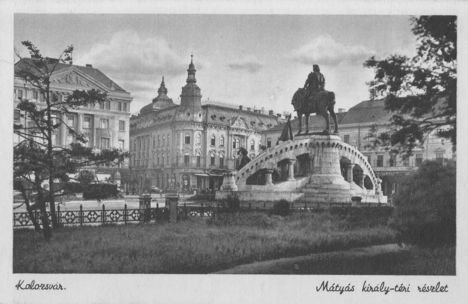
...Cluj-Napoca or Kolozsvár hadn’t always been like this. Not in Magda’s time. When she was just ten Patrick Leigh Fermor passed through the city in István’s car with his friend Angéla beside him. Magda might have seen the strange company as having ‘stormed and bucketed’ through Transylvania, they arrived at her home town,  a place that was “not as perilous as it would have been in the winter season, with its parties and theatres and the opera in full blast” and where visitors could drink themselves silly at the New York in the main square where the barman was supposed to have invented “an amazing cocktail”. It was a civilised, intoxicating sort of place, its history tangible in the cracked marble of the hotels and their vast grey mirrors even in 1993 when the city was in danger of starving and rotting away.

One invents everything: the world, one's friends and lovers and family, every power one is bound to and, most of all, oneself. Then one has to believe all these inventions and act in the world they inhabit. Because it is real of course. There are facts in it that stare you right in the face so it feels absolutely real. She too is real but from now on she will be diminshing and fading and I must work not so much to preserve her circumstances but her sense of being, or rather my sense of her being.

It is 1940 and she is sixteen. Nothing dreadful has happened yet and, as far as her mother and father can tell, nothing might happen. It’s just that the atmosphere is stifling. The beautiful city has year by year grown more hostile. She has made a recovery from her rheumatic fever and is out and about again, though not in school. Some friends have organised a dance and brother Dezsö is touting tickets near the station. Some of the Hungarian military labourers who have been doing work on the railtracks - so this must be in September at the earliest after the Second Vienna Award - stop to buy a ticket, among them my father, László. Northern Transylvania is suddenly Hungarian again. He is Hungarian, albeit Jewish. Magda and Dezsö are ethnically Hungarian, albeit Jewish. As Hungarians they are delighted to be citizens of the same country so it’s an occasion for rejoicing. As a schoolboy László had learned to chant Csonka magyarország nem ország. Egész magyarország mennyország. ‘Hungary cut down is a land that’s riven. Hungary made whole is our true heaven’ like all the rest. He too is a patriot. Since this is only a partial restoration of the prewar kingdom, it isn’t quite heaven but  a taste of heaven.

For László it is a break from labour, for Magda a chance to have some fun. László is just twenty-three, Magda sixteen. He goes to the dance and dances with a number of partners. It is all very decorous. The occasion might have been organised by a Jewish youth club which is why Dezsö is selling tickets, but it might be just an ordinary dance.

László and Magda dance together. 

Then he goes back to work and she to her house and they don’t meet again until she knocks at his door with a box of negatives in Budapest.

They discuss this possibility much later, once she is in Budapest. Maybe after her return from Penig. Maybe only once they are married, but the possibility is discussed. He remembers going to a dance, she recalls dancing with a man much like him. They were in the same place at the same time. Why not?

Nothing is certain. Later, when I am recording him, László tells me this and I wonder whether she too has told me. I can’t quite remember. Nothing is fixed, nothing certain.  Next time he tells me it is 1943 not 1940. She is home on a visit, he is working on the railtracks, the story is essentially the same but now it’s December and he too has been home on leave and was now back digging. She is nineteen now and he is twenty-six. She has already been in Budapest two years or more, has completed her apprenticeship with Escher and is making her own way as a photographer, or trying to. They are both swimming about in the grey pool of time until, at one point, they touch then part. Then in 1944 she arrives with the negatives and they meet properly, as for the first time.

What was it she saw in him? He has great dark eyes, a head of dark hair, is well-proportioned, of slightly less than middle height, and certainly fit because of all the work he has been doing, the kayaks he has been rowing, and the mountains he has been hiking. He was, she must have supposed, handsome enough but for that great hooked nose which was, nevertheless, somehow of a piece with him. She will have met many others more physically atractive or dashing. They would certainly have courted and propositioned her. She will have dated them and rejected them for a variety of secret reasons. But now here is this man in uniform, in his family apartment, talking to her in that dark-brown voice, no doubt polite and, in his own manner, persuasive enough so they go down the stairs together and look forward to meeting again. Is it calm, she perceives in him, a calm harbour for her own wild inner sea? Does he smell of security, of a basic decency she has not found in others? Of beauty she might have seen enough. Her brother was beautiful but distant and occupied with his own passions that excluded her.

Moments fall apart in your hand. People’s lives fall apart, their memories fall apart. It is hard imagining other people’s pasts, especially those decisive intense moments of youth. You have somehow to believe in them, as though you could hold them together by an act of wil

Monday, 1 August 2016

The Secret Agent / Rochester


Sunday was blessedly quiet. I read a little, wrote a little, caught up with correspondence, walked a little, slept a little, and at the end of the day we watched the last episode of The Secret Agent.
It is a good number of years since I read it so I had forgotten a great deal. The TV adaptation was very claustrophobic but memory of the book is less so. Maybe it is because the TV version simplified a great deal while changing the narrative order of the book. There was no real argument about the causes of the discontent or about its ideology. The anarchists wanted to blow things up, the Russians wanted things blown up. Somebody had to blow things up and of course it was the innocents who died.

Well, I suppose that is an accurate enough summing-up of what happens in life but for more complicated reasons. Good text for the times though as plenty of others have pointed out and probably one of the reasons for producing a new version now.

Not quite convinced by Toby Jones's Verloc. The face seemed stuck in a permanent grimace of malevolent discomfort. Tough on Vicky McClure's Winnie too, a passive sweetness working in a porn shop, who harbours no suspicion at all of Verloc and his sudden fatherliness.

*


Talking of porn a friend and near neighbour lent me his daughter's deservedly top-graded graduation essay on Rochester's Sodom and Gomorrah. It is essentially a feminist reading complicated by the notion of a moral pornography that subverts conventional power relations. Lovely sophisticated work.

It is worth remembering of course that Sodom and Gomorrah does not exist in a theoretical vacuum but that, like all Rochester's poetry, is a historical work produced in a certain political, moral and psychological climate, by a man whose best known poem is titled, 'Upon Nothing', a scathing dismissal of humankind as a whole.

And that is precisely what is thrilling about Rochester. It is not so much the forthright language or the scandalous subject but his iron will to form, by means of which he exposes rather than revels in the state of human desire, appetite and capacity. His creatures are much the same as Lear's 'poor, bare, forked' animals. They are unaccommodated. They inhabit a nothing, a vacancy. They do not have the shelter of either reason or morality. They are appetites lost in outer space.

Rochester, of course writes from a male perspective and since the pathology of male desire has been widely discussed from various - often critical - points of view, the essay can handle that with great confidence and aplomb. That is not quite the case when it discusses the story of Lot's daughters, where terms such as 'peculiar', 'deeply uncomfortable' and 'incredible' come into play.

The issue of female desire, appetite, and capacity is still rarely treated in literature and comes as a shock. There are exceptions, of course, but women might do well to write it as honestly and fiercely as they can, as fiercely perhaps as Rochester. And write it not as exception but as norm, as Rochester did. That, I suspect, would be genuinely subversive.