Wednesday, 24 January 2018

THE BLIND MUSICIAN AND THE VOYEURS 2


Studio photo of my mother at 14

By this time she is no longer a press photographer doing stories for Esti Budapest, an evening paper. Her damaged heart, ruined by rheumatic fever at the age of fourteen, is not up to it, or so I hear according to one story. She collapses in the street. She can’t go out on stories but must work in the lab and at home. Another version, from much later, suggests that her work has been restricted for political reasons. She has refused to file the expected reports on her colleagues, a serious omission in Stalinist Hungary. Besides, she is of the wrong class, a middle class woman and therefore untrustworthy, unlike my father whose own father worked on the factory floor, which is why dad is not only in the party, but in the ministry of building and quite high up too.

In any case, she is here in front of me, working, tired, frustrated, and a little snappy. She is – though I don’t know this then, and even if I knew I wouldn’t quite have known what to do with the knowledge – from a city in Transylvania, in a territory once Hungarian, then, after the First World War, the territory having been ceded to Romania by the treaties of Versailles and Trianon, Romanian, then once again Hungarian, ceded back to Hungary in 1940 under pressure from Hitler and Mussolini. But right now, as I am looking at her, in 1954, her home city is back in Romania. This is how the amoeba works. The pseudopodia stretch out and retract. She is a creature of the amoeba.


It was after Northern Transylvania was ceded back to Hungary that she – herself an ethnic Hungarian – left home at the age of sixteen to come to Budapest in order to be apprenticed to a well-known photographer called, so my father told me after her death, Károly Escher.

Escher now seems to me one of the greatest of Hungarian photographers, someone to rank with André Kertész, Robert Capa, Brassaï, Marton Munkacsi and Laszló Moholy-Nagy as an unknown yet international master. Interestingly, those masters are all, bar Capa, men of the same 1890s generation. Capa, born in 1913 belongs to the generation of some of the great Hungarian women photographers, such as Éva Besnyö, Judit Karász, Ata Kandó and Erzsi Landau.


[to be continued re: Escher]

The Blind Musician and the Voyeurs 1


Andrew and I photographed and hand-coloured by my mother, Magdalena Nussbächer-Szirtes

 
There is a rather beautiful Hungarian word, szélhámos, meaning literally harnesser of wind, or stripper of the wind, but, according to the dictionary meaning, conman or fake or fraud or simply rogue. That, ladies and gentleman, is how I feel standing before you: a harnesser of wind, a wind-stripper, a fraud. But not, I hope, a purveyor of wind, a windy speaker.

Hungarian is an isolated language, marooned among greater blocs of Slavic, Teutonic, and Romance. Its splendid isolation is due to its out-of-place Finno-Ugrian roots that relate it, only vaguely, to Finnish and Estonian, the whole tribe, or group of tribes, having – according to the standard theory – migrated out of Central Asia over the eight and ninth centuries AD to settle, in the Hungarian or Magyar case, in the Carpathian Basin in, according to conventional dating, the year 896; an occupation or land grab celebrated in its millennium year, 1896.

Countries in that part of the world – particularly the landlocked ones - behave like amoeba in geographical terms. They shrink, expand, put out arms and shrink back. Sometimes they are sliced into pieces but, miraculously, join up again though not necessarily in the shape they had before. Sometimes they vanish altogether only to return a few decades or centuries later. This enforced shape-shifting and possible extinction breeds both great anxiety and considerable adaptability, which are the conditions I would most readily ascribe to the country where I was born and left, together with my father, mother, and younger brother in 1956 as a child refugee. As refugees we carried very little except this small toy-typewriter case containing photographs. I still keep it under my desk. Here it is. By the time we had walked, illegally, over the border into Austria on 29 November – incidentally my eighth birthday – there was little else left, other suitcases having had to be offered as payment to those local people who escorted us, together with some fifteen or sixteen other would-be refugees, across the cold and muddy fields in which, my parents told me later, I lost one shoe, arriving in Austria half-shod.

The photographs in this little case were my mother’s work. She was a photographer by training. One chest of drawers, in the Budapest flat where we lived, was filled with examples of her work. Because we left in a hurry, without warning, she simply scooped up an arbitrary batch of prints and put them into the case.

We were penniless on arrival in Austria. We had no foreign currency at all. What we had were the photographs and the charity of others, a kindness we brought with us to England a few days later, when we were granted a flight to London.

Being so rushed it wasn’t a particularly good choice of photographs; bar three or four exceptions all of them were of my family. I knew little about her work as a child of seven of course but I would like, if I may, to use that work, and she herself, as a kind of lever to prise open a bigger Hungarian box.

In order to do so I want first to conjure a childhood memory of her. We are at home, she and I. She is working at a light-box on the table. Next to her are a set of razors, a small sheet of glass, some tiny tubes of photo-oils, and a few slender brushes. The razors are what she uses to mend negatives, the paints and brushes to add colour to a black and white photograph. She reddens cheeks and lips a little. The grey hair turns brown. Clothes take on colour. It is pretty though not exactly like life. Maybe it is simply better.  Jaw lines are clearer, wrinkles disappear: everything is – as I would put it now – tending towards an ideal.

[to be continued]

-->

Friday, 12 January 2018

Twelve Dark Passages


Text written to Sam Winston's DARKNESS VISIBLE project at the South Bank and, for one evening, at The Whitechapel Gallery on 11 January 2018


1
As we enter night we close the curtains to make sure the room is dark. We are moving to a different house. The night house. The hall, the kitchen, the bathroom, the spare room, put on their masks and turn to the wall.

2
As a child I saw animals come and go, squeezing their way through walls, then drifting from this world to the next and back as though they belonged to both. They were eyeless and soft as the dark that received them. They were, as I knew even then, thoughts formed to the purpose, their business to fill the dark spaces provided for them both outside and inside the skull, which was the darkest of the dark spaces at the very heart of the problem.

3
It is not a problem to us. It is dark, so we sleep. That is normal. We enter the normal through the simple subterfuge of turning off the lights and closing our eyes, the closing of the eyes being an affirmation of the normality we have chosen. This now is normality. This is the lightly-cushioned vacuum we have chosen. Lean back, stretch out, curl up, listen.

Hear.

The room is studded with noise that lulls and spikes. It grinds its way through the space that is now divided between room and body, a space that so fills the head it is positively dense with it. We have entered the train that passes, the boy that shouts, the laughter that builds and peaks and splits into constituent noises.

We have entered.

Now think.

Think night and what night provides even without night, in the simplest terms of its darkness. The mind begins to move and feel its way round. The entrances and exits of childhood begin to present themselves as possibilities. Here is that endlessly complicated building you entered somehow but could not leave. Here are its stairways, cellars and precipices. Don’t look over the rails! Is that someone falling? Is it someone you know? Is it the most loved of those who should not fall who is now falling?

4
This nonsense monologue continues on another level. This is language after all, not darkness, not an image. When a smell appears it quickly finds a name. When a voice laughs, it quickly lodges in a phrase or cadence.

Let’s build something out of this. Let’s make some kind of statue, a sculpture.

5
Imagine
a web
constituted
of such thin
filaments
they might be
strings stretched beyond their capaci t   y
on an imagined
micro-
scopic
inst-
rument

Here’s the spider
scuttling
to its natural music,
its codas and counterpoints,
its musical terminology of bar lines
its suspensions
its hemi-demi-semiquavers
its acciaccaturas
its gasping drops
its staccato and stuttering
its splintered crochets.

Oh spider,
hang in there,
help is coming!


6
Having established a bedrock of pure darkness we may perhaps be able to name its sub-classes, all the classic blacks we know. Let’s say their names: Ebony, Taupe, Davy’s Grey, Noir, Charcoal, Soot, Jet, Onyx, Lamp Black, Carbon Black, Super Black, Vantablack. That black.

The black of your polished shoe, the black of the ribbon on the undertaker’s hat, the black of drypoint in curled metal. The raven, the crow, the rook, the blackbird, the black swan. And other blacks. Keep adding. These are only names, and names are there to be invented. But do it in darkness. In the dark backward and abysm of time. In time’s eloquence. In time’s infinite capacity and its vast belly that keeps expanding and never will stop expanding.

Are we there yet? Is the thought of time a black thought yet? Is darkness visible supposed to be visible?

It’s just a room. These are just thoughts waking to find themselves returning as words. But they are waking in darkness, a darkness in which it makes no difference whether your eyes are shut or not.

7
If I were to think rationally about this
in the form of a sonnet, say, this is what
it would look like: without emphasis,
its lines open at first but eventually shut.
If this were a game with proper rules we might
roll the dice and chance the next move into
the dark before us. We could call that night.
We could play the game all the way through.

If this were convention we could call upon
exemplars and enter the last six lines as if
they were our last six lives, and then be gone,
having served our purpose, terminal and stiff,
with just a couplet as an ironic gesture, a spark
to briefly light what should remain as dark.


8
I have paced the room and know its dimensions. I can trace the wire back
to the plug and socket. I know where the couch and table are, and where the chair
is in relation to the table. I can feel my way to the door and the wall with the window. I can assure myself this is so. I can sit down. I can close my eyes, I can speak into the recording machine. I can chronicle my time and circumscribe it. I can even locate, or think I can locate, the ‘I’ figure that haunts these lines of writing and trap it, right here. This I. Can’t I?


9
When I was a child I wanted the door left open at night so some light could get in. The light meant the outside world was still there: my mother, my father, the geography of the entire apartment, the sense that I hadn’t entirely left them. A few years later, still a child, I saw a television programme where a tiger was enticed into a house and left to roam it. From then on the outside world meant danger so I had to have the door closed.

But there were dangers in semi-darkness too. Clothes left hanging on the door began to walk and drift towards me. The room lost dimension. It was all drift. Beyond the window, if I drew the curtains, would be a street that had little to do with me at night. It was the beginning of a world that extended into the infinite distance, across the house, over the park, beyond the railway line, past the industrial estate, disappearing down tunnels into the air, into the desolation of a universe lit by lampposts.

Even now, darkened alleys and passage-ways, empty malls, deserted stations, derelict theatres, all those peopled places unpeopled but intimating presence, leave me wary, pressed back into myself.

A totally dark room is whatever happens to be the case.


10
Darkness is not night. It is simply darkness. It depends where you find it and how easily you can leave it. Your body becomes an object in a specific space, a vulnerable location that is, nevertheless, habitable. What you cannot see expands into a set of alternatives. Don your blindfold. Put your hand into this bag? What do you feel? What if I suggested what it might be? What after all have you been expecting? Those are your own fingers, aren’t they? You’d know them even in the dark, wouldn’t you? Can you feel them moving around the inside of your head? There! Now you’ve located them. Now locate yourself. Be your own object. Possess something.


11
The idea of total darkness is not the same as total darkness.
The idea of light is not the same as light.
The words expressing the idea of light or total darkness are not ideas.

This word may be imagined vanishing into total darkness.
This word has begun to express an idea but most of it is lost in darkness
This sentence is not total darkness.

This one is.


12
I have not talked about blindness.
I can’t see how I could.


Tuesday, 26 September 2017

Heart Skips a Beat


That interview about the relationship between the beating of the heart and poetry was rather fascinating. The interviewer was a man who suffered from arrhythmia so my own quad op became part of the conversation. We started from a recent radio programme in which a choirmaster suggested that the various heart-rates of individual members of the choir begin to synchronise as they sing.
The broad course of the conversation was - very briefly -something like this:


ROCKING AND TICKLING

The child picks up the mother's heartbeat while still in the womb. Soon after it is born it is held in its parents' arms and gently rocked for a heartbeat-like assurance so it may sleep in security.The child hears lullabies for much the same reason. Both rocking and singing provide the kind of regularity you find in poetic metre which is - so the suggestion goes - an echo of the heart.

However, once the child is more aware, we start playing with it, moving our fingers round its palm, quietly assuring it with the mild tickling and chanting of 'Round and round the garden' then running up its arm with the faster, rising voice and movement of 'tickle him/her under there'. So the regularity breaks and causes laughter and pleasure.

Though a regular pulse is reassuring to the extent that we hardly notice it, we are pleased and excited when the heart 'skips a beat'. We love and seek that skip. It takes us out of ourselves, our regularity, while reminding us of it by way of contrast.


EXPLOSION AND AVALANCHE

I was thinking of two particular examples one from Tennyson the other from Dickinson. I will just refer to the Tennyson here. Here is a passage is from Tennyson's 'In Memoriam'


...A hand that can be clasp’d no more— 
Behold me, for I cannot sleep, 
And like a guilty thing I creep 
At earliest morning to the door.

He is not here; but far away 
The noise of life begins again, 
And ghastly thro’ the drizzling rain 
On the bald street breaks the blank day.


The tempo of the poem breaks into a run in '...ghastly thro' the drizzling...', which, in its turn, offers us some slight preparation for the astonishing last line that beats down on us, both rhythmically and in its alliteration, in an avalanche of heavy masonry. The power of feeling is realised in us physically. Our hearts, brains and lungs experience something of what Tennyson experiences through language and we are moved and exhilarated by it.

We then talked about Dickinson's use of breath and break. The argument was that we want the exhilarating, explosive force of broken rhythm and broken heart beat, but we don't want it all the time. That is true for excitement in life too. We want to be shocked, frightened, astonished, etc within the governance of some form.


GHOSTS AND TENSION

But this form - and this was the last point in our discussion - cannot afford to become too comforting or relaxing. It has to retain tension even within the regular beating of its heart. It can't nod off. Hence the importance of vowel-play, consonant-play, flexible caesuras, sudden shifts of imagery and other learned yet intuitive devices. It is the ghosts of form, its hauntings, that we desire, even in poems that do not appear to offer a set metre. The ghost of the set metre, which is itself the heart at tension, is constantly shadowing us, or should be.

Should we therefore enjoy arrhythmia, asked the interviewer, because it is clear that we don't and that it is dangerous?

The reason we don't, I suggest, is because there is no governance. Verse offers the possibility of governance. But it is governance at tension: it assures with a not quite steady hand.


Monday, 17 July 2017

Acceptance Speech of UEA Honorary Doctorate 17 July 2017


Thank you very much indeed, Chris Bigsby.* Thank you the University of East Anglia. I am enormously honoured and astounded. To pick up a theme from Chris, this is indeed a time of refugees, though the climate of reception has changed since my family came here. Let me say a word about my own time as a refugee.

When we arrived in England in the December of 1956 the authorities placed us, along with a lot of other Hungarian refugees, in off-season boarding houses on the Kent coast. Hundreds, maybe thousands of us, were being accommodated in such places elsewhere. It was in the depth of winter, cold and dull, but we could take walks along the prom and gaze at the sea, a great alien body of water the like of which none of us had seen before. It was as grey as everything else around us at that time but its noise was denser, a hiss, a low growl and a sort of clattering surge that served as both threat and safeguard. It was tangible, almost solid. If we wrapped up well and kept watching we would finish up tasting of salt. Our fingers had a clear salty taste. And as the year moved towards spring and colours brightened we got sharp salty winds and moved through what we began to think of as salty light.

The sea, the light, the taste of salt, are primal experiences, a kind of poetry written on the bone. Everyone understands poetry in that form. For most of us it is, as W H Auden put it in his poem In Memory of W. B. Yeats, a way of happening, or what Finn McCool in Irish legend decides is the music of what happens. It is the way someone steps out through a door, the way something lies on the table, the way light moves, the way something extremely minute makes sense by being itself yet being other and more. It is usually concentrated into a moment and my guess is that we desire such moments more than we desire money or fame or even what we call happiness. Such moments are what move us from routine into possibility. We live for the poetry in them and can’t really live without them. We want the other stuff that jobs and careers bring us and offer to society, and - of course - they too contain such moments. But we need the poetry of being to bring the world round to us and to make life worth while..


For a writer, it is more specific. It is sea, light and salt as they meet language. It is the way words strike each other and form something beyond themselves. It is not lyrical speech or a pretty way of saying something plain. It is language that is compelling in its own way, however simple or difficult, however direct or ironic. It is complexity coming to a shape, becoming a process that reads as meaning. It is all the terrible and beautiful things we fear, know, hope, and imagine assuming a comprehensible shape in words. 
 I don’t want to speak in grand rhetorical terms but I feel this is true. If we don’t believe something like this why do it? Why engage with it?

Well, we do engage with it. I started at seventeen knowing practically nothing and I don’t claim to know much more now.  What I do know is that I am deeply privileged to be honoured in a way I never expected. For me it is moving and rather astonishing. Thank you for the great honour. Thank you for astonishing me.

As for refugees they are, as we were, like leaves blown off a tree, drifting where the wind or sea takes them. But not just leaves. Leaves wither and die and return to earth. Refugees, migrants of all sorts, are also seeds of new growth and always have been. Few of us present here now live in the places where we were born. We too drift and seed. On good soil with a little tending we become part of the landscape. That is our history, our present and, with luck, our future.

*The oration was by Professor Christopher Bigsby

-->


Tuesday, 9 May 2017

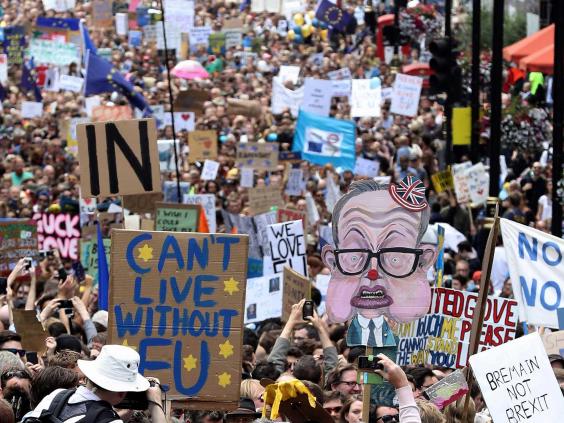
ON BREXIT AND FURY 4


OTHER FURIES


The bad relations with the metropolitan elite are one reason for the fury but there are others.

The first is sheer frustration and the pressure of poverty. The poor don’t want to be given moral lectures by the comfortable. They have not benefited from that which the liberals preach. Watching their phrases, tempering their emotions, following the latest codes of speech has not made them any better off. Besides, they don’t think their own codes so bad. They are capable of supporting each other, nurturing each other, and of showing kindness to strangers. But those codes are vaguer, wilder, more lonely, more fiercely isolated than before the break up of the great industrial communities in the 80s.

The decline and dispersal of the working class as a self-respecting and striving force makes for sad history. It is documented in many places and there’s no point going over it here, Enough perhaps to suggest that we are beyond the 80s now, in a new, more desolate phase of development.

That which was common has been largely hollowed out leaving a mass without a body. People have moved from communities of redundancy to redundancy without community. Individuals have shifted from short term job to short term job. People split up, hitched up and split again. This was followed by the gig economy and zero-hours contracts. Nor was anyone promising a way back. The nationalised industries were not going to return in a hurry. The world had changed. Has changed.

*

In one sense it has became far larger and moved beyond our understanding. Money rushes round the globe looking for places to roost. It lands then moves on. If it doesn’t like a place it simply leaves. A country is no longer a sealed unit. It is a landing strip. The desolation of old working towns is the desolation of landing strips overgrown with weeds.

In another sense however, the world has grown smaller through personalised technology. Computers, smart phones, the internet: everything is available at our fingertips. But for all its great benefits - and there are many - the web, that can create real intimacies, is more apt to create virtual ones between presences not bodies. It also produces a terrain in which the individual is ubiquitous yet insignificant. You can shout and scream all you like, as loud as you like, into the web and no one will stop you. It does not assure you. It will not love you. It simply amplifies you and your voice. It has an enormous capacity to fill the world not just with news but with alternative news. It licences and offers a ready arena for fury.

*

Fury is not just a reaction to perceived contempt but to the fading and vanishing of the known and trusted: the village that has turned into a weekend home for the wealthy, the town where people speak strange languages and establish shops catering primarily for themselves, the city with its disorientating, ever-changing districts and accents.

The atavistic is the familiar. The familiar is what can be controlled. We must take back control. We must be ourselves, putting ourselves first. America first, was Trump's cry, but we can substitute whatever country we like for America. It is by taking back control that we might become great again, in our own clearly demarcated region of greatness, which is chiefly composed of popular half-memory and nostalgia which must be defended with all the fury at our disposal, lest they, whoever they are - liberals, faceless bureaucrats, foreigners - take it from us.


ON BREXIT AND FURY 3


ON THE OTHER HAND


Having criticised the smugness and disdain of the ‘metropolitan liberal elite’ doesn’t mean I think their values or instincts are wrong. On the contrary, I am, on the whole, a slow but genuine supporter of the ‘political correctness gone mad’ persuasion. I have felt the resistance to 'correctness' at times but later found myself agreeing and adapting to it. That is because not all my first instincts are to be trusted.

And it is true that though I am no longer metropolitan and never have been in that precise sense, I do often describe myself as a liberal, of the liberal-left to be precise, someone who must, I suppose, be one of the elite in that, despite the lack of a university education or family wealth, I seem to have come by a couple of degrees and a level of success as a poet, translator and occasionally public writer that I coveted in my youth. Furthermore, I live in an old unthreatening town without too much visible poverty and move (in so far as I move) in a circle of educated middle-class people who accept me as one of them. I am a fortunate guy.

So 'Furious' of Doncaster and 'Seething' of Halifax are right. I cannot appreciate their sufferings at first hand: I am only told of them and read of them. They can admonish me once and I will accept it, yea three times, but when they go on a fourth time in a tone of aggrieved fury they annoy me and I just want them to bugger off. That is partly because I have a faint claim on disadvantage myself – not that I intend to draw on that capital unless in dire need – and because I can understand a claim the first time, and indeed the next two times out of courtesy.

But their claims do not blast my opinions out of the water. I think no better of Brexit for their fury which, it turns out, has little or nothing to do with Europe and far more with the substance of my previous post. I understand the nature of fury but I don’t follow its prescriptions or yield to its claims.

It’s a delicate balance though. I am not a model of patience and I too can be angry. I was, and remain, very angry about the way the referendum was organised and the great thumping lies told by the arch-Tories leading it as well as by the repulsive Farage who is all the more repulsive for his comic grin and hail-good-fellow manner. I remain deeply concerned about the direction the country has taken since the referendum, about the threat to those who have come here to work conscientiously and to the great benefit of the nation, and about the loss of hope of a more stable, more united Europe that could be a counterweight to the giants of America, China and an increasingly expansive Russia. I am, I will admit, fiercely anti-nationalist. The very word 'nationalist' gets my back up. On the other hand I am a European by birth and temperament, but that has never stopped me being British or even, sentimentally, almost patriotically, English, since England is where I live and have lived ever since it welcomed me and my parents in the eighth year of my life.

This is chiefly about myself. I want to write one more post on this subject, not about myself but about another aspect of the fury.