Friday, 3 January 2014

Brevities


Two days work and I have cleared out my university office, all mod cons included. There remain some dozen empty box files and lever arch files and some twenty-five ring binders. I am Lord of the Ring Binders and Plenipotentiary of Paper Clips. I have filled twelve bin-liners with old teaching material, and a couple of security bags with old reports and minutes of meetings etc. I have taken out the coffee machine and the desk lamp which were mine.  I have removed the many thin volumes of poetry and some of my own werke, not to mention sundry anthologies and works of criticism. They now sit at home in cardboard board boxes anticipating the next stage of the operation where I launch an assault on our overcrowded shelves and give some books away, as well as reaorganising my papers.

That's a lot of work to do.


*

Clarissa has had a cold for the last four days and has been slaving away at the tax. By the evening it is all we can do to settle down to an episode or two of Breaking Bad, which is in fact a monumental piece of storytelling, beautifully written, directed and acted. It's like Gogol's Dead Souls with crystal meths. At bottom it is a reflection on mortality and the male of the species. The big moral question is whether it is better to be a psychologically emasculated failure with two years to live, your family united in persuading you to take a hopeless course of radiation and chemo while you know that doing so will financially devastate the family, or whether to take arms against a sea of troubles and, being a chemistry teacher who once worked with a Nobel Prize winning scientist, to brew your own super-meths and go down the road to perdition against all kinds of sadists and demons. It is, in its own way, the American Beauty thesis but bigger and and far more dangerous. But we are less than half way through. It does deal with masculinity at a deep mythical level. Walter White, our hero, is the primordial provider, providing not only money but tragedy.

*

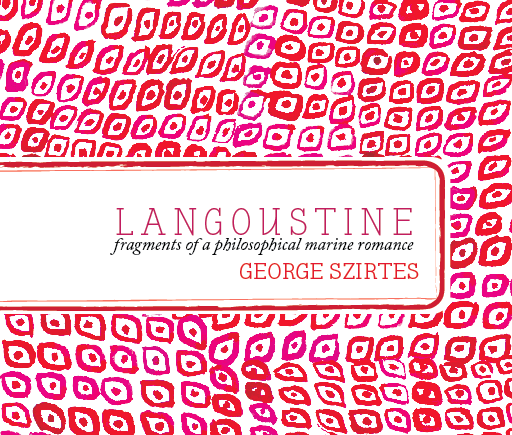
Tomorrow to talk to Faith from the BBC on the phone about the spot on next week's edition of The Verb, which means a long day travelling to and from the Batmanesquely named Mediacity in Salford. Subjects: Rilke on the edge of the First World War and Ferenc Békássy's poems in England, in English (published by the Hogarth Press) written just before he returned home to fight (and die) for the other side. This is really George Gömöri's territory but I'll make sure he gets the credit. There may also be time for a little Langoustine, and maybe even Wordless.

*

Meanwhile the wind is rising again. How quickly Saturday comes around.


Thursday, 2 January 2014

Fifteen Matryoshkas


It is 2:30 am. You have woken and are ever more awake. It is a long time to morning. The crests and troughs of potential sleep-time appear as a set of dolls, one inside the other.  These are the matryoshkas of the night. The text is followed by a few brief notes on process, the notes to myself as much as to any notional reader.


FIFTEEN MATRYOSHKAS


Night empties out its pockets. Nothing there except more night and more pockets. Night is a matryioshka, think the pockets as they empty.

I can't be merely a receptacle for ever smaller simulacra, says the matryioshka to its simulacrum. Nor can I, it replies.

This is the night, say some. We are within it. Our minds understand night from within as one matryioshka understands another.

If we keep talking, say the matryioshkas, night will end and light will bathe us like a nurse bringing relief. There will be flowers and rain.

Bring rain and flowers. Bring rain-flowers, pray the matryioshkas. Let there be just enough light to nourish the flowers. Let it rain flowers.

Our mouths are the mouths of matryioshkas, says the rain. Anything can grow there if you wait long enough but now it is night. You must wait.

Sometimes I dream of night rain, says one of the matryioshkas. I think I hear it falling on the grass. This is what the books say. I hear them.

The dreams of the matryioshkas are recorded in books that understand night and its bibliography. They record both flowers and rain.

Let night be over, we hear a tiny matryioshka cry inside another matryioshka. Open the book. Let it rain. Let something grow. May it be flowers.

We understand these four terms, say the books: matryioshka, night, rain, flower. We have deep pockets where it is always dark. We empty them.

I will not accommodate the romance of matryioshkas, declares night. I am not a romantic object. I know rain. I know flowers. Not like these.

Every night comes to an end, says one matryioshka. Show me, says another. Not yet, says the first. Not yet, says yet another.

Night, night, night, night, the matryioshkas repeat. Our pockets are empty. When will they be filled? Not yet, not yet, goes the answer.

Inside the matryioshka a dark space accommodating a matryioshka waiting to be born. The lullaby of matryioshkas is waiting to be written.

Night remains what it is. The night inside night remains what it is. Then morning climbs out, or is presumed to climb out, so it's believed.


*

Variations with fixed elements are fascinating. You can be going around in circles yet moving forward at the same time. You know you are improvising and steering clear of rocks such as banality, sentimentality and the over easy.  Nor do you want to be landed with a set of arid propositions or showy paradoxes. You keep hoping each matryoshka moves you closer to the core of something like a true condition, or that, at least, it offers a proper dynamic to get you through something that feels like a worthwhile journey. 

Ask no questions of it: move forward with the same sceptical trust as you always do when writing, the critical mind in a light trance.

All writing is snark hunting. All snarks are boojums. Boojums are what we get and boojums are better than no boojums. Inside every snark a new boojum.  Two for the price of one. It's a bargain.


Wednesday, 1 January 2014

A Wild Day for the Romanians


A wild wind, the rain thin, not yet in full fury, the whole sky like a clenched fist. A harsh day on which to greet that supposed flood of Romanians and Bulgarians, all 'seeking benefits'. Few seem to have arrived on the first flight.

So much of politics is gesturing under pressure. The Tories are afraid that UKIP will steal their votes so they talk tough on immigration and pull stern faces. In so far as Tories represent the wealthy and their vested interests they haven't much to fear. A few Romanians are not going to impinge on them. It is different with the poor and lower middle class. Theirs is the true contested political terrain.

In this complicated, vestigially class-orientated country what counts as good or bad for you may be as much psychological as practical. The sense of security is closely associated with stability. Things are manageable while they remain the same. Even when you are squeezed you can cope as long as you know where the pressure is coming from. Hence the deep conservatism of the working class and the stoicism of the underclass. The more pressure you are under the harder that stoicism has to work but at least it is a recognisable form of work. There is, of course, a conflicting desire for change but change is fraught with danger. The super-rich are out of reach. The way they got there is too hard to handle and if you handle it wrong everything collapses on top of you. No one is going to insure you against dropping further down the scale. There is always further to fall.

Pressure produces conservatism but it also produces reaction based on very local concepts of injustice. Anything that threatens further insecurity will be located in some immediate, identifiable cause. It is a very simple line of reasoning:

The foreigners take our jobs. Who allows the foreigners in? European bureaucrats who care nothing for us. They talk about 'justice' but it's all theory to them. They don't know or care who pays for it. We pay for it.

The little injustice that may have to be addressed - if there is anything at all to be addressed - is as nothing compared to the big injustice whose correction is fraught with much greater danger, so fury is concentrated on the immediate and identifiable.  The matter may be safely stirred up. The raw material is there.

It has been UKIP's task to do the stirring, but the constituency is traditionally Tory.

I don't much like the term 'lumpenproletariat' but maybe that is what most of us have become. And we're basically nice people who are friendly with the neighbours and kind to animals. We give to charity. I say 'we' because I don't want to patronise such people. That's too easy.


Tuesday, 31 December 2013

Resolution and Goodbye to Teaching


The problem with the blog has been that I expect to write brief essays and there hasn't been the time recently. But I do resolve to write something on every possible day henceforth, however brief, however minor or fragmentary.

Meanwhile a short farewell note on teaching.

I have retired as a teacher. In fact today is my last official day of employment. My teaching career is over, in a salaried institutional capacity at any rate.

Teaching has been forty years of my life from 1973 on, for the first year as a part-time Art teacher in Cheshunt, the next as a part-time English teacher at a Hitchin school. After that six years first as full-time teacher of Art then as Head of Art in Hitchin Girls' School, followed by twelve years as Director of Art and Art History at St Christopher's in Letchworth, a progressive, independent, vegetarian school where Clarissa also taught and where our children did their own schooling. In 1991 I was asked to draft a poetry course for a new BA in Cultural Studies at what was then Norwich School of Art. I started teaching it on a contracted hours basis in 1992, then, two years later was offered salaried half-time work (I had already opted for a fractional post at the school) and we moved address to where we live now. In the meantime Tom read Computer Science at Bristol and Helen read English at Magdalen College, Oxford. After 1992 I taught poetry and ran the creative writing part of the Cultural Studies degree (which changed its name two or three times in the period) until 2006 when I was asked to apply as a Reader in Creative Writing at UEA, regarded at the time as the leading university for creative writing in the UK, possibly in the world. That is where I have just finished.

In the rest of my life I was writing. I have been publishing books of poetry since 1978 and have been translating from the Hungarian since 1984. But that was independent of teaching and, mostly, nothing to do with it apart from the fact that between 1975 and 1991 I wrote a play or libretto a year, usually as a production for school. Those things may continue to blow about as dust in the desert but I enjoyed writing and producing them and some of them, by no means all, had something to recommend them.

Teaching was mostly exciting: the roll call of those I taught (along with colleagues of course, chiefly Peter Scupham and Andrea Holland and, latterly, Denise Riley and Lavinia Greenlaw) who have become widely published and recognized poets is considerable, on average close to two a year. If one can be proud of the success of others I am very proud of them. There are still others who were and continue to be outstanding writers who should be better known. I wish them luck and am just as proud of them.

I think what I chiefly taught was close listening and close reading, which is of far greater use to a developing writer than any amount of theory, however valuable that might be as an informing discipline. The rest was a perpetual willingness to laugh, a good deal of patience and simply a keen curiosity about what might have been going on in the words of young potential writers. There were times I was hands-on in a way not generally approved ("Why not scrub this, why not move this to there, why not raise or lower stakes here or there, have you tried this or that word…" etc). But the writers all turned out differently. I don't think there is a recognizable spawn of Szirtes, and if there isn't, it is probably because of a personal curiosity. I never consciously preferred one way of writing - or, perhaps even more importantly, one way of feeling - over another. Somewhere in the text I was reading I assumed there was some reason for its existence, or at least an opportunity within it that might lead somewhere.

That is what tutorials were about. The class teaching was not a matter of teaching tricks - there are few tricks that are worth teaching - it was, with the postgraduates, the encouragement of a culture of generous but intense listening (don't immediately tell us whether you like the writing, first try to describe what it is and what it seems to be doing), and, with the undergraduates, a strong interest in discussing the principles of poetry and language, and in introducing works that demonstrated a reasonable range of options.

The original undergraduate course involved five semesters of reading and writing with terms devoted to Poetry as Song, Poetry as Narrative, Poetry as Ideas, and Poetry as Reports on Experience. So there were ten divergent selections of song, ten of idea, ten of narrative and ten of essentially descriptive verse. Not that these were clear distinctions in themselves, but that they were useful ways of entering discussion. Today I would probably extend this with a course in Poetry as Register, and Poetry as Voice.

Shaw told the world that those who can, do and that those who can't, teach. It was a cruel thing to say. Almost everyone has taught: all the great masters of visual art had their schools, most writers had friends to whom they looked for criticism and advice. That is, in essence, all teaching is. It is a sort of friendship based on common interest within a framework. The friendship may well continue once the framework falls away. It is a human exchange based on curiosity, generosity, wit, and close attention.

As for the institutions, they exist as frameworks that facilitate such human exchanges. It is their only proper function. The current drive towards an ever more corporate business model is the opposite of learning: it operates on the lines of the nineteenth century mill glossed by twenty-first century public relations. The UEA is fine at the moment - long may it continue to be. I am leaving at a point when that drive is ever more in the ascendant in many places. It is to be resisted and ridiculed. The human spirit can do better than that.


Tuesday, 10 December 2013

Two Family Photographs with Hats

                                               
Left

Someone asked if we were happy back in, what was it, 1951? I certainly wasn't unhappy. I suspect my parents were as happy as one could be in a poor totalitarian state. If this is indeed c. 1951 then my father is thirty-three or -four and, for the first time in his life, enjoying his work in the Ministry of Building after years of lowly manual work, forced labour and near extinction. My mother, not in the picture because she is taking it, is twenty-six, six years out of concentration camp, working as a photographer, albeit restricted because she is registered as a class alien and under surveillance, as was my father, as was everyone, but class aliens more than most. My father had lost his father, my mother had lost everyone. If this is 1951, my brother is not yet born. We do not even dream of a car, a TV, a fridge, a vacuum cleaner or any mod com except a radio with very restricted reception. Dad walks to work. We have a flat on the edge of the 7th district opposite the Liszt Music Academy which stands in a square that is still barren. The city is still partially in ruins, but I suspect this might have been the happiest period of their lives. So, surely the answer must be yes, we were happy and our lives were OK.


Right

This is mid-sixties, say 1965, in north west London and we are all dressed up to go for our Sunday meal, probably at Schmidt's in Charlotte Street which was our favourite proper restaurant. On alternate Sundays we ate out at an Italian cafe, served by a beautiful young Italian woman called Filomena, with whom I was probably shyly and morosely in love. I am about fifteen, going on sixteen in the picture. If this is 1965 my father is forty-eight, my mother forty. Ask me that question about happiness again. I am not happy, nor do I look happy in the photo. Why would I be at that age? Who is? I vaguely remember that we had exchanged a few cross words before leaving and had stopped by a car, probably our car, a Morris or an Austin, probably a company car, to allow someone I can't now remember, who might have arranged to come to Schmidt's with us, to take this photo. We're too smart for the Italian cafe. My mother insists on smartness. Are they happy, my mother and father? It's not a bad life, surely. My father has given up a potentially exciting if dangerous career back home for a steady job in England. My mother has no real hope of being a press photographer now. Too ill, she might still be working as a retoucher in Oxford Street, but might already be working from home. This isn't our last family house in London, it's probably the penultimate one, in Kingsbury. My brother and I are at school, of which more another time.


The question of happiness

The way such a question is posed always leads to confusion. We start by considering our conditions and trying to work out whether we were moving up or down, were stable or unstable, well or ill, fulfilled or not fulfilled, and balancing these things up leaves us flummoxed. Was there more happiness than unhappiness?  I would not say my school days were happy or fulfilled. My brother's were troubled and very difficult. My father was at least keeping the ship afloat. My mother was probably the least happy of us all. What does that add up to?

Consciousness of happiness does not take into account all the factors that might make us so. What is certain is that things might have been a great deal worse but we didn't spend time thanking our lucky stars for that. No, we are transient beings in transient times. There we are standing by a car on a foggy winter day, well wrapped up, presenting a face. My parents put their backs into the moment and try to make it work. I love my mother's outfit in the second picture. I love my father's hat and coat. I love his hat and his expression in the first.  The curious little figure that is me stands beside him looking frightened. What is there not to be frightened of? I wear my hat the way my mother has arranged it. Cute! she might be thinking. And I have to admit it does look cute. Cue the conditions for happiness.


Tuesday, 3 December 2013

The Death of Peter Zollman


Peter Zollman has died. 

Who was he? A remarkable man. Born in Hungary in 1931, a scientist in the first place, then an industrial scientist, and then, after he retired, an extraordinarily gifted translator of Hungarian poetry into English. 

That in itself is something of a miracle, partly because he believed in form-for-form translation and practised it with great skill, but even more because a man of Peter's age,  that is to say someone who did not enter the English language very early as I was fortunate to do, usually finds it impossible to develop a keen ear for English language poetry. Peter went through a period of 'apprenticeship' as a verse translator but over the last twenty years or so could 'hear' English verse, feel its balance, and shift gracefully between registers while keeping true to form.

He was a dedicated and copious translator. He translated all the major Hungarian poets from the 16th century to the present, and in considerable quantity. His work rarely appeared in the English publishing world, but it did appear in book form on many occasions, often through Hungary-based publishers but also through the US.

We sometimes translated the same poem and there are a good number of occasions on which I would recommend his rather than mine.

I am looking to write a proper obituary for either the Guardian or The Independent if I can persuade them. He certainly deserves it.


He died in his sleep last night. His widow, Denise, rang this afternoon to give us the news.


Saturday, 23 November 2013

Where were you when JFK was shot?


From the digest of that year's TW3. Millicent Martin singing Herbert  Kretzmer's words
23 November. But who is the poet? I'm pretty sure it's P J Kavanagh. Confirm if you know.


I was at home in Kingsbury, a none-too-smart North West London suburb. 

I was a week short of fifteen - we'd been in England almost seven years - and remember it quite clearly as it came through on our B&W TV on Friday, interrupting programmes, then amplified into a long news item on the later evening news. 

It was an enormous and disorientating shock. I don't imagine I grasped the full significance at first but was aware that we regarded him as a heroic figure, someone who was handsome, glamorous and oddly unpresidential - not a grey man like most politicians - someone who had spoken out in Berlin and had faced down Khrushchev in Cuba. I too found him exciting.

There was a very popular pioneering satirical programme on TV that came late on Saturday, That Was The Week That Was. That day, the 23rd, it was only fifteen minutes long, no laughs, entirely about JFK, the programme itself dark and shocked. Millicent Martin is singing a little unsteadily and out of key on it, her own emotions on edge. 

It was possibly the first time that I thought, 'Oh the whole world is like that, even in America.'  

I had already understood from the revolution in Budapest that the world could be violent, perhaps even that violence was not an abnormal state of affairs, but the news lay oddly on top of my own broken fragments of memory, like a fallen hoarding.