Tuesday, 30 October 2012

Competitions and poets’ alchemy:
a unique opportunity to be your secret self


Blog Tour Post!!

Today - meaning Wednesday! - is the last day for entries to this year’s National Poetry Competition. Ian Duhig, who has both won and judged the competition, ponders what competitions are really for.  

On the general question of entering a poetry competition, I always thought if it was a good enough idea for Beckett then it would be good enough for me too. Not winning puts you in the company of thousands of good poets, including those who perhaps could or should have taken the laurels. 
Winning competitions isn’t going to guarantee you will be taken seriously as a poet; but what is true is that an anonymous poem, judged on its own merits by a judge or judges, can have a fairer chance of getting any attention it deserves than simply by landing on the desk of some busy editor. 
It is also an impersonal, unembarrassing way to get your work before an informed reader, like showing off our dancing at a masked ball. Very often, a poem that doesn’t actually win can catch the eye of the judge, who then follows that writer’s career and draws other people’s attention to her in the future. This was certainly the case with me when I discovered Rhian Gallagher’s poem ‘Embrace’ among the National Poetry Competition entrants.
What I have learned as a competition judge includes something wonderful: how competitions give people the chance to put their best foot forward, to express what is most important to them in the best way they can, becoming unique celebrations of art in life, from poetry’s power to offer the ‘sad and angry consolation’. Geoffrey Hill attributes to this, in his ‘The Triumph of Love’, a way to make room for the kind of laughter Aristotle valued as a vehicle of social correction, a kind of charivari. 
Competitions can simply be the opportunity to get something off your chest, like a curse or the prayers left at the shrine in Sandra Cisneros’ ‘Little Miracles, Kept Promises’ but worked with the poet’s alchemy. Tony Harrison’s ‘Timer’ is a shining example of grief forging itself into a winning gold ring.
Finally there can, of course, be no real competition between poems, which do such different things, to such different criteria, that any judge’s views may be irrelevant to their success.
Yet competitions offer a venue for our engagement with parts of us that may not normally be exercised in other parts of our lives - as John Riley wrote, ‘the song accomplishes the singer’. They are opportunities for accomplishment, and to accomplish ourselves.

**Ian Duhig worked with homeless people before winning the National Poetry Competition gave him the opportinity to work as a freelance writer, which he has done since. He subsequently won the National Poetry Competition again, the Forward Best Poem Prize and been shortlisted three times for the T.S. Eliot Prize. The most recent of his six books is 'Pandorama' (Picador 2010). Duhig has also received a Cholmondeley Award and is a Fellow of the Royal Society of Literature.

This post is part of a blog tour commissioned by the Poetry Society. You can find the whole tour on the Poetry Society website


Sunday, 28 October 2012

Pre-wintering


It is rare for me to actually throw up so it was interesting doing so last night. It's just a bug that comes with a mild temperature, feeling chill, and somnolence. No big deal. Out tonight to deliver talk to Peripatetics on Hungary, planned in less than sharpest fashion because of said somnolence. There will be at least two people there who are familiar with the territory.

I don't write much about feeling under the weather because I don't generally and because I know people with serious afflictions.

But we have just shifted gear into winter with the changing of the clock, something of a magic ritual. Time winds into itself by human command. Doing this twice a year seems an easy trick.

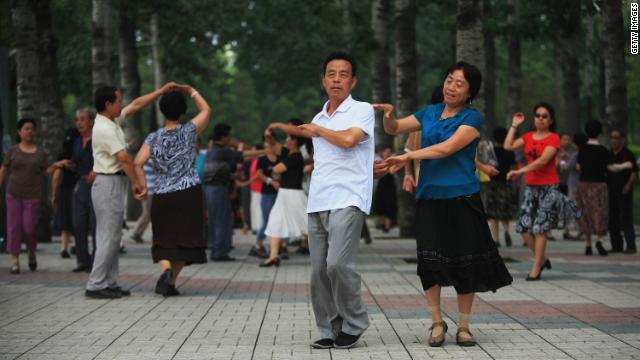
Winter, the season of sleep, the city of frost. I will arise and go now. Here's a poem, a memory of China from December last year.


The Dancers in People’s Park 

In my dream I saw the dancers of China
shifting through the dusk of People's Park,
the healthy park where dancing is exercise,
and it moved me to tears in the oncoming dark
to see the dancers in the gathering dark
where bats flew and the cricket creaked
where plane trees peeled and moonlight leaked
and the people, the elderly, especially the elderly,
went dancing in the park. 
I ate magnificent meals, whose history was magnificent,
and was shown bronzes more ancient  than the Ark,
I watched high calligraphy scroll across the table,
the madness, the scholarship, the whistling in the dark,
and I was impressed while whistling in the dark
by the poets, the carvers, the calligraphers, by all
who laboured to fill both the vault and hall
and saw it was a miracle, a marvel and a miracle,
to watch them spinning in the dark.
I listened to the voices, followed their courtesies,
knew to listen out for each scholarly remark,
remarks that were substantial, deeper than a well
that reaches down for ever into everything that's dark.
And I heard the voices crying in the dark
where dancers turned to zombies, or floated like ghosts
drifting round  in circles like the tables of my hosts
and the dancers grew fainter, like a dream of dancing,
of people dancing in the dark.


Friday, 26 October 2012

Talking Heads: Stop Making Sense


I haven't done this before but after a day of hard work it's nice to put up a full one and a half hour concert video. Talking Heads in 1984, directed by Jonathan Demme. The words are always intelligence-in-mask, smart, slightly wild, apocalyptic, edge of madness yet commercial, and the music is compulsive, energetic and essentially pop  with a touch of funk but going off in unexpected directions. The dancing is great too. Travelling back on trains from gigs or tired meetings, I sometimes plug into this. It gets better and better as it goes.

It's either that or Bach.

Or tango. 

The playlist:
Setlist:
"Psycho Killer"
"Heaven"
"Thank You for Sending Me an Angel"
"Found a Job"
"Slippery People"
"Burning Down the House"
"Life During Wartime"
"Making Flippy Floppy"
"Swamp"
"What a Day That Was"
"This Must Be the Place (Naive Melody)"
"Once in a Lifetime"
"Genius of Love"
"Girlfriend Is Better"
"Take Me to the River"
"Crosseyed and Painless"


Thursday, 25 October 2012

Image in a white shirt

Budapest ID photo from 1968, our only return visit as a family

Today Derek Adams came over to photograph me. His offer to do so came out of something I had said on the net about the photograph as a way of investigating the spirit. What I had written was: No photograph looks absolutely like you until you die: then they all do. Derek responded to that and a few other such little notes by suggesting a photograph and I said: yes.

My note simply reflected on the fact that while we are alive we are in motion and that this or that moment of absolute stillness runs counter not only to our experience of life but also to other people's experience of us. But once we are dead we no longer move. We are still. We have vanished. Now only the photographs remain; they are our final stillness. It is perhaps one of the reasons we like to look our 'best' in photos. If that is all that remains of our appearance it had better be good.

But why do we bother? We won't be there to care.

Perhaps the wish echoes that of our mothers in youth that we should wear clean underwear in case we get run over by a car. Or our own wish that our senile toothless old age should not be the image of us that those we care for - or indeed anyone - carry away with them. This, you must understand, is not us.

Our sense of presentability is something we wear under the skin. I don't mean we want to look false or overpreened, just that we want control of the way we are perceived. That control may involve being 'unpresentable' if that is the way we have grown used to presenting ourselves. There is a pride in not 'letting ourselves go' - the phrase itself a clue that we prefer to maintain a hold on our selves, the selves facing the world, that is.

*

So Derek arrives at the time discussed. I hop into his car to help him find a parking space, which we do further down the street, and I help him carry his equipment back to the house. The natural light is best in the upstairs kitchen, so we move the table and I make him coffee as he prepares his white backscreen, a couple of circular reflectors, a mirror, the tripod, the camera and various lenses. His series of photographs of poets is entirely in black and white against a white background. Knowing this I decide to wear a white shirt. The idea, presumably, is that it is only the face the viewer really sees, the face without distractions. He puts a chair in front of the screen and I sit on it.

Derek is a professional photographer of long standing so he knows it is good to engage the subject in conversation. But I am deeply self-conscious and know I am. He talks and I talk back but the camera is right in front of me. I am self-conscious because I have no confidence in my appearance. I myself do not know what it is. It is constantly running away from me. I would like to be able to handle it, as sheer phenomenon if nothing else, but I can't. I have no handle on it.

He takes over a hundred pictures and I do relax some way, but never completely. I am wary of my own image. Maybe that wariness is an aspect of my spirit. I suspect it is. I wonder whether that wariness will show. Perhaps it should.

It's about an hour and a half's work, then I put out some lunch and we talk a little more. He is due to give a reading himself in Southend tonight and has to get home and make dinner for his wife who is out at work.

*

I didn't get to see more than a few of the photos on his viewfinder as Derek flashed them before me. Yes, that is distinctly me, I thought, the me that often appears in photographs, those with presentable selves.

And yet, it is as if I were suspended in aspic.

I note myself in the aspic, that strange jelloid space, my transparent coffin. It is like seeing photographs of my parents in relative youth. They are both dead now. At some point I too will be, and these new photographs will then be older, confirming, magisterial. And somebody will say: He was something like that, though he is posing.

But they might add: And yet that is him as he was too because there will be something, maybe just in the eyes, where what everyone regards as spirit still resides. Behind the theatrical mask, the eyes, the eyes that are full of time - time that is always shutting down, every night, every hour, every moment - those eyes right there will appear to be overflowing with time, leaking time, spilling it, from this picture with its natural light, its white screen, reflectors, mirror, chair and white shirt.


Monday, 22 October 2012

Crabwise


1.
When he was very young his slender fingers
and junior ‘bedside manner’ made such an impression,
his mother considered him to be an absolute 
natural for the medical profession.

2.
The doctor across the yard was called
when the boy was in great pain.
He was at dinner. It was mere gut ache
not appendicitis. They had to call again.
Peritonitis actually. Bad call.
But the boy survived, and that’s what counts, after all.

3.
Damn patients! Just listen to them. Holy Moses!
You’d think they could conduct a diagnosis!

4.
The good Chekhovian medic, that sane figure,
Had clearly never met the ghost of Dr Bardiger,
Whose communications were brief and almost dumb,
Who never once said more than mmm or hum.

So hum for ‘take a seat’. And mmm for ‘time to speak’
Another hum for the prescription and good bye
With the odd ahem for ‘Come back in a week
Unless in the meantime, mmm, you sadly die.’

5.
The good doctor had had a difficult day.
He wasn’t going to put up with much more.
The time-wasters and sick could go away.
He strode around his office and locked the door.

The day had been difficult and time was short.
But nothing out of the ordinary. Nothing to report.

6.
It was the night and Doctor Crabwise rose
to fetch a glass of water and to think.
Who was the figure there with the snub nose,
He asked the mirror over the bathroom sink.
It must be me, he thought, and took a drink.

7.
The system was ruining him. It ran on wheels
beyond him on its own harsh economics.
The surgery was equipped with glossy mags
and a clutch of second-hand kids’ comics.
Outside, the endless sea of the terrified and sickly.
Get done with them, poor sods, and get done quickly.

8.
I think of the surgeon now who knew the heart,
and held in his hands my mother’s wretched body,
of how he spoke to her and exercised his art
with tenderness, and sorted through the bloody
tangle of her valves and was a blessing
long after the nurses had applied the dressing.

9.
Doctor Crabwise and the rest: strange gods of hope
Curators of the body and the edges of the soul.
The medicine man with the stethoscope
That seeks the heart and looks to keep it whole,
We know your rank, as also our low station,
We pray to submit ourselves to your most strict examination.

10.
Meanwhile the world, its voice a little hoarse,
Kept grumbling on, and nature took its course.


Sunday, 21 October 2012

Sunday Night is... Chet Baker x 3


Three frail precisions. The third time means autumn.


Of late night TV and ghosts


It's a closed-in grey Sunday with the usual raindrops pendant on the semi-transparent clothesline, a pair of blue tits dodging in and out of the leaf-cover, the sun behind those veils of grey making periodic efforts to penetrate them.

It's the long season moving in, asserting its right of possession, bedding down in the yard, draping itself over everything.

*

It has been a full week to say the least.

I teach Mondays and Tuesdays till about 6pm and after. Monday night saw the welcoming dinner for the new international writer fellows, Tuesday night was the launch of the UEA anthology that I was down to introduce, Wednesday evening was the delayed celebration dinner for the Wymondham Words Festival to which C was going to come until summoned as emergency family baby-sitter, Thursday was London to introduce and converse with Noémi Szécsi on the occasion of the publication of The Finno-Ugrian Vampire, the English translation of her first book of 2002. Friday morning was the postponed university class I had missed right at the beginning of the year, followed by an appointment at the Writers Centre, and Saturday was the Wymondham launch of In the Land of the Giants.

Bad bad night on Friday. Sometimes I feel like a ghost in my own life. Occasionally the ghost wakes up and runs around the shadows in my head until there is no option but to get up and watch Bad Television. Hours of it.  As I do so other ghosts appear - the ghost of Peter Falk as Columbo for instance, the news flickering into ghostly life on various channels, an almost empty House of Lords with its sanguinary red upholstery and its ghostly vacancies. There is the panoply of night goods, panel games, poker, phonesex, sitcoms, death goods. There is no more alien hour than 3am in one of the forgotten lunar pockets of the empire.

This house is over four hundred years old. Lives have passed through it, soaked themselves into the walls and floors. Our lives are doing so right now.

*

A week full of Events.

I find myself launched into events with my event face on, with the event voice, the event wit, the event bonhomie. On Monday conversations about Arthur Miller, local politics, the passage of time. On Tuesday the inner-cigarette-lighter glow of playing host to new writing. On Wednesday the determined glitter of the good party, to make the good sing and feel good about itself. On Thursday the wariness and nerviness of acting as sub-TV chat show host to a literary celeb, a job I am told I do well, but which feels like a sentence every time, and which is never as good as either host or guest would like. Friday, the slightly smaller delayed class in a different room, the boosting of intellectual adrenalin, the Lance Armstrong aspect of the bright class, then lunch, wondering afterwards whether I have put things the right way. Yesterday, knowing how to read those tiny little poems, doing the old trooper with a leaven of gaiety. ( It was lovely being there, thanks to Robert, with cups of wine and friends long unseen, and family and children, and people back at the house... I am an extraordinarily fortunate man, and the knowledge of that is something that runs, puffing and panting, beside me.)

And this life is in the midst of all those other lives. The classes, the colleagues, the committee, the friends, the visiting writer and the organisers and the audiences. The other hosts, the friends who appear - their own thoroughly substantial lives and worlds, through which I shimmy as though blown by this or that gust - and the life of the imagination that produces both marvels and monsters and, occasionally, just silence.

*

In between, scribbling, quipping, pushing poems on, reading, reading. Writing this. Watching the spider  outide the window, curled up, swinging in the breeze at the centre of her web.

Some music for the evening later. Maybe a filmclip?