Showing posts sorted by relevance for query hitchin. Sort by date Show all posts

Tuesday, 31 December 2013

Resolution and Goodbye to Teaching


The problem with the blog has been that I expect to write brief essays and there hasn't been the time recently. But I do resolve to write something on every possible day henceforth, however brief, however minor or fragmentary.

Meanwhile a short farewell note on teaching.

I have retired as a teacher. In fact today is my last official day of employment. My teaching career is over, in a salaried institutional capacity at any rate.

Teaching has been forty years of my life from 1973 on, for the first year as a part-time Art teacher in Cheshunt, the next as a part-time English teacher at a Hitchin school. After that six years first as full-time teacher of Art then as Head of Art in Hitchin Girls' School, followed by twelve years as Director of Art and Art History at St Christopher's in Letchworth, a progressive, independent, vegetarian school where Clarissa also taught and where our children did their own schooling. In 1991 I was asked to draft a poetry course for a new BA in Cultural Studies at what was then Norwich School of Art. I started teaching it on a contracted hours basis in 1992, then, two years later was offered salaried half-time work (I had already opted for a fractional post at the school) and we moved address to where we live now. In the meantime Tom read Computer Science at Bristol and Helen read English at Magdalen College, Oxford. After 1992 I taught poetry and ran the creative writing part of the Cultural Studies degree (which changed its name two or three times in the period) until 2006 when I was asked to apply as a Reader in Creative Writing at UEA, regarded at the time as the leading university for creative writing in the UK, possibly in the world. That is where I have just finished.

In the rest of my life I was writing. I have been publishing books of poetry since 1978 and have been translating from the Hungarian since 1984. But that was independent of teaching and, mostly, nothing to do with it apart from the fact that between 1975 and 1991 I wrote a play or libretto a year, usually as a production for school. Those things may continue to blow about as dust in the desert but I enjoyed writing and producing them and some of them, by no means all, had something to recommend them.

Teaching was mostly exciting: the roll call of those I taught (along with colleagues of course, chiefly Peter Scupham and Andrea Holland and, latterly, Denise Riley and Lavinia Greenlaw) who have become widely published and recognized poets is considerable, on average close to two a year. If one can be proud of the success of others I am very proud of them. There are still others who were and continue to be outstanding writers who should be better known. I wish them luck and am just as proud of them.

I think what I chiefly taught was close listening and close reading, which is of far greater use to a developing writer than any amount of theory, however valuable that might be as an informing discipline. The rest was a perpetual willingness to laugh, a good deal of patience and simply a keen curiosity about what might have been going on in the words of young potential writers. There were times I was hands-on in a way not generally approved ("Why not scrub this, why not move this to there, why not raise or lower stakes here or there, have you tried this or that word…" etc). But the writers all turned out differently. I don't think there is a recognizable spawn of Szirtes, and if there isn't, it is probably because of a personal curiosity. I never consciously preferred one way of writing - or, perhaps even more importantly, one way of feeling - over another. Somewhere in the text I was reading I assumed there was some reason for its existence, or at least an opportunity within it that might lead somewhere.

That is what tutorials were about. The class teaching was not a matter of teaching tricks - there are few tricks that are worth teaching - it was, with the postgraduates, the encouragement of a culture of generous but intense listening (don't immediately tell us whether you like the writing, first try to describe what it is and what it seems to be doing), and, with the undergraduates, a strong interest in discussing the principles of poetry and language, and in introducing works that demonstrated a reasonable range of options.

The original undergraduate course involved five semesters of reading and writing with terms devoted to Poetry as Song, Poetry as Narrative, Poetry as Ideas, and Poetry as Reports on Experience. So there were ten divergent selections of song, ten of idea, ten of narrative and ten of essentially descriptive verse. Not that these were clear distinctions in themselves, but that they were useful ways of entering discussion. Today I would probably extend this with a course in Poetry as Register, and Poetry as Voice.

Shaw told the world that those who can, do and that those who can't, teach. It was a cruel thing to say. Almost everyone has taught: all the great masters of visual art had their schools, most writers had friends to whom they looked for criticism and advice. That is, in essence, all teaching is. It is a sort of friendship based on common interest within a framework. The friendship may well continue once the framework falls away. It is a human exchange based on curiosity, generosity, wit, and close attention.

As for the institutions, they exist as frameworks that facilitate such human exchanges. It is their only proper function. The current drive towards an ever more corporate business model is the opposite of learning: it operates on the lines of the nineteenth century mill glossed by twenty-first century public relations. The UEA is fine at the moment - long may it continue to be. I am leaving at a point when that drive is ever more in the ascendant in many places. It is to be resisted and ridiculed. The human spirit can do better than that.



Saturday, 12 June 2010

Watching England


A very full day in Cambridge - now in Hitchin. Of course we put ourselves through the agony of watching England play. It is not agony because they are awful - it is agony because they are peculiarly accident prone. The team is not great, though it could get better, and given one or two breaks might look as though it were doing more than blustering, but you know something is always likely to go wrong, often something ludicrous. And so it did. A crippling, slow-motion, joke of a goal. Such things happen to the best of keepers, such as David Seaman, though there must be a reasonable suspicion that Robert Green may not be the best of keepers.

He offers no security. Teams need security, and the goalkeeper is there to provide it. I doubt whether there has ever been a successful team without an imposing, infallible-looking goalie. So while he may not make another mistake in the competition his defence will be so worried in case he does that one of them will make the mistake instead.

That's enough technical chat. Tomorrow I discuss the midfield problem in equally illuminating detail.


Wednesday, 5 May 2010

Farewell to Creative Writing at the Art College 5


Some books by Scupham, Barker, and Szirtes


The Staff

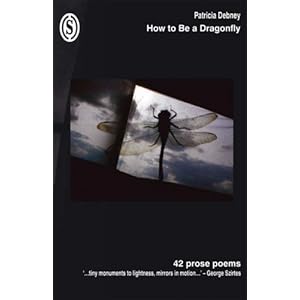
In 1994 I was asked to attend more meetings. Until that time I had been driving over from Hitchin, for one day a week in the first year of the course and for two (staying overnight) after the second, as a second cohort of students arrived. The drive was over two hours each way. I said I would attend more meetings if I lived closer, and I would do that only if they gave me a permanent fractional post. So a job description was written for an 0.5 Senior Lecturer, the fractional post was advertised in the press, and some very good people applied. The day of the interview was very difficult since it turned out I knew two of the others to be interviewed and had met the third. All these three were well known poets. The fourth was Patricia Debney, a graduate of the UEA MA in Fiction. We sat together for a whole day in a state of embarrassment since they knew I had written and was delivering the course, while I knew that either I was going to get it, which meant a wasted trip for them, or I was not, which meant my course structure and delivery were deemed a failure before they had even run one full course.

I got the job. Son Tom was already at Bristol University, daughter Helen was just starting at Oxford, so C and I moved to our present house in W in the summer of 1994. Patricia was offered work in the Critical Studies department of the college (was that its name then?), with a view to further work on the Cultural Studies BA.

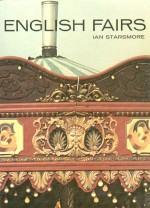
The permanent course staff then was Ian Starsmore as director, Simon Willmoth teaching the cultural studies alongside Ian, and Graham Giles teaching and directing the art.

I am not sure now whether it was in third or the fourth year of the course that Fiction opened up with Elspeth Barker. Elspeth had written one wonderful dark and funny book, O Caledonia and was the widow of the poet George Barker. We now had two branches of creative writing. The visual was moving along too, though it was always going to have to stand comparison with the work produced in other parts of the art college, with courses that had more time, resources, and money at their disposal. Elspeth wasn't on the permanent staff, nor was she ever to be, but she was a prominent writer and reviewer whose reputation could help establish fiction on the course.

Once she became available Ian advertised the course in magazines like the Times Literary Supplement with Elspeth's and my name featured and we drew in plenty of applications. Both Cultural Studies BA and Creative Writing at BA level were relative novelties and there wasn't much competition.

Once Fiction was up and running in its second year Patricia could teach some Fiction too. And Peter Scupham who lived nearby joined me for the Poetry on the same basis as Elspeth. Soon Margaret Steward joined us to teach Performance, a hard task since there was no theatre, in fact nothing that could serve as a drama studio, but Performance, Fiction and Poetry became the three strands of Creative Writing. All three were compulsory in the first year, with increasing specialisation in the second and clear specialisation in the third, with some crossover permitted. Performance put on a section from Tony Harrison's version of The Mysteries with a mature female student as God. Ian and I were Yorkshire shepherds, set in the student bar.

At this time we were oversubscribed, running an annual anthology and inviting six writers per year to read and talk to students. Writers came as invited by the writing course, but also on an ad hoc basis when they were available. George MacLennan joined about the same time, teaching across the college, with increasing contributions in Cultural Studies.

Then came Andrea Holland, in about 1995 who had just arrived in the area with an MFA from the USA and some publications behind her. She turned up at just the right time for us to find her some work teaching Poetry. She became very important, ever more so as time went on, eventually taking over from me. Elspeth too has continued teaching to the present moment.

All the branching out meant having to rewrite the whole Poetry course. In effect it no longer existed as envisaged, but was divided into modules or units to sit alongside Fiction and Performance. Elements survived but were now almost independent of each other. There was also more pressure to relate what we were doing to the work on the core part of the degree.

The students were beginning to achieve individual successes beyond the course itself. A stream of writers and future writers began to appear as early as as the second cohort. They will get their own special post as will the visiting writers and speakers.

I could let Fiction and Performance look after themselves somewhat as they were in very sound hands. We trusted each other. The institution ran partly on trust anyway. Like all institutions of the time time it ambled and stumbled but managed to stay upright and walk. It managed its affairs as best it could, relying heavily on its artist staff who were given reasonable personal freedom to develop ideas and initiatives. I believe it worked.

*

A year or two ago I was having coffee with J from the UEA and we were comparing notes on changes. I said I thought some changes were necessary from the days when I was a student as I rarely saw the artists that were on the staff then. Sometimes they'd be in the pub and students just had to seek them out. There were inconsistencies and liberties of all sorts.

Yes, J nodded. But was the work produced any worse?

Probably not,, I thought, There isn't in fact a direct relation between quality of work and the culture of accountability. Institutions are not the goal, they are the means. The human contract always trumps the institutional contract. If someone wants to be writer it is the potential writer one tries to respond to, not the grade student. Degrees and marks and being good boys and girls were secondary to the point of the experience.

Nor was the world outside ever likely to ask a writer whether they had got a First or an Upper Second. Show us your work, it would say. And you either had the work or you didn't. I owed the institution what the institution demanded for its money. To the students I owed a generous, but true ear and a human commitment that would extend beyond the financial pro rata. The reason I had been brought in because I was a poet not because I was a lecturer. The fact is I had never been a lecturer.

These thoughts have stuck with me from the very start. Do the institutional work properly and as efficiently as you can, but remember education is not about its own procedures but about something beyond. It needs the procedures to achieve that. The procedures have a point. And that which lies beyond is the point.

But success beyond the college was already brewing by the time the first cohort were through and so it was to develop. That next and a few more changes and developments.


Some books by Debney, Starsmore, and Willmoth


Thursday, 11 December 2008

To Bath


I am off to Bath for a reading. C set off to Hitchin earlier to look after her mother. Except the car has broken down on the way, with a flat tyre. The car was fitted with new tyres only last week, whether this particular tyre I don't know. She's at the side of the triple carriageway, ringing me. This is a couple of hours or so before I am due to get the train. So I ring the AA and tell them to hurry then call a taxi for myself to get down there. Who cars about cost? It'll be about half an hour's drive to where she is. The AA say they'll be there soon. The taxi arrives just as C is ringing. 'Don't come,' she urges me. They are almost there. So I send the taxi away with £10 for his trouble. He scowls. He has only come round the corner so there's not much call for scowling.

Meanwhile the rain raineth but the sky cleareth. Maybe it cleareth.

It will be a series of phone calls now to make sure she's OK.

*

The issue of assisted suicide. I understand there need to be safeguards. Old people, sick people, shouldn't be pressurised into it. There should be no guilt attached to choosing to stay alive by whatever means. But the fact is I myself would feel guilt if it were me. And I value my dignity too. The man in the news finished off the job himself. No-one murdered him.

I cannot begin to express how deeply I loathe those who mouth on about sympathy at a safe distance but still want the final say on what others do with their lives. I see them as a crew of moral Health & Safety officials who would prevent you crossing the road without their say-so. Totalitarians of the spirit.

Enough fuming. Other things to do. Check C. Shave.

Hah.


Sunday, 12 April 2009

Sunday night is.. Billy Collins's Budapest


So here's one over Mr Collins for, assuredly (note the elegant locution), I have been there, was born there, conceived there, as was my father, and so on, returning to some far corner of a foreign field that is forever Budapest.

Billy Colllins is a much animated poet. I wish there was more of this kind of thing. Here I am, kindly animator. Just wave so I can see you in the dark. Come animate me.

*

Back from Hitchin, staying Easter weekend with C's much loved mother. Magnolia, gorse, cloud. A strained back for me. I think of old age and, frankly, I doubt whether it is even what it is cracked up to be. Having just received my free bus pass I think a free ride to oblivion at some stage should be fun. Wheee... and there I am back to Budapest, a hand moving on paper, just as in the animation.


Monday, 27 May 2013

Goodbye Fergie 6: Relegation


Manchester United were relegated to the then Second Division in 1974. This followed a few seasons of steep decline after Matt Busby, Sir Matt Busby as he was by then, retired. In 1968-69 United came second to Manchester City, just two point behind them, with Georgie Best getting the goals but most of the great mid-Sixties team was beginning to fade. The following year United slipped to 11th, though Best was still scoring. It was at that point Busby retired and handed over to the young Wilf McGuinness, a decent United player whose career was ended by a bad injury in 1960.

It didn't work. United finished eighth and began the next season poorly, so that was the end of McGuinness and Busby returned.  It made no difference, the team finished eighth again. Transition was going badly. Busby bowed out and Frank O'Farrell, the Leicester manager came next. George Best was playing brilliantly but going off the rails. Knives were being thrown at Old Trafford. It was the beginning of the Seventies. Eighth again. Next season was even worse. United went the first nine games without winning. O' Farrell was gone in December. United ended the season in 18th place. Best went missing, didn't turn up for training and played his last game for United the next January, by which time Tommy Docherty, a hard man known as The Doc had taken over. By the end of the 1973-74 season United were relegated, next to bottom of the league.

What of numinous names? Stepney was still there, and Sadler and Kidd. And some younger players who were going to be all right, but not yet:  Holton (six foot two, eyes of blue / Big Jim Holton's after you), Martin Buchan, the very young Brian Greenhoff (who died a few days ago aged only sixty), Stewart Houston, Gerry Daly, Sammy McIlroy, Willie Morgan, Trevor Anderson who shone once or twice, and older players brought in to restore some order, such as George Graham, and Jim McCalliog. Lou Macari was only twenty-four but he already seemed part of the another team's past. 


*

The years of decline coincided precisely with my years at art college. I was at Harrow for a year from 1968, then spent three years at Leeds (at the height of Leeds United's glory), married Clarissa in the summer of 1970, then did a year at Goldsmiths. The following year, in the year of relegation, I was in my first job. Our first child, Tom, was born the day before Best played his last game.

When the work people do is associated with youth it is the youthful image we retain. I can remember the faces of the failed teams of the early seventies quite clearly. My own face was still young. For most of 1974 I was just twenty-five. The art college had been a great part of my life. I exhibited at the Lane Gallery with others at the end of my first year, got married, received a travelling scholarship the next year that Clarissa and I spent in Italy falling in love with Giotto, then won the art history prize and finished Fine Art with a First. On the other hand I failed to get into the Royal College and left Leeds behind for Goldsmiths. Here Clarissa suffered a miscarriage shortly after moving to our London flat in New Cross, then slowly recovered. Then she was pregnant again. We moved to Hitchin and I found my first job as a fractional art teacher in a Cheshunt school.

In 1973 there was the Yom Kippur War and OPEC raised the price of crude oil. Miners went on strike - everybody went on strike - we had the three-day-week and lighting the house with candles. There were IRA bombs in London. There was the Cod War with Iceland. And United went down. 

United went down but my devotion to Manchester United continued. We had an old black and white TV that sat next to the kitchen boiler. We watched Match of the Day. I was a teacher, which was not what I had set out to be. Clarissa was far from picking up her art career and was being a mother once, then twice.


The fates of the country, of Manchester United and ourselves seemed to be running a parallel course. The country was breaking apart just like United, and would have to re-form itself, as would United. As for us, real life started here, with jobs, children and the long struggle. The Sixties was collapsing like a pack of cards. Edward Heath called the 'who governs' election and it turned out it wasn't him. There was the Guildford pub bombing and the Birmingham pub bombing. Friedrich Hayek won the Nobel Prize for economics. 

No more Beatles. It was David Bowie and the Spiders from Mars in charge now. It was Bill Shankly, Alf Ramsey's sacking, Don Revie's appointment and Brian Clough's arrival at Derby County. It was the maddest, strangest and darkest of years. It was the year the Sixties finally ended. 

But it was going to be all right somehow because it simply had to be. In 1973 I published a poem in the TLS. Next year, relegation year, I published a poem in Ambit. Straws to clutch at for the probationary art teacher. Lindsay Anderson's film,  O Lucky Man, came out. Luck would out sooner or later.


Saturday, 29 August 2009

Home again


The weather cooled this morning. Alarm set to 6 am after a late-ish last night supper with with Laci, Gabi and Linda in the garden of a newly re-opened restaurant situated in the fork of two roads. Back for watermelon and a little talk before bed. At night car alarms go off, police and ambulance chase each other down nearby main roads and I wake at 5.30 anyway. On TV Tottenham are playing Liverpool in 1995. John Barnes scores. This is not a dream. The alarm does go off at 6am. We rise, shower, breakfast and pack what's left to pack, then tidy the flat. At 7 am we cross the hall to share a coffee with Laci and Gabi. The advance copy of The Burning of the Books and Other Poems, we have discovered, has a double blank page in it between the contents page and the first poem. C and I fill it, she with a drawing and I with a poem. We give it to them. Then the airport shuttle service arrives and the farewells.

The bus heads first into the Castle District to pick up a young Japanese couple. We cross Erzsébet híd (Elizabeth Bridge) with my favourite view of the Danube, looking towards Parliament and Margit híd (Margaret Bridge), a view I always find heartbreakingly beautiful. The main road to the airport is blocked by a three-car crash, says the radio, so we take an alternative road, Üllöi út, lined with plain single-storey buildings and a tramline along which we see no tram moving. We arrive at the airport, Ferihegy 1. There I continue to read Adam LeBor's thriller, finishing it on the plane, which has a bumpy ascent and a bumpy descent through cloud in both cases. The luggage belt take twenty minutes to start moving. Taxi drives us through back lanes to Hitchin. I forget how beautiful, green, and gently undulating Hertfordshire is. We have lunch at C's mother's where we left the car. Her forgetfulness is quite marked now.

*

Impressions of Hungary in political terms? Worrying, brutal, the country swerving far right rather quickly. Adam's novel explores this rightward swing in terms of a conspiracy thriller. The thriller part is fine - I don't read thrillers on the whole - but the political landscape he draws holds me right through.

Political landscape is an important aspect of the book's, any book's, reality-sense. It's always the reality-sense which grabs me. I am not primarily a great fan of plot and character. I take them in my stride, but consider them chiefly as the necessary, and necessarily artificial, means of shaping the reality-sense, the sense that tells me life is strange yet parallel. Truth to tell I generally finish up not caring what happens to the central characters as such. It is the world I want to understand not them. But since the world necessarily involves the imagination and cannot be understood without it, fiction, and therefore plot and character, are necessary. Reality-sense is not detached from the quality of writing, of course. The two are indivorcible.

It was Pound who said that technique was the test of a man's sincerity. I don't think he meant slickness, or effectiveness in terms of rhetoric. I think he meant a proper tension in the way language passes through a writer's nerves.

Well, Hungary works through my nerves and at the moment it chiefly makes me twitch. It feels as though it is at an important and dangerous stage in its development.


Wednesday, 14 November 2012

Long days, short nights


On Saturday we rushed down to the nursing home in Hitchin to see Winnie, Clarissa's mother. She had had heart failure, fluid on the lungs and a high temperature. In February she had had pneumonia and we were told to prepare for the worst within days, perhaps within 24 hours, but she recovered.

She recovered this time too.

She smiled when I talked to her and showed her photographs. She even said a few things that were genuine responses to prompts and questions and was perfectly conscious throughout, but her forehead was clammy. Clarissa and Hilary spent a long time talking to her. Then in mid afternoon we drove home.

Sunday was spent finishing some deadline work and preparing for Monday.

Monday:  Into university early for teaching then straight out to reading by Anjali Joseph, Hayley Buckland and Meryl Pugh at Cafe Writers in Norwich. Very good and good to see them. Home late, not much sleep.

Tuesday: Again I go in early to teach in the morning then in the afternoon I come home, change and catch the train to London for the Stephen Spender Prize Giving first meeting Ugandan-born poet Nick Makoha, whom I had mentored the previous year. Home after midnight, four hours sleep, awake for three hours

Today, Wednesday morning: Extra-day in university for two meetings. I come home to work after 2pm, have a hot lunch and do some work, then lie down an hour to make up for the previous night.  Not much sleep though. Just about to sit down for supper when there is another crisis in Winnie's condition. This time the nurses try to rouse her and she is not responding. We hang on the phone for doctors, nurses, family, half-packing the bag, checking the availability of hotel or guesthouse rooms, but now it seems there is no need to rush off. Winnie is responding again.

Clarissa (and I too) are against taking her off to hospital. Shuttling between ambulance and hospital, possibly with no bed available would be distressing for her. She is comfortable where she is, the nurses are very good. If this is the end it is a better one in a known comfortable place than in a cold hospital ward or corridor. But it might be just another crisis. She is a very strong woman.

But we might be rung tonight. It is very much knife-edge living for now.


*


In the meantime people are chasing me for deadlines, as ever. I usually meet my deadlines but they get pretty close these days. I make a lot of work for myself of course. People - I don't mean official students -  are constantly asking me to read their work, comment on them or give them a quote - and of course I do. I would welcome such help if I were them, and I am fortunate to be in a position where people think it worth asking me. At the moment I would say my time is 50% teaching and associated matters, 20% translating, 20% other things for other people and 10% for my own work.  I wouldn't say that is a lot worse than it has ever been, because my own work probably never added up to more than 20%, but it is not as it should be now. Fortunately I am high-octane and naturally productive in tight corners.

Nevertheless, I am not as young as I was and the teaching will stop.

Also, since I don't think I have said this here before, my next book of poems Bad Machine is Poetry Book Society Choice for the Spring. Hurrah!


Bloodaxe. Cover by Francis Picabia. Due out 24 January, 2013


Friday, 11 June 2010

Books, etc.


A busy week coming up. Tomorrow to Cambridge to run a workshop for the Poetry School at Michaelhouse, then to meet my friend, Italian poet and translator, Gabriele, who has translated a whole book of my poems into Italian and we are now discussing details of publication.

Overnight in Hitchin for C's mother's 90th birthday. Monday in University, Tuesday, an Ambit reading at the Betsey Trotwood in the evening. Wednesday I teach. Thursday I deliver a talk at the Sainsbury Centre for Visual Arts about two refugee Hungarian writers, Sándor Márai and Gyözö Határ for Refugee Week, On Saturday I am at the LRB Bookshop to discuss the following books with Michael Hofmann, Stephen Vizinczey and Thomas Zmeskal:

Gyula Krúdy: Life is a Dream
György Faludy: My Happy Days in Hell
Thomas Bernhard: Old Masters
Josef Skvorecky: The Cowards

The New Writings World days begin on Sunday, when we are expecting dear friend Sharmistha from India, and on Tuesday 22nd I introduce Shanta Acharya and chair discussion for her book launch at the Nehru Centre.

Meanwhile reading and writing and university work.

Sometimes life doesn't seem quite possible.


Monday, 25 July 2011

Not about the Poetry Society, not about Norway, not about Amy Winehouse


The Springfields: island of Dreams (1963)

It's lunchtime. C is down in Hitchin with her sister trying to sort through the parental house. I pop down to the cafe on the corner and decide to tuck into comfort food. Spicy mince, mash and greens. It's just like school, only tasty. Not wonderfully, gorgeously tasty, but sort of middle, respectable working-class tasty. It's cheap and it's a generous helping and I have a pot of tea on the table. I contemplate the sweets board which is always the same, including spotted dick and jam roly-poly. I quite like such places. In particular I like this one.

The woman who serves me looks tough but she calls me 'dear' now. I call her 'love'. 'Be with you in a minute, dear.' 'No problem, love.'

And she puts on the same late fifties /early sixties music that is always playing there. We begin with Cliff Richard (Summer Holiday), move on to Roy Orbison (Only the Lonely), which moves me now as it never did when it first came out. There follow The Shadows. And then, strangely startling, The Springfields and 'Island of Dreams'. It's Dusty and the two boys in faintly Country and Western mode. It startles because it is one of my early pop memories and I haven't heard it for a very long time. I liked it very much back in early 1963 when I was fourteen. And I fell in love with Dusty to the extent of writing her name in black ink on a school desk. The hair? Oh, quite natural for the period. Like wearing a hair drier instead of hair. My mother had the same in black. She was just thirty-nine then.

The song is still haunting. And, damn it all, it does take me back to Norway, despite my best intentions. Whatever it is that is poignant about memory, a little of it is lodged in this song, especially that middle break when Dusty sings alone. High in the sky, there's a bird on the wing / Please carry me with you.

Tomorrow down to London to do another proms spot, this time for TV. [Puts on his Hungarian face.]


Monday, 29 March 2010

Cloud Talk 3: The cumulonimbus and the tuba


Cumulonimbus tuba via


[Back from London, gathering at EH's on Saturday night, the night in Hitchin, visiting greatly spirited dying friend in London this afternoon, then on to reading by Faber Academy poets in Great Russell Street. Just home, having quickly read emails, but not up to responding now. Tomorrow. Meanwhile, back to those clouds.]


We should probably leave the clouds at some stage and descend to earth, to the hard practicalities of translation. But I’d like to carry the cloud with us, as a cloud in the mind and the heart, even as we consider practicalities. The notion of the cloud envisages it as a location for seeking meaning, as a form that arises out of some necessity in the physical universe that is then echoed in the universe of the mind: the cloud becomes a limiter of knowledge, a wonderful sensory provider of the necessary possibilities of knowledge.

The cloud has form that is clearly perceptible. The poem talked of language as no more than punctuation and rhyme, that is to say convention. That is a dramatic hyperbole, of course, a kind of synechdoche for the other formal qualities of language as opposed to its signifying quality. It is a part that stands for a whole. The forms of language are what make language: that is the suggestion. Clouds have form: language has form.

And so to poems. Poems certainly do have form, are clearly formal utterances. My own poem works in quatrains and rhymes ABBA throughout.

One of the old, continually recurring debates with the translation of poetry, concerns fidelity to form. Fidelity to the lexicon is, we know, gestural at best, though it is the kind of fidelity we usually mean when it comes to translation. Is this or that word being properly understood? When the poet says whale, he does not mean shark let alone camel or weasel. All this is, no doubt, true and important, while at the same time we must be aware that rendering a whale as a whale does not solve all the problems of translation when it comes to poetry, if only because we are aware that, in poetry, it is not so much the mechanical, narrative function of the whale that is foregrounded (though it can never quite vanish) but some idea of what a whale denotes and connotes. A certain, fully contextualised whaleness is what is wanted, the kind of whaleness that is not altogether precise but - shall we say? - a little cloudy.

Fidelity to form works along different lines – lines, let us say, of matching lengths, in matching clusters, making similar gestures to sound at certain crucial points. There, we say, is an original work: here we are, reproducing its elements. We are not Chippendale or Sheraton: we reproduce their forms. We are makers of reproduction furniture, and reproduction furniture is, we understand, something between a homage and a cheat. That is not to say we are not craftsmen, because Chippendale and Sheraton are by no means easy to imitate – we deserve credit for our skill, but our very calling is a little unworthy, even a touch shady. We duplicate, therefore we are potentially duplicitous.

Very well, let us allow that. Nevertheless there are certain common forms, we might argue, that carry a certain inescapable history, in fact an entire sense of being with them. Say, the sonnet. Though there are various kinds of sonnet they do have certain commonly identifiable characteristics, such as having fourteen lines. We might also argue that if a poet has chosen a specific version of the available sonnet models that constitutes a conscious choice. One might find oneself accidentally finishing up with a Shakespearian sonnet with all that entails, but in proposing that possibility we should remember that we are only just down the corridor from the vast hall where a thousand monkeys are hammering away at typewriters until one of them finally produces Hamlet.

So, let us, hesitantly, propose that such common forms are part of the meaning of the poem. How important a part? We might, equally hesitantly, propose that the character of the voice is to some degree defined by the kind of posture it adopts in producing its music. Music was the other term Hamlet employed, of course, there being, ‘…much music, excellent voice, in this little organ’. Most ordinary speech is noise with elements of music: a poem though – this little organ, though sometimes it is a pretty mighty organ - clearly is music, an organized set of shiftings, working on some principle that gives it form, a necessary form. A violinist does not adopt the same posture as a tuba player...

*

...to be continued.


Friday, 12 December 2008

From Bath


No rest for whacked. From Bath to London to Hitchin to Wymondham to Norwich to Wymondham and tomorrow to London and back again, before London again Monday and Coventry Tuesday.

In Bath reading with Zoe Brigley, young Welsh Bloodaxe poet, followed by Indian meal to midnight then hanging round the deserted bar of the hotel with Zoe, Tim L and Carrie E until about 1am when one of us (not me, constable) inadvertently sets off the bar alarm in trying to get a drink of water. We continue sitting around for another fifteen minutes waiting to see what will happen. Nothing does. Eventually the night attendant, a sheepish boy from somewhere in Europe, appears and smiles sheepishly but doesn't know how to turn off the alarm. Then, at last, someone else does turn it off. I was faintly expecting the cops to burst through the door.

The train home is delayed half an hour. Spend time listening on iPod toy to Beethoven's String Quartet op. 132, one of the greatest pieces of music ever written, and Schubert's Quintet in C, another of the greatest pieces of music ever written.

The university has been asking to see my naturalisation papers. After fifty-two years in England they had better check I am not illegal or a terrorist in a sleeper cell. No one ever bothered before. In any case I find it and see, surprisingly, that what I had remembered about becoming one of her Majesty's subjects was wrong. The wording, according to the 1948 British Nationality Act is THE ABOVE NAMED HAS BEEN REGISTERED AS A CITIZEN OF THE UNITED KINGDOM AND COLONIES.

So British, United Kingdom and colonies. A pretty kettle of halibut. Now they want to see my P60 to check that the NI number they have had for a number of years is the NI number they have had for a number of years. It is, I assure them, the NI number they have had for a number of years.

The meeting I dashed into Norwich for was. appropriately enough, about refugees and asylum -seekers, as part of the City of Refuge programme.

*

Directed to a lovely review of the New and Collected Poems in The Morning Star today. Which reminds me. The hotel had a decorative book-case in the restaurant. Clearly no-one was expected to actually take a book from it. I did this morning. There was a well preserved copy of a New Statesman anthology, including H.G.Wells's interview with Stalin. It is faintly comical, Wells imagining he is putting Stalin on a spot with the odd Fabian half-nelson. Bernard Shaw also finds it amusing, but then Shaw is a repulsive bag of self-conceit. Neither of them pick Stalin for the monster he is. At that precise moment in fact. The purges were happily proceeding while the interview was going on.

Incidentally, pleased the Menezes case has exposed the police cover-up. The thing stank to high heaven from day one. And now the knife-crimes figures. It is getting very hard voting for this lot.


Friday, 13 September 2013

Malaysia Postscript
Notes on a few photographs 3: In Malacca


1.


Almost the first view of Malacca on foot: the old heritage district.  Nice that despite its heritage status it remains relaxed, a touch louche, not utterly finished-and-giftwrapped for the tourist. This entrance to the street tells you much. There is the traditional Chinese-style gate topped with advertisements for Prudential. There are the bright colours - that yellow, that red - the cars and the street furniture.  It is all very different from KL. The part of town is quiet, bohemian, friendly, between two worlds. In the photo below, a little way down the same street there is the air-conditioning fan hung big and any-old-how on the bright wall, the shack-like ambience of the upper floor, the red plastic stool in the street, the big plastic foot sign for reflexology, and that faintly Dutch-looking gesture at a bell gable on the red building. The notices and advertising signs are of the same general disposability as the metal tables and chairs of the eateries anywhere in the country. There is nothing poncified here but old Malacca is a bubble inside a bigger commercial city, a once vital port.


2.


I should know more about the mythological / historical figures represented on this Chinese Buddhist door than I do but Alvin and Pauline were there to explain them and how to read them. I was seeing them primarily in terms of form, all swag, swirl and billow, a design verging on symmetry but not quite given over to it. The style of depiction is familiar but not the code. It is fierce work in its way, the foreign eye lashed by visual waves, drenched by the obsessive detail and high-pitch colour. There is the underpinning in narrative too, the narrative of significance and meaning, a narrative I always assume is there but which I rarely absorb on a reading. I am dazed with an overload of information and the explanatory detail passes me by. Not just on this occasion but all occasions: my poor registering of narrative is one of the reasons I haven't written a novel and am unlikely to write one unless it is shot through with texture and presence. But Malacca is a new place entirely and impressions shower on me like one of those deluge-like rains we come across from time to time on our tour.

Underneath the temple door there is a bohoish wallful of cats in collage, often with texts. There's this one above. Another says "Only the poet can water an asphalt pavement in the confident anticipation that lilies will reward his labour." You've got to try it, I suppose. Credit for neat expression. This is a cat that has been places. Possibly to San Franciso.


3.


Karl, Clarissa and Pauline have all taken better photographs of this visit to the Royal Press in Malacca. Clarissa's are there if you click on the link to her name above. For Clarissa and I this visit was like a door into the past when we worked on a press very like one of those in the picture. We ran The Starwheel Press in Hitchin from 1978 onwards, active till 1984. The name is still extant. You'll find its production sometimes on second hand book lists at ABE, priced much higher than we ever priced. We had an etching press in the cellar and the monotype press in an outhouse. We produced portfolios of etchings by five artists (including ourselves) and five poets (not including me).  Presses of this kind are what I have always thought of as Romantic Mechanics. Cars too were Romantic Mechanics then. You could fit a fully grown cat and a litter of kittens under the bonnet then and still get to the moving parts.

Entering the Royal Press was like entering a family house, and it was indeed a family house and family business. The light, the typecases, the printed specimens, the smell blended with the stir of a rather vestigial activity still taking itself seriously. It was a dose of the familiar. Friendly as ever, getting on with life, turning the house into a museum, but not yet a museum, still a working place. I think of the light as falling, falling like a solid object, through the two courtyards, and rumbling through the various rooms according to its own Romantic Mechanics: mechanical yet magical, sudden, perpetual, hovering.


4.


It is evening. We park the bus and set out to find a bar/eaterie that Alvin remembers. But it is closed. The owner has gone off on a holiday. Down the same street we find this. We are all sitting round the table upstairs, Clarissa, Iqa, Pauline, Alvin and Karl (Eddin couldn't come on this trip). This place has a sense of presentation but we are the only people upstairs. A TV screen shows repeated clips of a resident band that is not playing tonight. Another displays information on Malacca. I get up and take a few photographs because I sense there is something photographable here. The walls, the space, the windows and doors. I look out of the back window and there is a car, like a silent question, poised under a sign, a name. Yellow, red, black, and the deep brown of street lighting in shadow. It strikes me like a half-heard song. So there it is. And this table. It is a poetry I understand, a still-life of practically nothing, just light. The setting for still-life. Profusion dazzles me: this half-vacancy immediately finds its way to my heart.


Then we get back in the bus and drive back to KL.


Wednesday, 18 December 2019

Prayer for my Daughter


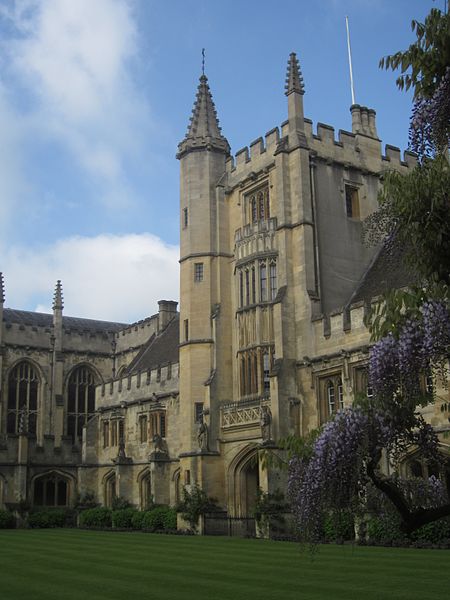
Magdalen College, Oxford


Somehow or other I succeeded in leaving this poem out of the New and Collected (2008). I did not mean to, it just went missing. Then recently, when I was in Munich, the man who had invited me, Helge, said it was this poem that I had read some  fifteen years before at Cologne, that he remembered and that other people had liked so much.

Last night I read it at LUMEN, the cold weather harity in London, and one member of the audience has written to me and asked where she could find it. The answer was, 'nowhere'. But I have found it among old files, and here it is.

It was written for our daughter, Helen, just about to go up to Oxford in 1994, the year we moved to Norfolk. It refers to the Yeats poem, of course, and quotes it too, but it refers to much else. Each time I wrote one part another part demanded to be written so in the end there were seven. It was both fun and moving to write.


Prayer for my Daughter


1.
So here we are and here’s my stanza,
like a Clementi cadenza
a penny-plain extravaganza,

just to keep things neat but sprightly
in what might otherwise politely
decline into a straight unsightly

father-to-daughter patronising
advisory misadvising
lecture on vague points arising,

a Yeatsian prayer to admonish
characteristics too Maud Gonneish,
Fenian or Amazonish.


2.
My stanza’s nineteenth century capers
are out of time. I read the papers
and know the new opinion shapers,

I know their loose, sincere demotic
ironies and semiotic
quiddities, but I’m Quixotic:

though windmills are as quaint as giants,
I continue in defiance
of gravity or modern science

rhyming like a man demented
dolphin torn and gong tormented
till the giants have relented.


3.
Darling, tonight the whole horizon
closed like a lid. The traffic sighs on
rainy tarmac, men flit like flies on

jets of wind, the river fractures,
and a streetlight manufactures
a wealth of frazzled broken textures.

So beautiful: the petrol station’s
amber flatness, the quotations
of lit shopfronts, the impatience

of running clouds. The winter races
into darkness, interlaces
bodies in its breathing spaces.


4.
You see, I want to turn this patter-
song to deeper, graver matter,
more throttle more carburettor

I want to be a souped up, solemn,
portentous father, wise as Solom-
on not just a gossip column,

someone you’ll take seriously
whose works you’ll study furiously
not discard imperiously

from some theory-laden high-rise
nor swat and squash flat, wasp- or fly-wise.
but approve, applaud and lionise.


5.
Walking last night I sought an image
to offer you, a kind of homage
to the wind’s wild scrape and scrimmage,

and noticed how the very cheapest
vulgarisms struck the deepest:
the Woolworth lights, a buckled leaf pressed

to the pavement, a crisp packet
flying in the gust. I took it
home with me, to store and stack it

in memory, imagination,
to use it in some combination:
a poem finding its occasion.


6.
Some quick advice? Well just a quickie:
Beware the sentimental-sticky,
Beware the choosy and the picky,

Beware all those who talk in torrents
The snobs who earned the strict abhorrence
Of poor pale sickly D.H.Lawrence,

Beware the Oxfordly superior,
Beware those with a smooth exterior,
The cynic wiser and world-wearier,

Beware the shady and the murky,
Beware the overprecious-quirky,
Beware your father talking turkey.


7.
Out on your own. The eighteenth hurdle
safely past. The tales I’ve heard all
tend to make a man’s blood curdle,

so to the prayer (I’m feeling prayerful):
Darling be wise, be good, be careful,
be water, fire and earth and air-ful,

find images beyond the kitchen
that women used to bake and bitch in
from Halicarnassus to plain Hitchin,

may you, in darkness, be that changing
wind and light, your mind free-ranging,
sea-like, unplumbed, salt, estranging,

tender, yes, but not kid-gloving
neither too mousy, nor too shoving,
be fortunate, be loved, be loving

be all of these, be kind, far-seeing,
in short, beyond the you- and me-ing
all that befits a human being,

what human beings may be made for:
life, unearned, unknown, unpaid for,
that you were celebrated, prayed for.